
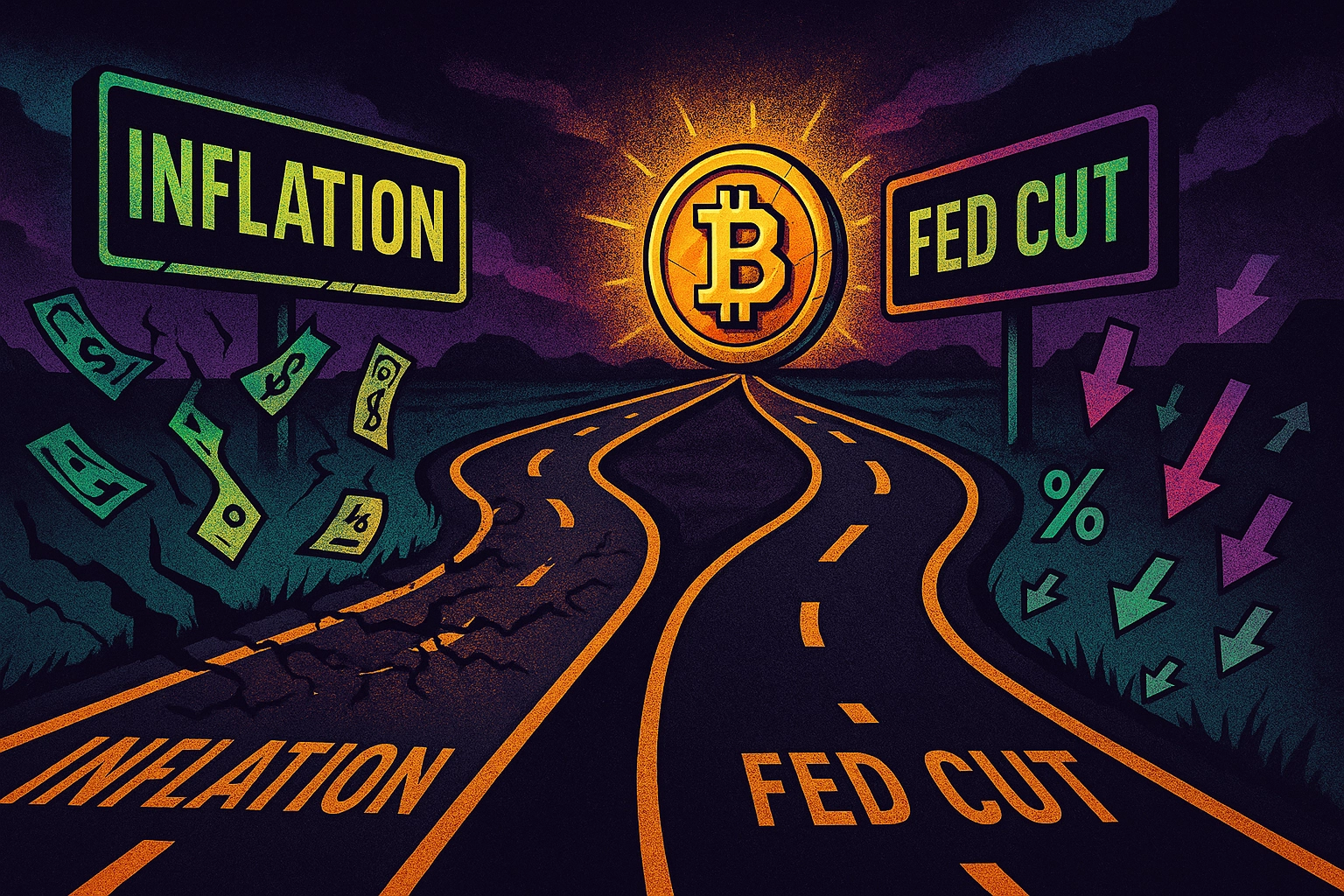
Bitcoin Gains as Fed Faces Inflation Pressure from Trump
Bitcoin Positioned to Gain as All Economic Roads Lead to Higher Inflation
Key Market Dynamics Favor Bitcoin Regardless of Fed Policy
The United States economy faces mounting inflationary pressures that could benefit Bitcoin regardless of Federal Reserve policy decisions. President Donald Trump's aggressive push for interest rate cuts, combined with existing economic policies, creates multiple pathways to higher inflation and potential Bitcoin price appreciation.
Current economic indicators paint a concerning picture for traditional markets. The US dollar has declined over 10% since January, core PCE inflation remains elevated at 2.8%, and July's Producer Price Index surged 0.9%, tripling analyst expectations.
Trump's Rate Cut Demands Create Inflationary Pressure
Trump has publicly pressured Federal Reserve Chair Jerome Powell to implement substantial rate cuts of up to 300 basis points, potentially bringing rates down to 1.25-1.5%. This aggressive monetary policy shift would flood the economy with cheap money, driving up risk assets and accelerating inflation.
The current 10-year Treasury yield of 4.33% appears increasingly unstable against the backdrop of a 37 trillion dollar debt load. Any significant policy changes could trigger substantial market volatility and currency devaluation.
Scenario One: Federal Reserve Implements Aggressive Rate Cuts
Should the Fed comply with political pressure and begin cutting rates as early as September or October, several economic consequences would likely unfold rapidly:
Inflation Surge Expected
Core PCE inflation could climb from current 2.8% levels to above 4% by 2026. Historical precedent shows post-COVID rate cuts and stimulus measures pushed core PCE inflation to a peak of 5.3% in February 2022.
Dollar Weakness Accelerates
A renewed inflation surge would likely drive the dollar down further, potentially sending the Dollar Index below 90. This currency weakness would compound existing concerns about US monetary policy effectiveness.
Treasury Yield Volatility
Initial monetary easing might briefly lower Treasury yields to around 4%. However, as inflation expectations rise and foreign investors retreat, yields could surge beyond 5.5%, potentially breaking the current bull market entirely.
Fiscal Crisis Risk
Higher yields would create immediate fiscal consequences. Interest payments on US debt could rise from approximately 1.4 trillion dollars to as much as 2 trillion dollars, representing roughly 6% of GDP by 2026. This scenario could trigger a debt servicing crisis.
Scenario Two: Federal Reserve Maintains Current Policy
Even if the Fed maintains current interest rates to preserve institutional credibility, inflationary forces remain active through existing policy measures:
Tariff Impact Already Visible
Trade policy effects are appearing in key economic indicators. The S&P Global flash US Composite PMI rose to 54.6 in July, the highest since December. Input prices for services jumped from 59.7 to 61.4, with nearly two-thirds of manufacturers attributing higher costs to tariffs.
Fiscal Policy Pressure
The Big Beautiful Bill's combination of increased spending and sweeping tax cuts threatens to destabilize public finances. The International Monetary Fund has warned these deficit-increasing measures run counter to reducing federal debt over the medium term.
Gradual Inflation Rise
Without immediate rate cuts, core PCE inflation may still drift up to 3.0-3.2%. Ten-year Treasury yields would likely rise more gradually, potentially reaching 4.7% by next summer. Debt servicing costs would climb to an estimated 1.6 trillion dollars, representing 4.5% of GDP.
Bitcoin Benefits from Both Economic Scenarios
Rapid Rate Cut Scenario
In an environment of sharp cuts, high inflation, and dollar collapse, Bitcoin would likely surge immediately alongside stocks and gold. With real interest rates negative and Federal Reserve independence questioned, cryptocurrency could become a preferred store of value for investors seeking alternatives to traditional assets.
Gradual Inflation Scenario
Even with a slower inflation trajectory, Bitcoin maintains strong fundamentals. While the cryptocurrency might trade sideways through the end of 2025, growing inflation expectations and continued dollar weakness would gradually increase appeal for non-sovereign assets.
Systemic Risk Creates Long-term Bitcoin Value Proposition
Both economic scenarios position Bitcoin not merely as a technology investment, but as a hedge against systemic monetary policy risks. The combination of aggressive fiscal stimulus and trade policy ensures upward price pressure remains built into the economic system.
Whether Federal Reserve policy changes occur rapidly or gradually, the underlying economic trajectory favors alternative stores of value. Bitcoin's decentralized nature and fixed supply make it particularly attractive as traditional monetary policy effectiveness faces increasing scrutiny.
Market Positioning for Economic Uncertainty
Current market conditions suggest investors should consider Bitcoin's role as a hedge against monetary policy uncertainty. The cryptocurrency's performance often correlates with periods of currency debasement and inflation concerns.
Professional investors and institutions increasingly view Bitcoin as digital gold, providing portfolio diversification during periods of economic instability. This institutional adoption provides additional support for long-term price appreciation regardless of short-term Federal Reserve decisions.
Conclusion: Multiple Paths Lead to Bitcoin Gains
Economic analysis suggests Bitcoin stands to benefit from current US monetary policy pressures through multiple pathways. Whether the Federal Reserve implements aggressive rate cuts or maintains current policy, underlying inflationary forces create favorable conditions for cryptocurrency appreciation.
The convergence of fiscal expansion, trade policy impacts, and monetary policy uncertainty creates an environment where alternative assets like Bitcoin become increasingly attractive to investors seeking protection against traditional market risks.
This analysis does not constitute investment advice. All investment decisions involve risk and individuals should conduct thorough research before making financial commitments.
For more Crypto, Web3, Blockchain & AI news visit : www.metamoonmedia.com