
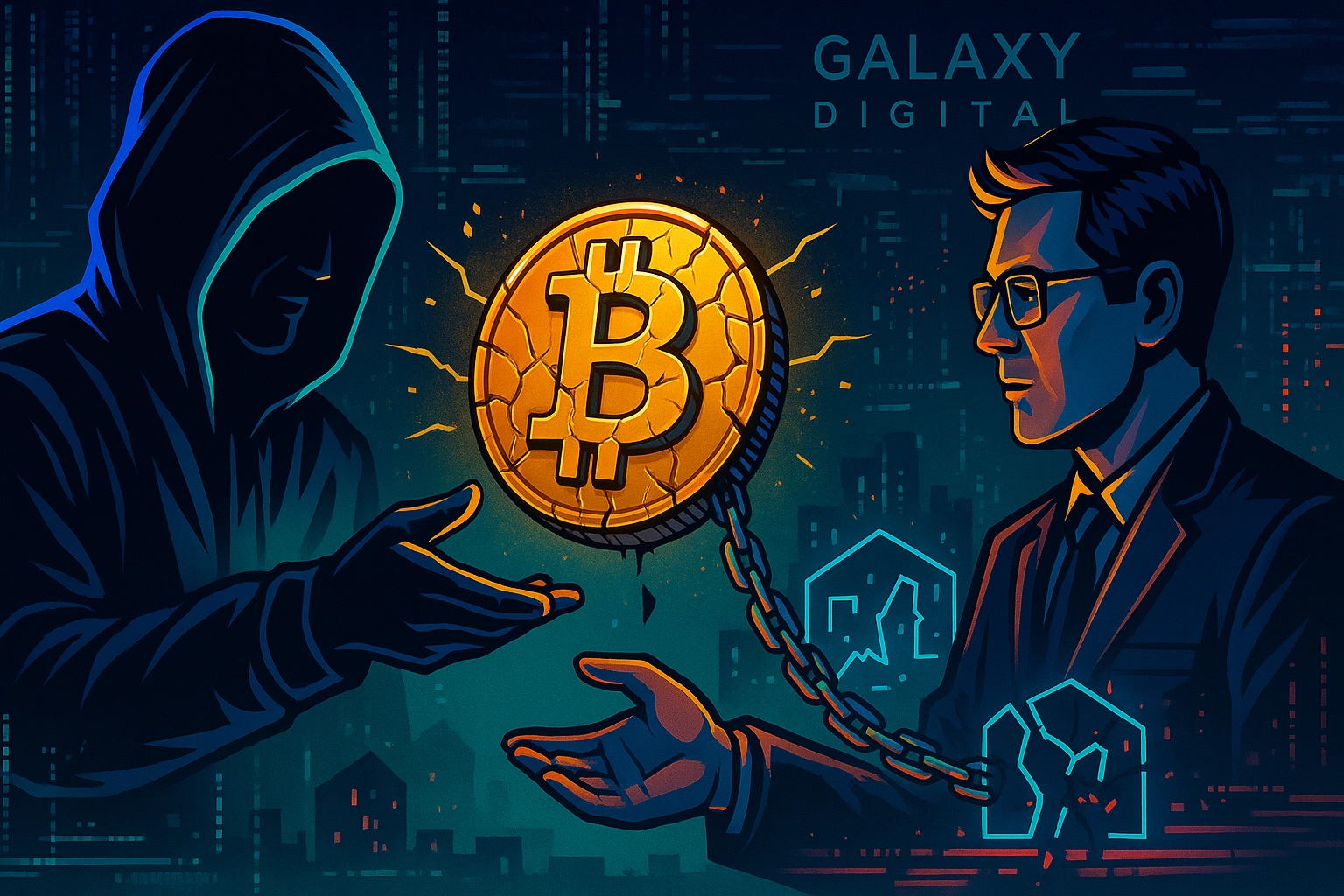
Galaxy Digital Sells 80,000 Bitcoin From Hacked Exchange
Galaxy Digital Sells 80,000 Bitcoin From Hacked Exchange Wallets
Galaxy Digital has executed one of the largest Bitcoin transactions in cryptocurrency history, selling more than 80,000 Bitcoin worth over $9 billion on behalf of an unnamed client. The massive sale, disclosed on July 25, 2025, has sparked intense speculation about the seller's identity and connection to a defunct Bitcoin exchange.
Massive Bitcoin Sale Traces Back to MyBitcoin Exchange
The transaction represents one of the most significant Bitcoin sales ever recorded. According to Galaxy Digital, the Bitcoin belonged to a long-term investor who acquired the cryptocurrency during its earliest days and held the coins for more than a decade. The firm characterized the sale as part of estate planning activities.
Galaxy Digital made an unprecedented move by announcing the transaction directly on the Bitcoin blockchain using an op_return field to embed the message in transaction metadata. The announcement included sending 1 satoshi to each recipient address involved in the sale, creating a symbolic gesture that attracted blockchain analysts' attention.
Connection to Defunct MyBitcoin Platform Discovered
Blockchain investigators quickly traced the sold Bitcoin to addresses connected to MyBitcoin, one of the earliest Bitcoin wallet services. The platform ceased operations in 2011 following a notorious security breach that left many coins unaccounted for and users unable to recover their funds.
CryptoQuant CEO Ki Young Ju noted that the wallets remained dormant since April 2011, just before MyBitcoin's collapse. This timing has fueled widespread speculation about whether the seller was connected to the original hack or the platform's anonymous founder known as Tom Williams.
Market Analysts Question Seller Identity and Motives
The discovery of the MyBitcoin connection has raised significant questions within the cryptocurrency community. Ki Young Ju suggested the Bitcoin likely belonged to either the original hacker or Tom Williams, MyBitcoin's mysterious founder. He expressed uncertainty about whether Galaxy Digital conducted proper forensic analysis before facilitating the sale.
Market analysts also questioned the strategic reasoning behind disposing of such a large Bitcoin holding in a single transaction. Bloomberg's Eric Balchunas suggested the sale's scale would have caused substantial market slippage and questioned the urgency behind the decision.
The rapid liquidation raised concerns about the seller's motivations, with some analysts wondering whether it indicated lost faith in Bitcoin's long-term prospects or represented an unusual financial need requiring immediate cash conversion.
KYC Procedures May Have Vetted Seller
Despite concerns about the Bitcoin's origins, some industry experts believe Galaxy Digital's involvement suggests proper due diligence was conducted. Eliezer Ndinga of 21Shares argued that if Galaxy facilitated the transaction, the firm likely implemented stringent Know Your Customer procedures to verify the seller's legitimacy.
This perspective suggests that while the Bitcoin's history may appear suspicious, Galaxy Digital's reputation and regulatory compliance requirements would have necessitated thorough vetting before processing such a substantial transaction.
Bitcoin Market Shows Resilience After Major Sale
The cryptocurrency market demonstrated remarkable resilience following the massive Bitcoin sale. Despite initial price pressure that pushed Bitcoin below $115,000 to multi-week lows, the digital asset quickly recovered and was trading above $117,000 at the time of reporting.
Market observers praised Bitcoin's swift rebound as evidence of the cryptocurrency's growing maturity and status as an independent asset class. The recovery suggests that Bitcoin's market depth and institutional adoption have strengthened its ability to absorb large-scale selling pressure.
Implications for Bitcoin Market Structure
The Galaxy Digital transaction highlights several important aspects of Bitcoin's current market structure. The ability to execute a $9 billion Bitcoin sale through established financial services firms demonstrates the cryptocurrency's integration with traditional finance infrastructure.
However, the transaction also reveals ongoing challenges related to Bitcoin's early history and the traceability of coins from defunct platforms and security breaches. As institutional adoption continues, the cryptocurrency industry may need to develop better frameworks for handling Bitcoin with complex ownership histories.
The incident underscores the importance of proper due diligence and compliance procedures when dealing with large Bitcoin transactions, particularly those involving coins from the cryptocurrency's earliest days when regulatory oversight was minimal.
For more Crypto, Web3, Blockchain & AI news visit : www.metamoonmedia.com