
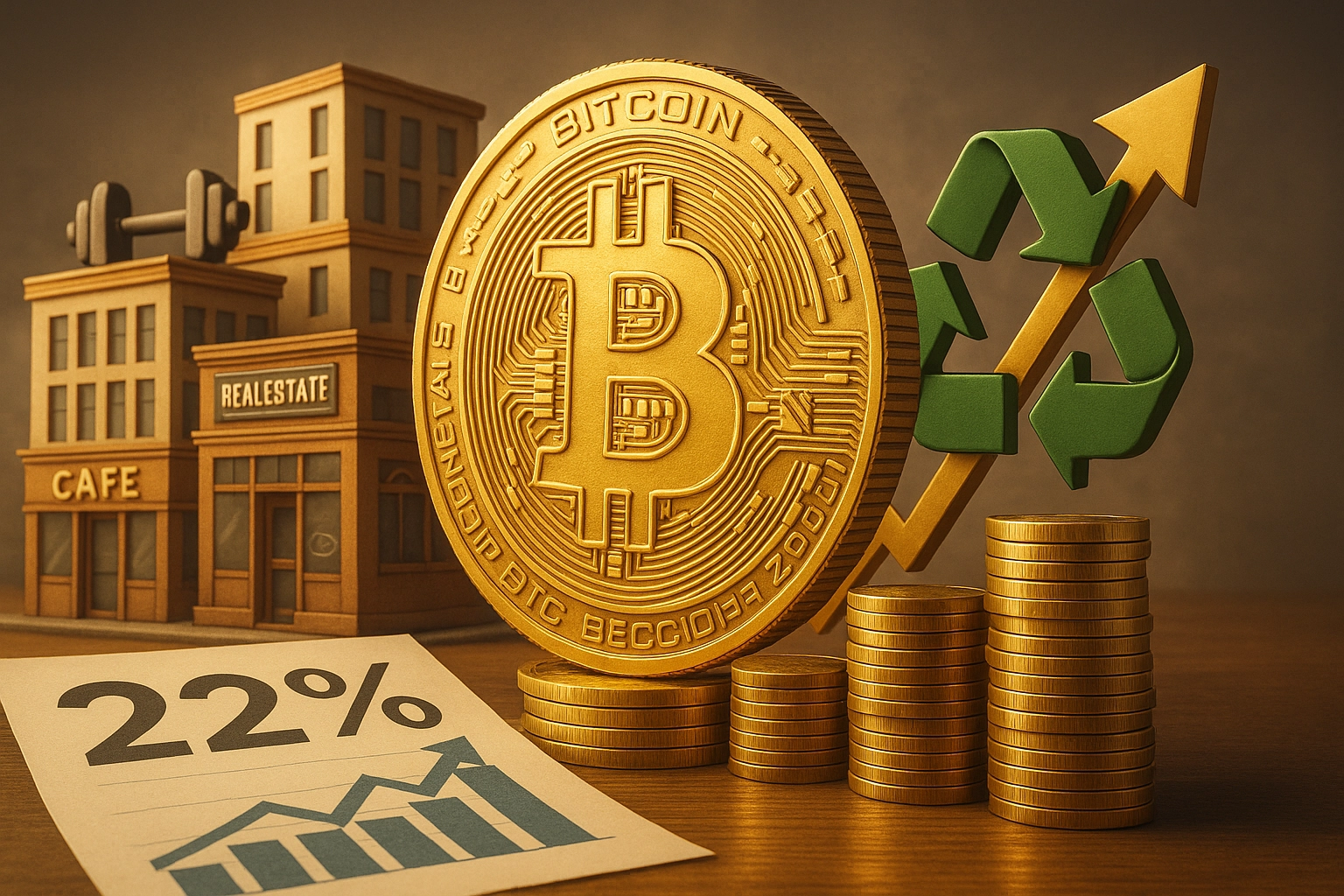
Private Firms Reinvest 22% Profits Into Bitcoin - 2025
Private Businesses Are Investing 22% of Profits Into Bitcoin, New Data Shows
Private companies across various industries are quietly reinvesting an average of 22% of their profits into Bitcoin, according to new research from financial services firm River. This trend signals a significant shift in how traditional businesses view cryptocurrency as part of their financial strategy.
Real Estate Firms Lead Bitcoin Adoption Among Private Companies
Real estate companies have emerged as the biggest adopters of Bitcoin among private businesses, with nearly 15% reinvesting their profits into the cryptocurrency. Other sectors showing strong adoption include:
Hospitality sector: 8-10% profit allocation
Finance companies: 8-10% profit allocation
Software firms: 8-10% profit allocation
Fitness studios
Painting companies
Roofing businesses
Religious nonprofits
Small Businesses Quietly Accumulate Significant Bitcoin Holdings
According to River research analyst Sam Baker, these conventional businesses have quietly acquired 84,000 Bitcoin throughout 2025. This substantial accumulation represents approximately 25% of the total holdings that institutional fund managers and corporate Bitcoin treasuries have built up over time.
Baker emphasized that while Bitcoin treasury companies receive most media attention, the adoption by conventional businesses often goes unnoticed despite complementing their existing business models effectively.
Market Conditions Drive Widespread Bitcoin Adoption
Several factors have created ideal conditions for business Bitcoin adoption:
Improved Bitcoin accounting standards
Enhanced regulatory clarity
Increasing institutional acceptance
Strong bull market performance
These improvements contrast sharply with the 2020-2021 bull cycle, when businesses largely remained on the sidelines as Bitcoin reached $69,000 primarily through retail investor enthusiasm.
Small Companies Have Easier Path to Bitcoin Integration
River's data reveals that 75% of their business clients employ 50 people or fewer. Baker argues that smaller companies face fewer barriers to Bitcoin adoption compared to larger corporations.
Large companies with committee-based decision-making processes tend to follow established norms and avoid controversial moves. This explains why few S&P 500 companies currently hold Bitcoin in their treasuries.
Baker noted that even when CEOs or CFOs personally believe in Bitcoin's long-term value, they rarely advocate for adoption unless peer companies have already taken similar steps.
Investment Amounts Vary Significantly Among Businesses
While the average reinvestment rate stands at 22%, individual allocation strategies vary considerably:
Over 40% of businesses allocate between 1-10% of profits to Bitcoin
Only 10% invest more than half their net income into cryptocurrency
Many smaller purchases are under $10,000
Recent examples include Western Main Self Storage, a Rhode Island company that purchased just 0.088 Bitcoin worth $9,830, bringing their total holdings to 0.43 Bitcoin.
Limited Awareness Remains Major Adoption Barrier
Despite growing adoption among informed businesses, Baker highlighted that most companies aren't considering Bitcoin due to widespread misunderstandings and limited awareness.
Research supports this observation:
Only 6% of Americans know Bitcoin's supply is capped at 21 million coins
60% of Americans admit they don't understand much about cryptocurrency
Baker concluded that Bitcoin is often dismissed not because it has been properly evaluated and rejected, but because most business decision-makers lack sufficient understanding to evaluate it properly.
Bitcoin's Role in Current Bull Market
Business and institutional Bitcoin adoption has become one of the primary catalysts behind Bitcoin's bull run to $124,450 in this cycle. There have been periods where spot Bitcoin exchange-traded fund issuers acquired 10 times more Bitcoin than miners could produce, creating significant upward price pressure.
This institutional-driven growth represents a fundamental shift from previous market cycles and suggests a maturing cryptocurrency ecosystem where businesses increasingly view Bitcoin as a legitimate treasury asset and profit diversification tool.
For more Crypto, Web3, Blockchain & AI news visit : www.metamoonmedia.com