
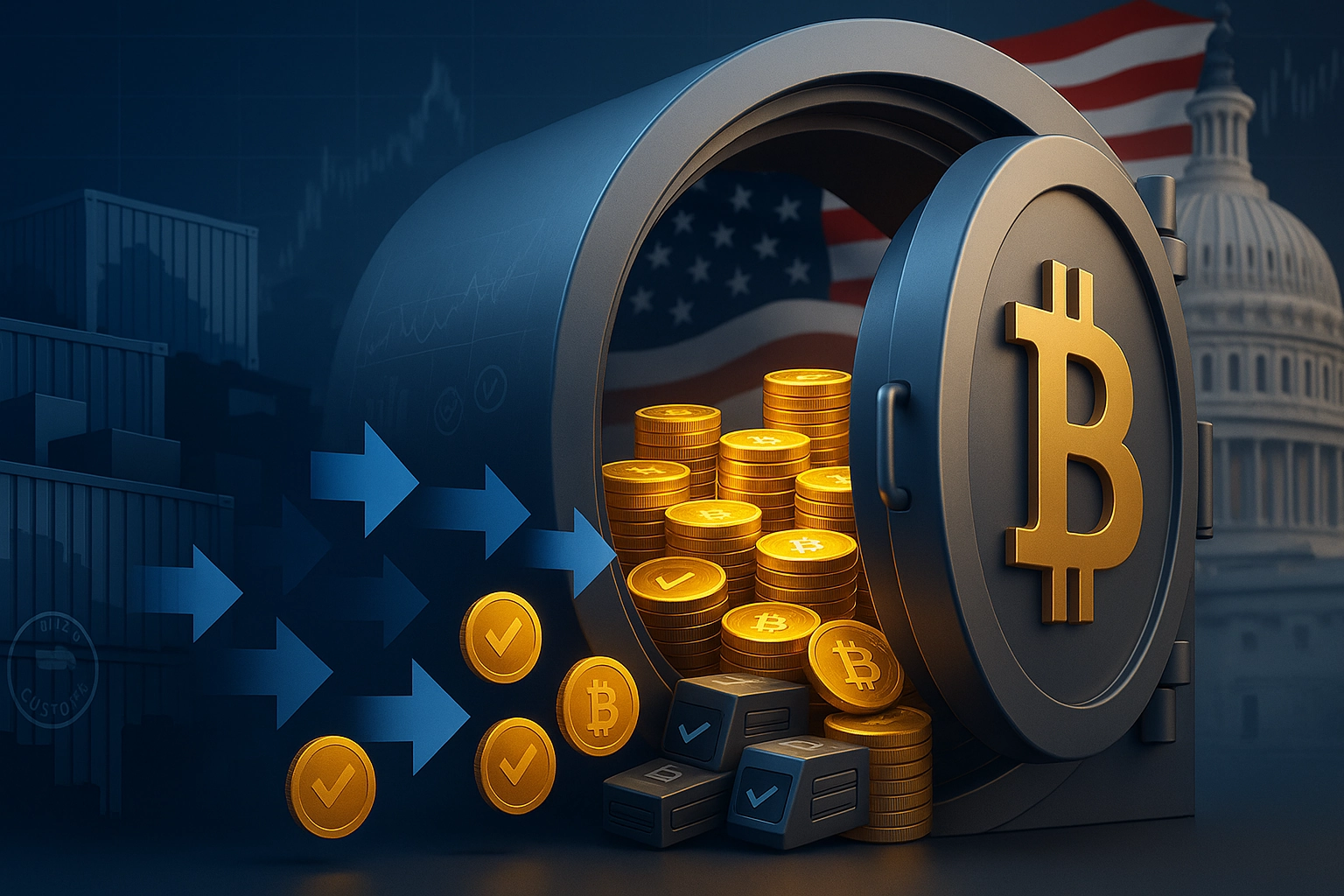
US Bitcoin Reserve: Fund Through Tariff Surplus Strategy
US Bitcoin Strategic Reserve: Funding Through Tariff Surplus Could Unlock New Pathway
Expert Proposes Using Tariff Revenue for Bitcoin Purchases
The United States government has a potential pathway to expand its Bitcoin strategic reserve by utilizing surplus revenue from trade tariffs, according to cryptocurrency expert Adam Livingston. The author of "The Bitcoin Age and The Great Harvest" has outlined a budget-neutral strategy that could help the US government acquire more Bitcoin without impacting existing federal spending priorities.
$70 Billion Tariff Surplus Presents Strategic Opportunity
Livingston's proposal focuses on redirecting a portion of the substantial tariff surplus collected by the US Treasury. Current data shows the government has collected $135.7 billion in customs duties, representing double the previous year's collection pace. This has resulted in an unallocated surplus of approximately $70 billion.
The proposed strategy involves channeling monthly tariff surplus portions into secure, cold storage Bitcoin holdings. These Bitcoin assets would remain untouched, meaning they would not be traded, staked, sold, rehypothecated, used for program funding, loan collateral, or yield generation.
Budget-Neutral Requirements Shape Bitcoin Acquisition Strategy
President Trump's executive order establishing the US Bitcoin strategic reserve includes specific stipulations regarding acquisition methods. The order mandates that additional Bitcoin purchases must utilize budget-neutral strategies, making the tariff surplus approach particularly relevant for policymakers.
This requirement has sparked discussions about various funding mechanisms that wouldn't impact existing federal budget allocations or require new government spending.
Treasury Secretary Signals Mixed Messages on Bitcoin Purchases
Recent statements from Treasury Secretary Scott Bessent have created uncertainty around the government's Bitcoin acquisition plans. Initially, Bessent indicated the government would not purchase new Bitcoin for the strategic reserve, stating that only confiscated assets would be used to build the reserve.
However, the Treasury Secretary later clarified his position, confirming that the government continues exploring budget-neutral pathways for acquiring additional Bitcoin holdings. This clarification suggests that proposals like the tariff surplus strategy remain under consideration.
Alternative Budget-Neutral Strategies Under Discussion
Beyond the tariff surplus approach, several other budget-neutral strategies have emerged for expanding the US Bitcoin strategic reserve:
Gold Holdings Revaluation Strategy
One proposed method involves revaluing the Treasury's gold holdings, which are currently priced at $42.22 per troy ounce despite gold trading at approximately $3,335 per ounce on spot markets. This revaluation could unlock significant value for Bitcoin acquisitions.
Strategic Asset Reallocation
Another approach involves reallocating existing government reserve assets. This could include selling portions of the strategic petroleum reserve or other government-held commodities to fund Bitcoin purchases.
Confiscated Asset Utilization
The government continues building its Bitcoin reserve through assets seized from criminal activities and regulatory enforcement actions, providing a steady but limited acquisition stream.
Market Implications and Strategic Considerations
The tariff surplus strategy presents several advantages for US Bitcoin reserve development:
Utilizes existing revenue streams without new spending
Maintains fiscal responsibility through budget-neutral approach
Provides consistent funding source tied to trade policy
Supports long-term strategic asset accumulation
Global Competition Drives Urgency
The discussion around US Bitcoin reserve funding comes amid growing international interest in Bitcoin strategic reserves. Other nations are exploring similar initiatives, creating competitive pressure for the US to establish a substantial Bitcoin position.
The tariff surplus strategy could provide the US with a sustainable mechanism for building a significant Bitcoin reserve while maintaining fiscal discipline and avoiding political debates around new government spending.
Implementation Timeline and Challenges
While the tariff surplus proposal offers a viable funding mechanism, implementation would require coordination between Treasury, trade, and digital asset policy teams. The strategy would need to address technical considerations around secure storage, acquisition timing, and market impact management.
The ongoing policy discussions suggest that multiple funding approaches may ultimately be combined to achieve the strategic reserve objectives outlined in the presidential executive order.
Conclusion
The tariff surplus funding strategy represents a practical approach to expanding the US Bitcoin strategic reserve within existing budget constraints. As Treasury officials continue exploring budget-neutral pathways, this proposal could play a significant role in shaping America's digital asset reserves and maintaining competitiveness in the evolving global financial landscape.
For more Crypto, Web3, Blockchain & AI news visit : www.metamoonmedia.com