

Bitcoin vs Gold: Investment Comparison Guide 2025
Bitcoin vs Gold: Complete Investment Comparison Guide 2025
Introduction
The investment landscape has evolved dramatically, with Bitcoin emerging as a digital alternative to traditional safe-haven assets like gold. As markets become increasingly volatile, investors are weighing the merits of both assets for portfolio diversification and wealth preservation. This comprehensive comparison examines Bitcoin and gold across multiple dimensions to help you make informed investment decisions.
Key Investment Characteristics: Bitcoin vs Gold
Bitcoin: Digital Store of Value
Bitcoin operates as a decentralized digital currency built on blockchain technology. Its value stems from network adoption, investor confidence, and a mathematically capped supply of 21 million coins. Unlike traditional investments, Bitcoin generates no cash flows or dividends, with returns coming solely from price appreciation.
The cryptocurrency trades 24/7 across global exchanges, offering high liquidity but experiencing significant volatility. Bitcoin's price movements often correlate with risk assets, behaving more like a growth stock than a stable store of value during market stress.
Gold: Traditional Safe Haven Asset
Gold represents thousands of years of proven value storage, backed by physical scarcity and universal acceptance. Central banks worldwide hold gold reserves, with many increasing their holdings to diversify away from fiat currencies.
The precious metal offers moderate volatility compared to Bitcoin and typically performs well during economic uncertainty. Gold trades during market hours through various instruments including ETFs, futures, and physical holdings, providing multiple access points for investors.
Performance Analysis and Market Behavior
Bitcoin Price Trends
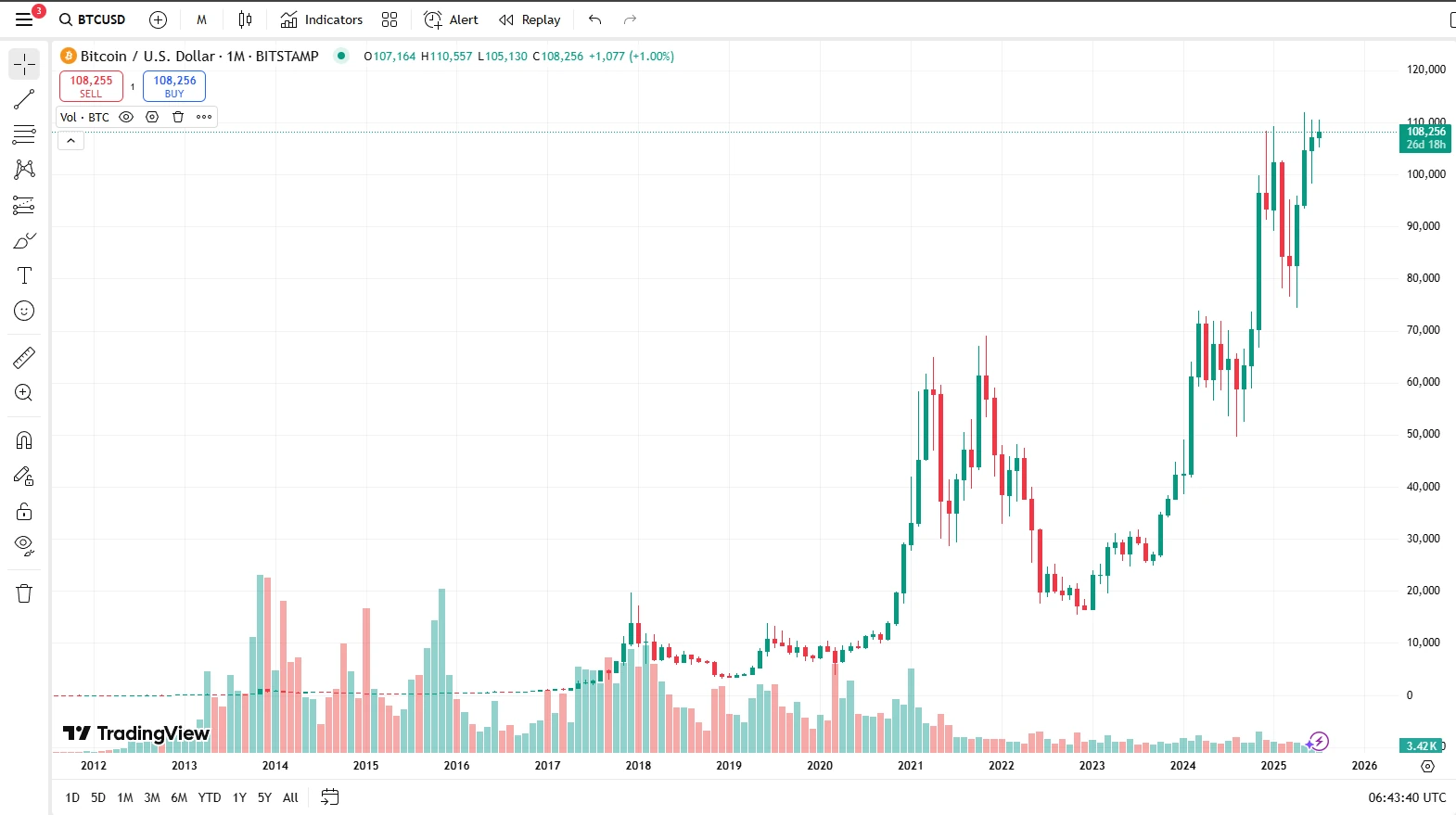
Bitcoin demonstrated remarkable growth from approximately $16,000 in January 2023 to over $100,000 by January 2025. This rally was driven by institutional adoption, spot ETF approvals, and improving macroeconomic conditions.
However, Bitcoin's volatility remains extreme. The cryptocurrency experienced a significant correction in April 2025, falling over 7% within 24 hours following global tariff announcements. This demonstrated Bitcoin's continued sensitivity to macroeconomic events and policy decisions.
Gold Market Performance
Gold reached historic highs in 2025, surpassing $3,000 per ounce for the first time in March. The precious metal achieved 18 record highs throughout the year, driven by safe-haven demand and geopolitical tensions.
Gold's performance during the April 2025 market turbulence showed its defensive characteristics, with the metal maintaining strength while other risk assets declined. This reinforced gold's role as a portfolio hedge during uncertain times.
Investment Advantages and Risks
Bitcoin Investment Considerations
Advantages:
Potential for exponential returns due to limited supply
24/7 global accessibility and liquidity
Growing institutional adoption and acceptance
Hedge against currency debasement and inflation
Digital native asset with no storage costs
Risks:
Extreme price volatility and potential for significant losses
Regulatory uncertainty across different jurisdictions
Environmental concerns regarding energy consumption
No intrinsic value or cash flow generation
Technology and security risks
Gold Investment Considerations
Advantages:
Proven store of value over millennia
Low correlation with equity markets
Central bank and institutional support
Tangible asset with intrinsic value
Lower volatility compared to Bitcoin
Risks:
No yield or income generation
Storage and insurance costs for physical holdings
Potential for long periods of underperformance
Regulatory risks in some jurisdictions
Competition from digital alternatives
Portfolio Allocation Strategies
Risk Tolerance Assessment
Conservative investors may prefer gold's stability and proven track record, while those comfortable with higher risk might allocate more heavily to Bitcoin for its growth potential. Most financial advisors recommend limiting alternative assets to 5-10% of total portfolio value.
Diversification Benefits
Both assets can serve as portfolio diversifiers, but they respond differently to market conditions. Bitcoin may provide upside during risk-on environments, while gold typically performs better during crisis periods.
Time Horizon Considerations
Long-term investors might benefit from holding both assets, as their performance cycles often differ. Bitcoin's volatility may smooth out over extended periods, while gold provides steady value preservation.
Macroeconomic Factors and Market Correlations
Interest Rate Sensitivity
Both Bitcoin and gold are sensitive to interest rate changes, though they react differently. Rising rates typically pressure both assets, as they compete with yield-bearing alternatives. However, real interest rates (adjusted for inflation) are particularly important for gold performance.
Inflation Hedge Properties
Gold has historically served as an inflation hedge, though its effectiveness varies by time period. Bitcoin's inflation hedge properties remain unproven, with mixed performance during inflationary periods.
Currency and Monetary Policy Impact
Both assets benefit from currency debasement concerns and expansionary monetary policies. However, Bitcoin's correlation with risk assets can override these factors during market stress.
Future Outlook and Investment Implications
Bitcoin's Evolution
Bitcoin's role in the financial system continues to evolve, with growing institutional adoption and regulatory clarity. The cryptocurrency may gradually mature into a more stable asset class, potentially reducing volatility while maintaining long-term growth potential.
Gold's Enduring Appeal
Gold's fundamental appeal as a store of value remains intact, supported by central bank purchases and geopolitical uncertainty. The precious metal's role as portfolio insurance continues to attract investors seeking stability.
Technology and Innovation Impact
Blockchain technology and digital asset infrastructure continue advancing, potentially enhancing Bitcoin's utility and accessibility. Meanwhile, gold benefits from improved trading platforms and storage solutions.
Investment Decision Framework
Matching Assets to Objectives
Choose Bitcoin for growth potential and high-risk tolerance, gold for stability and wealth preservation. Consider your investment timeline, risk capacity, and overall portfolio composition when making allocation decisions.
Market Timing Considerations
Neither asset should be viewed as a short-term trading vehicle for most investors. Dollar-cost averaging into both assets can help smooth out volatility and reduce timing risks.
Professional Guidance
Consult with financial advisors to determine appropriate allocations based on your specific circumstances, risk tolerance, and investment goals. Professional guidance becomes particularly important when dealing with volatile assets like Bitcoin.
Conclusion
Bitcoin and gold each offer unique advantages for modern portfolios, serving different roles in wealth preservation and growth strategies. Bitcoin provides potential for significant returns with corresponding risks, while gold offers time-tested stability and crisis protection.
Rather than viewing these assets as competing alternatives, consider them complementary portfolio components. A balanced approach that includes both assets may provide superior risk-adjusted returns and enhanced portfolio diversification.
The optimal allocation depends on individual circumstances, risk tolerance, and investment objectives. As both assets continue evolving within the global financial system, staying informed about market developments and regulatory changes remains crucial for investment success.
Frequently Asked Questions
Is Bitcoin better than gold for inflation protection?
Bitcoin's inflation hedge properties remain unproven, with mixed performance during inflationary periods. Gold has a longer track record as an inflation hedge, though its effectiveness varies by time period and economic conditions.
Can Bitcoin and gold coexist in the same portfolio?
Yes, Bitcoin and gold can complement each other in diversified portfolios. They often respond differently to market conditions, providing enhanced diversification benefits when held together.
How do interest rates affect Bitcoin and gold prices?
Both assets are sensitive to interest rate changes, particularly real interest rates. Rising rates typically pressure both assets as they compete with yield-bearing alternatives, though their responses may differ based on market conditions.
What percentage of a portfolio should be allocated to Bitcoin or gold?
Most financial advisors recommend limiting alternative assets to 5-10% of total portfolio value. The specific allocation between Bitcoin and gold depends on individual risk tolerance and investment objectives.
Which asset is better for long-term wealth preservation?
Gold has a longer track record for wealth preservation, while Bitcoin offers higher growth potential with increased risk. The optimal choice depends on your risk tolerance, time horizon, and investment goals.