
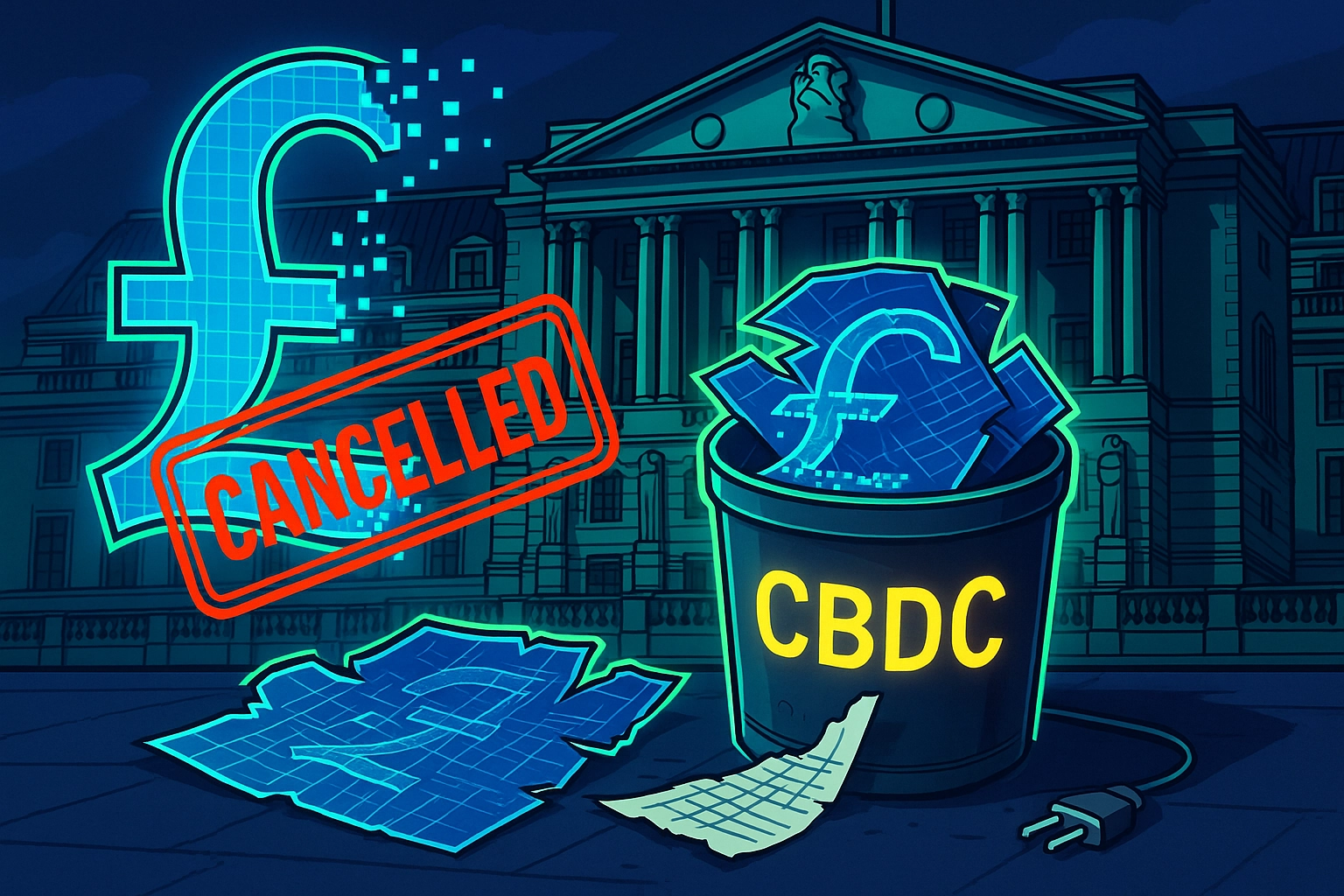
Bank of England May Cancel Digital Pound CBDC Plans
Bank of England May Cancel Digital Pound CBDC Plans
Central Bank Rethinks Digital Currency Strategy
Britain's central bank is reportedly considering abandoning its central bank digital currency plans over concerns about necessity and potential benefits. The Bank of England is reconsidering its consumer-focused digital pound amid growing skepticism from officials and stakeholders.
Governor Bailey Shows Skepticism About CBDC Need
Bank of England officials are privately encouraging commercial banks to accelerate payment innovations instead of creating a consumer CBDC. Governor Andrew Bailey stated he would need "a lot of convincing" if commercial bank innovations succeed.
Speaking to the Treasury Committee at a Parliamentary hearing, Bailey said, "I think that's a sensible place to do it. If that's a success, I question why we need to introduce a new form of money."
Shift From Previous Pro-CBDC Position
This represents a significant retreat from the Bank of England's previous position that a digital pound was "likely needed." In 2023, Bailey had stated that "the Bank of England and HM Treasury judge that it is likely a digital pound will be needed in the future."
The move reflects dwindling global support for state-backed digital currencies, marking a notable policy shift for the UK's central banking authority.
UK CBDC Development Lags Behind Other Nations
According to the Atlantic Council's CBDC tracker, the UK's digital currency remains in development phase and trails other jurisdictions in progress. No final decision has been made on whether to proceed with the project.
The digital pound initiative has attracted attention from conspiracy theory groups and faced criticism from lawmakers. A public consultation generated over 50,000 responses, with most being critical of the proposed digital currency.
Privacy and Stability Concerns Drive Opposition
Consumer privacy concerns have emerged as a major obstacle to CBDC implementation. Critics worry about potential government surveillance capabilities and the risk of destabilizing bank runs during financial crises.
Additional concerns include the possibility of foreign or Big Tech stablecoins undermining the British pound's dominance in domestic markets.
US Takes Anti-CBDC Stance
Across the Atlantic, the United States has moved in the opposite direction. The House recently passed the Anti-CBDC Surveillance State Act, designed to block the Federal Reserve from issuing or testing a CBDC without explicit congressional approval.
Republican Congresswoman Marjorie Taylor Greene raised concerns that stablecoin regulation bills could create a "backdoor" for government-issued digital currencies disguised as privately issued crypto tokens.
Global CBDC Development Status
Despite setbacks in major economies, CBDC development continues worldwide. Only three countries have officially launched CBDCs: the Bahamas, Jamaica, and Nigeria.
According to the Atlantic Council's tracker, 49 countries are currently in the pilot phase, 20 in development, and 36 in research phases of CBDC projects.
What This Means for Digital Currency Future
The Bank of England's potential reversal on CBDCs signals a broader reassessment of digital currency necessity among major central banks. As commercial payment innovations advance, central banks may find less justification for introducing new forms of government-backed digital money.
This development could influence other central banks' CBDC strategies, particularly in developed economies where existing payment systems already provide efficient digital transaction capabilities.
The UK's cautious approach reflects growing recognition that CBDCs may not offer sufficient benefits to justify their implementation costs and associated risks to financial stability and consumer privacy.
For more Crypto, Web3, Blockchain & AI news visit : www.metamoonmedia.com