
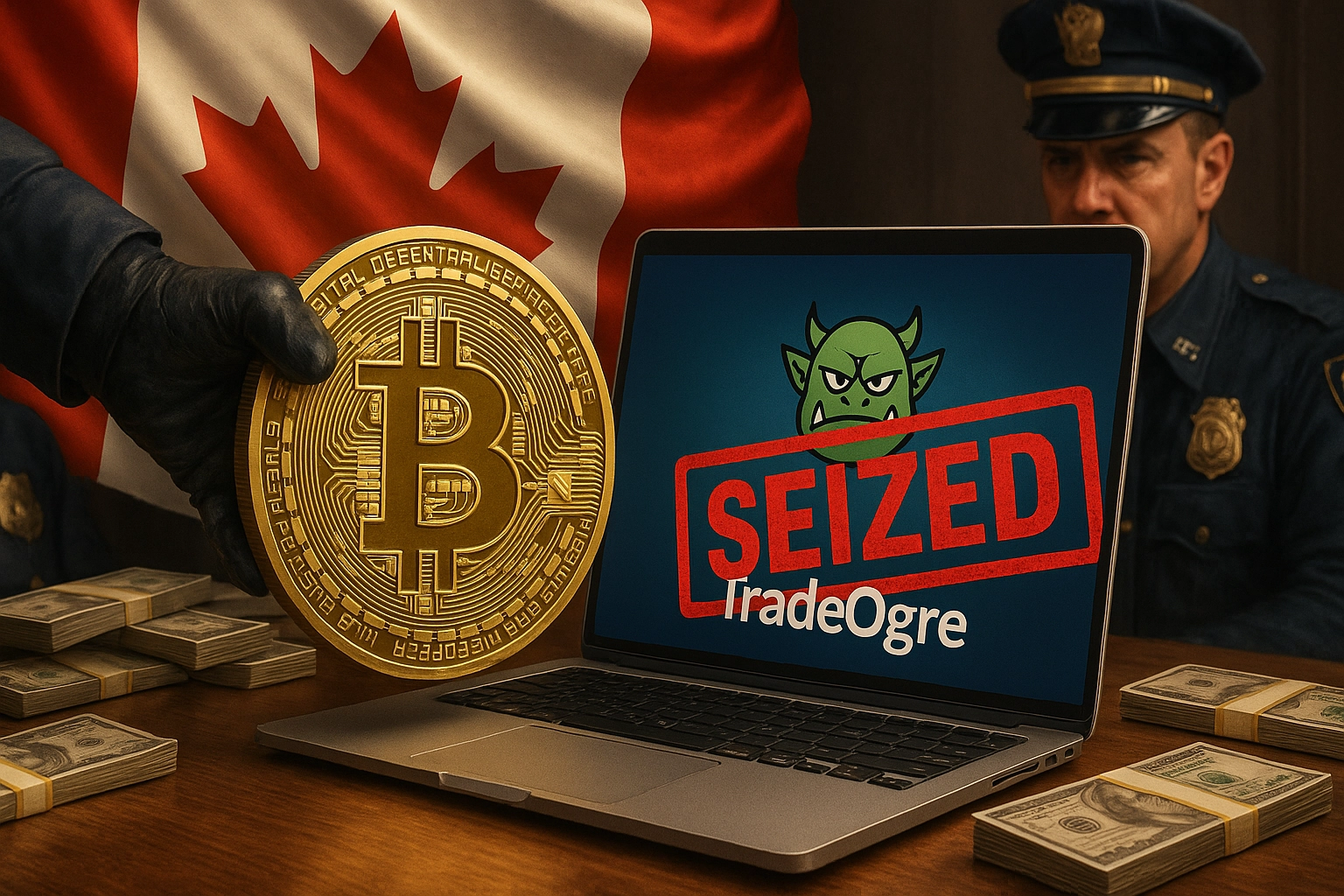
Canada Seizes TradeOgre Exchange: Users Slam $40M Theft
Canada Seizes TradeOgre Exchange: Users Slam $40M Theft
The Royal Canadian Mounted Police has executed Canada's largest cryptocurrency seizure, confiscating over $40.6 million from TradeOgre exchange. The controversial action has sparked fierce criticism from users who claim authorities are punishing innocent traders.
RCMP Executes Record-Breaking Crypto Seizure
The RCMP announced Thursday it seized 56 million Canadian dollars worth of cryptocurrency from TradeOgre, marking the largest crypto seizure in Canadian history. The centralized exchange operated without Know Your Customer requirements, allowing users to trade anonymously.
Law enforcement claimed TradeOgre failed to register with Canada's financial intelligence agency and facilitated criminal money laundering activities. The platform had been offline for months before the official seizure announcement.
First Crypto Exchange Dismantled by Canadian Police
This marks the first time Canadian law enforcement has completely dismantled a cryptocurrency exchange platform. The RCMP's money laundering investigations team began investigating TradeOgre in June 2024 following a tip from Europol.
Authorities alleged the platform violated regulations by:
Failing to register as a money services business with FINTRAC
Not implementing user identification protocols
Processing transactions from suspected criminal sources
The RCMP stated that investigators believe the majority of funds transacted on TradeOgre originated from criminal activities. The agency emphasized that platforms without user identification requirements commonly attract criminal organizations seeking to launder money.
Privacy-Focused Exchange Served Niche Market
TradeOgre gained popularity for listing privacy-focused cryptocurrencies and low-value altcoins that larger exchanges typically rejected. The platform's no-KYC policy attracted users seeking financial privacy and access to niche digital assets.
The exchange's website went offline on July 30, with its social media accounts falling silent since May. Users had been monitoring for signs of activity before the official seizure announcement.
Crypto Community Denounces Government Action
The seizure has generated significant backlash from cryptocurrency users and privacy advocates who argue the action unfairly targets legitimate users.
MetaMask security lead Taylor Monahan challenged the RCMP's assumptions, stating that she and her associates are not criminals despite using non-KYC exchanges. She demanded evidence and recourse for innocent parties whose funds were seized without notification or due process.
Firo co-founder Reuben Yap questioned the government's authority to forfeit user balances solely based on lack of KYC compliance, calling the action "theft from many innocent users."
Privacy Rights Versus Regulatory Compliance
The controversy highlights the ongoing tension between financial privacy rights and regulatory oversight. Many decentralized exchanges operate without KYC requirements, implementing alternative measures like blockchain analytics to prevent illicit activities.
Privacy advocates argue that using non-KYC exchanges is not illegal in Canada and that legitimate users should not be penalized for seeking financial privacy. The case raises questions about proportional enforcement and due process in cryptocurrency regulation.
Asset Recovery Process Faces Significant Challenges
Innocent TradeOgre users may eventually recover their seized funds, but the process will likely be complex and lengthy. Recovery procedures typically involve strict deadlines and extensive documentation requirements.
The 2017 BTC-e exchange seizure by US authorities provides a precedent for the procedural complexity involved. Claimants faced immense burdens of proof, requiring extensive blockchain and off-chain documentation to verify holdings.
Additional challenges include:
Strict filing deadlines with severe penalties for mistakes
Complex documentation requirements
Asset valuation at seizure date, not current market value
Lengthy legal proceedings
Even successful claimants often receive only a fraction of their assets' current worth due to valuation methodologies and administrative costs.
Ongoing Investigation and Future Implications
The RCMP confirmed its investigation continues, with analysts examining transaction data from the platform. Additional charges may follow as the investigation progresses.
This case sets a significant precedent for cryptocurrency regulation enforcement in Canada. The seizure demonstrates authorities' willingness to take aggressive action against non-compliant exchanges, regardless of user impact.
The incident reinforces advocates' calls for cryptocurrency users to maintain self-custody of their digital assets rather than relying on centralized platforms. The prolonged silence from TradeOgre before the seizure highlights risks associated with centralized custody.
Regulatory Landscape Continues Evolving
The TradeOgre seizure occurs amid increasing regulatory scrutiny of cryptocurrency exchanges globally. Canadian authorities are demonstrating a more aggressive stance toward platforms that fail to comply with anti-money laundering regulations.
This enforcement action may prompt other non-KYC exchanges to reassess their compliance strategies or exit Canadian markets. The incident also highlights the importance of regulatory clarity and proportional enforcement in the evolving cryptocurrency landscape.
The case underscores the ongoing debate between financial privacy rights and regulatory oversight, with significant implications for both legitimate users and the broader cryptocurrency ecosystem.
For more Crypto, Web3, Blockchain & AI news visit : www.metamoonmedia.com