
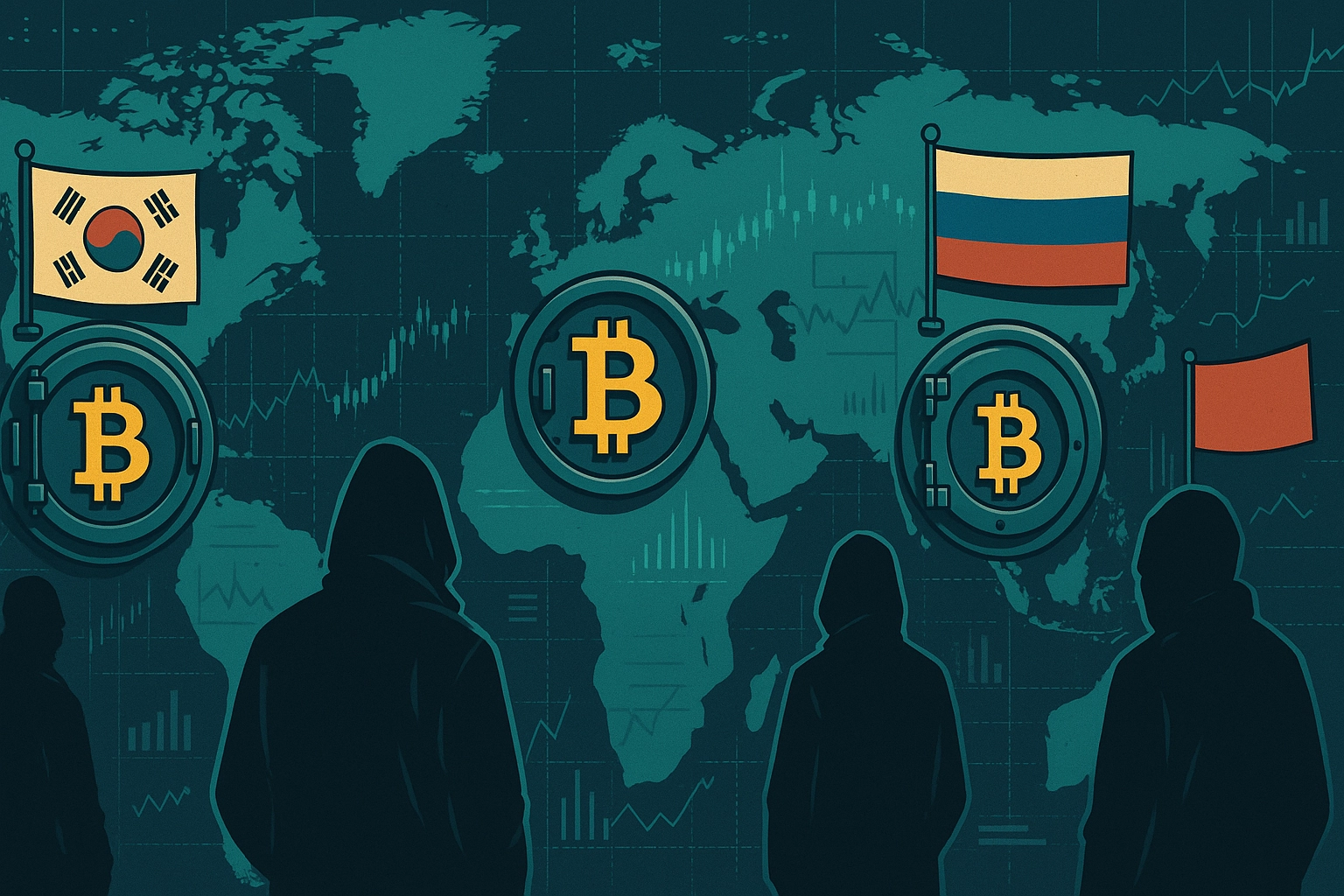
Countries Secretly Holding Bitcoin: Hidden Reserves 2025
Countries Secretly Holding Bitcoin: The Hidden Global Reserves in 2025
Government Bitcoin Holdings Reach Record Levels
Approximately 463,000 Bitcoin, representing 2.3% of the total supply, is currently held by governments worldwide according to blockchain data and legal disclosures. This massive accumulation, worth tens of billions of dollars, demonstrates Bitcoin's growing role in national asset strategies and sovereign wealth management.
While the United States and China dominate public discussions about government Bitcoin holdings, numerous other countries are quietly building substantial Bitcoin reserves through mining operations, legal seizures, and strategic acquisitions. These hidden accumulations are reshaping the global cryptocurrency landscape in ways most people don't realize.
The Established Leaders: US and China
United States Strategic Bitcoin Reserve
The US government leads all nations with nearly 200,000 Bitcoin worth between $18-22 billion as of early 2025. These holdings primarily result from high-profile seizures including the Silk Road marketplace, dark web operations, and ransomware takedowns.
In March 2025, President Donald Trump signed an executive order creating a Strategic Bitcoin Reserve, consolidating all seized Bitcoin under federal control. This marked a fundamental shift from previous policies of auctioning confiscated cryptocurrency, signaling Bitcoin's new role in American geopolitical strategy.
China's Mysterious Bitcoin Reserves
China ranks second in government Bitcoin holdings, though exact amounts remain unclear. In 2019, Chinese authorities shut down the PlusToken scam and confiscated over 190,000 Bitcoin in one of history's largest crypto seizures.
The fate of these funds remains largely unknown. Some blockchain analysts suggest portions were quietly liquidated, while others believe the coins remain dormant in government cold storage. Despite banning domestic trading and mining, China continues playing a key role in Bitcoin geopolitics.
The Hidden Accumulators: Countries Building Secret Bitcoin Reserves
Bhutan: The Hydropower Mining Powerhouse
Bhutan has quietly assembled one of the world's largest nation-state Bitcoin reserves, with few outside the crypto space taking notice. Starting in 2019, the country's sovereign investment fund began mining Bitcoin using vast hydropower capacity.
By 2025, Bhutan mined between 12,000-13,000 Bitcoin worth $1.1-1.3 billion. For a country with just over $3 billion GDP, these Bitcoin holdings represent 30-40% of the national economy - the highest percentage globally.
Bhutan's strategy stands out for several reasons. The operation runs on 100% renewable hydropower, avoiding environmental concerns. Rather than exporting electricity at low prices, Bhutan transforms energy into valuable crypto assets. The entire effort coordinates through Druk Holding & Investments as part of long-term national development planning.
United Kingdom: Unexpected Major Holder
The UK rarely appears in Bitcoin ownership discussions, but recent seizures placed it among the top holders. In 2021, British authorities seized approximately 61,000 Bitcoin during a money laundering investigation linked to a Chinese fraud ring operating through UK shell companies.
At current prices, this haul is worth around 5 billion British pounds. The Crown Prosecution Service proposed retaining the Bitcoin rather than liquidating it, potentially establishing one of the world's most unexpected sovereign Bitcoin holdings. Whether Britain becomes a long-term custodian or sells its holdings, it's already a major stakeholder in crypto geopolitics.
Ukraine: Digital War Chest Strategy
Since the 2022 war with Russia began, Ukraine became one of the first examples of necessity-driven Bitcoin adoption. The country used cryptocurrency as a large-scale, borderless fundraising tool for national defense.
In the conflict's first year, Ukraine received over $70 million in Bitcoin donations from individuals, organizations, and exchanges worldwide. These funds deployed rapidly for military equipment, humanitarian relief, infrastructure repair, and emergency logistics.
By mid-2025, government Bitcoin holdings dropped to roughly 186 Bitcoin, showing coins were spent rather than stockpiled. Ukraine's strategy was reactive - using crypto assets for real-time wartime capital rather than reserve building.
El Salvador: Legal Tender Pioneer
El Salvador became the first nation declaring Bitcoin legal tender in 2021. President Nayib Bukele positioned the decision as a path to financial sovereignty and broader inclusion in a country where most people lacked banking access.
By January 2025, the government accumulated over 6,000 Bitcoin through the "1 Bitcoin per day" initiative. The country launched state-backed Volcano Bonds, built geothermal-powered mining facilities, and opened a National Bitcoin Office to coordinate strategy.
However, amid International Monetary Fund pressure, El Salvador agreed to repeal Bitcoin's legal tender status in early 2025 for a $1.4 billion bailout. Despite this change, government Bitcoin purchases continue, and the state still views Bitcoin as a long-term asset.
Iran: Silent State Mining Operations
Iran rarely appears on Bitcoin ownership lists, but its influence grows through a legal-mining-for-reserves model. Since 2019, Iran treated Bitcoin mining as a state-regulated industry requiring licensed miners to sell mined Bitcoin directly to the Central Bank.
This approach allows Iran to bypass sanctions and pay for imports without declaring wallet addresses. Estimates once placed Iran's mining activity at 4-7% of the global hash rate, likely feeding into hidden government Bitcoin reserves through the state-run Shaparak payments network.
Rumored Players and Emerging Markets
United Arab Emirates: The 420,000 Bitcoin Mystery
Crypto circles have long speculated that the UAE may control up to 420,000 Bitcoin, which would make it the world's largest holder if true. These figures typically link to enforcement actions against fraudulent investment schemes and high-profile Ponzi operations.
However, this remains highly debated with no government records, public wallet addresses, or official acknowledgments. Blockchain analysts have failed to verify these claims, though the UAE's name persistently appears in sovereign Bitcoin wealth discussions.
Bulgaria: The Vanishing Bitcoin Fortune
Bulgaria's Bitcoin story dates to 2017 when authorities reportedly seized over 200,000 Bitcoin in a cybercrime network raid. This haul briefly made Bulgaria one of the most Bitcoin-rich governments globally.
Over time, clarity faded with contradictory official statements. Some reports claim the coins were sold, others that they never existed in government wallets. A 2023 Freedom of Information request yielded denial of any current state Bitcoin holdings, though the tale persists as a case study in Bitcoin ownership rumors.
Smaller Government Holdings Worldwide
Several smaller nations maintain documented but modest Bitcoin reserves, typically from legal seizures rather than strategic policy. Finland holds around 90 Bitcoin from criminal investigations, Georgia possesses approximately 66 Bitcoin from court actions, and Venezuela is estimated to have roughly 240 Bitcoin possibly linked to Petro-related activity.
While small globally, these holdings reflect how even minor players are being drawn into the crypto reserve race as Bitcoin becomes increasingly mainstream in government portfolios.
Why Secret Bitcoin Accumulation Matters
Governments don't need press releases to enter the Bitcoin game. Some loudly declare intentions while others mine silently, regulate quietly, or build holdings through indirect means. The motivations vary, but the pattern is increasingly familiar - silent Bitcoin accumulation by countries is rising.
For some nations, Bitcoin provides strategic diversification as digital gold that's scarce, borderless, and disconnected from central bank policies. It's especially attractive to countries seeking inflation hedges or dollar reserve diversification.
In Bhutan, mining transforms surplus renewable energy into sovereign capital. In Iran, Bitcoin bypasses global sanctions to fund imports. Even in the US, government Bitcoin wallets once used for asset liquidation now serve a federally managed Strategic Bitcoin Reserve.
This quiet movement faces challenges including high volatility, rare transparency, and geopolitical pressure from traditional financial institutions that could push countries to rethink or conceal strategies.
The Future of Government Bitcoin Holdings
Nations holding Bitcoin are no longer outliers in global finance. Whether accumulation is public or discreet, these countries are shaping a new layer of economic strategy where Bitcoin serves as a tool of the state.
The trend toward government Bitcoin adoption continues accelerating as more countries recognize cryptocurrency's potential for monetary sovereignty, sanctions resistance, and portfolio diversification. From Himalayan kingdoms to established democracies, the global Bitcoin ownership map is expanding beyond traditional expectations.
As blockchain technology matures and Bitcoin's role in international finance solidifies, expect more governments to quietly enter the space - whether through mining operations, strategic purchases, or legal seizures. The question isn't whether more countries will accumulate Bitcoin, but how transparent they'll be about their growing digital asset reserves.
For more Crypto, Web3, Blockchain & AI news visit : www.metamoonmedia.com