
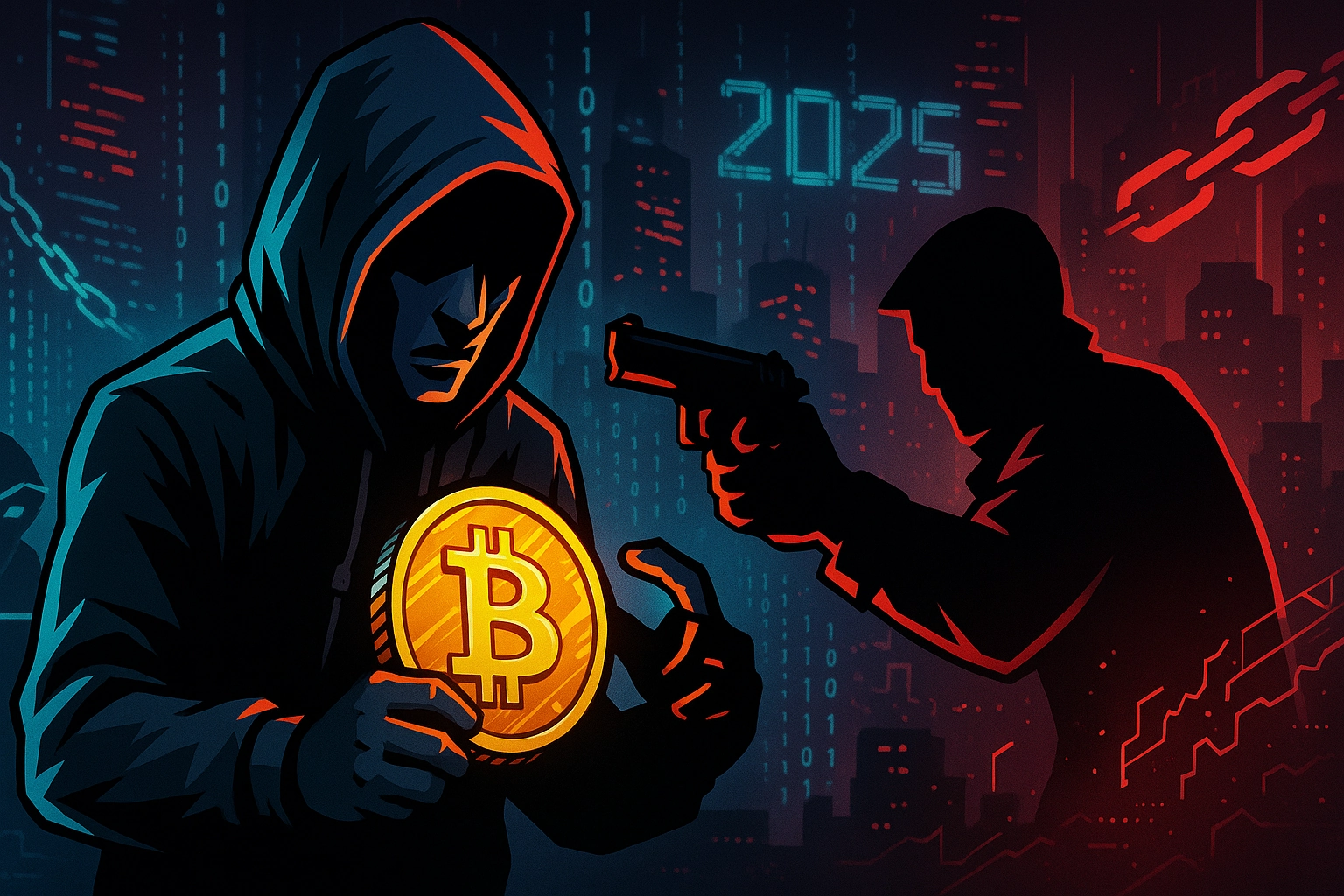
Crypto Crime Surge 2025: $2.17B Stolen, Violence Rising
Cryptocurrency Crime Reaches Record Highs in 2025 With $2.17 Billion Stolen
The cryptocurrency industry faces an unprecedented crime wave in 2025, with stolen funds already exceeding $2.17 billion in the first half of the year alone. This staggering figure surpasses the entire amount stolen throughout 2024, positioning 2025 as potentially the worst year on record for crypto-related theft.
Accelerating Theft Timeline Sets Alarming Precedent
New data from blockchain analytics firm Chainalysis reveals a disturbing acceleration in cryptocurrency theft patterns. While 2022 previously held the record for total stolen value, it took 214 days to accumulate $2 billion in stolen funds. In stark contrast, 2025 reached similar levels in just 142 days, representing a 34% faster timeline.
By the end of June 2025, the year-to-date stolen value was 17% higher than the comparable period in 2022. If current trends continue, analysts predict that stolen funds from crypto services alone could exceed $4.3 billion by year-end, posing significant threats to ecosystem security and investor confidence.
North Korean Hackers Drive Majority of Stolen Funds
The most significant factor driving this surge is the $1.5 billion Bybit exchange hack, attributed to North Korea's notorious Lazarus Group. This single breach accounts for approximately 69% of all funds stolen from cryptocurrency services in 2025, highlighting the sophisticated nature of state-sponsored crypto attacks.
North Korean cryptocurrency operations have become increasingly central to the regime's sanctions evasion strategies. Known DPRK-related losses totaled $1.3 billion in 2024, making 2025 already their most successful year to date with still months remaining.
Personal Wallet Compromises Surge to 23% of Total Thefts
Beyond large-scale exchange breaches, attackers have shifted focus toward individual users, with personal wallet compromises now representing 23.35% of total stolen funds year-to-date. This represents a significant increase in direct targeting of retail cryptocurrency holders.
Three key trends emerge from personal wallet breaches:
Bitcoin theft accounts for a disproportionate share of stolen value, with the average loss from compromised Bitcoin wallets growing over time. This suggests attackers are specifically targeting higher-value Bitcoin holdings rather than smaller retail accounts.
The number of victims on non-Bitcoin and non-EVM chains like Solana has increased substantially, indicating that threat actors are expanding their expertise beyond traditional Bitcoin and Ethereum targets.
While Bitcoin holders face lower probability of being targeted compared to other cryptocurrency holders, when breaches do occur, the financial losses tend to be more substantial.
Regional Crime Patterns Reveal Geographic Vulnerabilities
Geographic analysis reveals concerning patterns in cryptocurrency crime distribution. North America leads in both Bitcoin and altcoin thefts, while Europe dominates in Ethereum and stablecoin losses. The Asia-Pacific region ranks second for total Bitcoin stolen and third for Ethereum theft.
Countries with the highest victim counts include the United States, Germany, Russia, Canada, Japan, Indonesia, and South Korea. Meanwhile, Eastern Europe, the Middle East and North Africa, and Central Asia experienced the most rapid growth in victim totals from the first half of 2024 to the first half of 2025.
Physical Violence Against Crypto Holders Escalates
A particularly disturbing trend involves the rise of "wrench attacks" against cryptocurrency holders. These attacks involve using physical violence or threats to force victims to reveal private keys or transfer assets, bypassing digital security measures by targeting individuals directly.
Analysis reveals a clear correlation between these violent incidents and Bitcoin price movements. The perception of future price increases appears to trigger additional opportunistic physical attacks against known crypto holders, creating a dangerous feedback loop between market performance and personal safety risks.
2025 Violence Projections Double Previous Records
Current trends suggest 2025 will experience significantly higher numbers of physical attacks against crypto holders, potentially double the next highest year on record. Crime underreporting likely conceals the true extent of the problem, meaning actual violence levels may be even higher than documented cases indicate.
The correlation between Bitcoin price appreciation and physical attacks creates additional security considerations for cryptocurrency investors, particularly those with publicly known holdings or high-profile involvement in the crypto ecosystem.
Security Infrastructure Challenges Mount
The surge in cryptocurrency thefts represents both immediate threats to ecosystem participants and long-term challenges for the industry's security infrastructure. While other forms of illicit activity have shown mixed year-over-year trends, the dramatic increase in cryptocurrency theft stands out as the dominant concern for 2025.
The combination of sophisticated state-sponsored attacks, increased targeting of individual users, and rising physical violence creates a complex security landscape that requires coordinated response from exchanges, wallet providers, law enforcement, and the broader cryptocurrency community.
Industry Response and Future Outlook
The cryptocurrency industry faces mounting pressure to address these escalating security challenges. The rapid acceleration of theft timelines, combined with the diversification of attack vectors, suggests that traditional security measures may be insufficient to protect against current threat levels.
As 2025 progresses, the industry must balance innovation and accessibility with enhanced security measures to protect both institutional and retail cryptocurrency holders. The correlation between price movements and physical violence adds an additional layer of complexity to personal security considerations for cryptocurrency investors.
The data suggests that without significant improvements in security infrastructure and user education, 2025 may indeed become the worst year on record for cryptocurrency crime, with implications extending far beyond financial losses to include personal safety risks for crypto holders worldwide.