
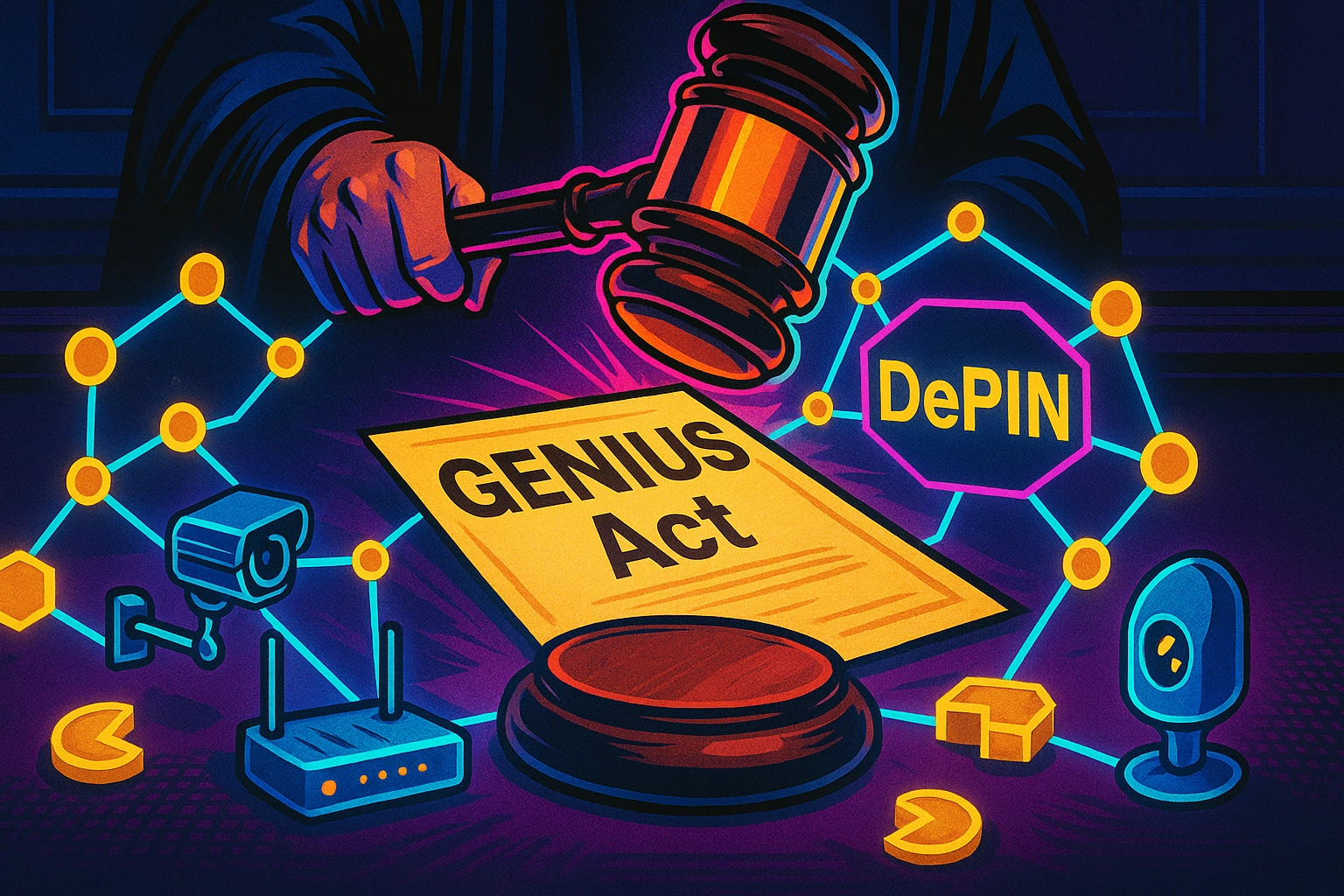
DePIN Regulation After GENIUS Act Crypto Framework
Why DePIN Networks Need Federal Regulation After GENIUS Act
The United States recently passed the GENIUS Act, marking the first major step toward national cryptocurrency regulation. This legislation focuses on stablecoins by establishing reserve requirements, mandatory audits, and authorized issuer protocols. While this represents significant progress for the crypto industry, lawmakers must address the next critical area requiring regulatory clarity.
Decentralized Physical Infrastructure Networks, commonly known as DePIN, represent one of the fastest-growing blockchain sectors yet remain without a comprehensive legal framework. Unlike speculative crypto projects, DePIN involves building tangible, real-world infrastructure through community-owned hardware networks.
Understanding DePIN Technology and Market Growth
DePIN networks operate through community contributions of physical hardware including antennas, sensors, and storage devices. Contributors earn token rewards for providing infrastructure that supports wireless connectivity, mapping services, and decentralized storage solutions.
The sector demonstrates substantial commercial viability with impressive revenue metrics. Projects like Glow have generated over $15 million in revenue, while Geodnet reports more than $1 million in annual recurring revenue. Collectively, DePIN protocols across the ecosystem produce over $250 million in total revenue.
These figures represent functioning networks delivering genuine value to users and contributors, not experimental pilot programs. However, this rapid growth occurs within a regulatory gray area that creates uncertainty for all stakeholders.
Critical Regulatory Gaps in DePIN Infrastructure
Data Collection and Privacy Standards
DePIN systems rely heavily on real-world data collection and infrastructure deployment. Unlike traditional sectors, these networks don't fit neatly into existing telecom, cloud computing, or cryptocurrency regulatory categories. This hybrid nature makes applying current laws challenging and often inadequate.
Many DePIN protocols utilize devices that gather environmental or location-specific information. Currently, no clear standards exist regarding permissible data collection practices, storage requirements, or ownership rights. This uncertainty undermines user trust and may discourage network participation.
Compensation and Tokenomics Framework
Network contributors invest personal funds to deploy hardware infrastructure without established baseline rules governing reward mechanisms. If token incentives diminish or economic models shift unexpectedly, contributors face financial risk without regulatory protections or recourse options.
Governance and Decentralization Standards
Many DePIN projects claim decentralized governance while maintaining centralized decision-making through core development teams. If these systems intend to serve public interests, they require transparent accountability mechanisms and genuine decentralized governance structures.
Developing Appropriate DePIN Regulation Framework
Learning from GENIUS Act Success
The GENIUS Act demonstrates that cryptocurrency regulation can support innovation without stifling technological advancement. This legislation provides a stable foundation for stablecoins while preserving space for continued development. DePIN networks deserve similarly thoughtful regulatory treatment.
Tailored Approach for Hybrid Technology
DePIN exists at the intersection of hardware, software, and services, requiring specialized regulatory framework. These networks shouldn't be regulated identically to decentralized finance protocols or stablecoins due to their unique infrastructure-focused nature.
Essential Regulatory Components
Effective DePIN regulation should establish clear definitions for qualifying protocols and create standards for data ownership, privacy protection, contribution tracking, and reward distribution mechanisms. Transparent governance requirements are essential for building stakeholder trust and ensuring accountability.
Economic Impact and Innovation Potential
Infrastructure Development Opportunities
DePIN technology offers significant potential for expanding infrastructure access in underserved areas, enabling smart city development, and returning control of essential systems to local communities. Achieving this scale requires legal clarity and regulatory certainty.
Investment and Growth Considerations
Without regulatory framework, investors remain hesitant to commit substantial resources to DePIN projects. Communities resist joining networks lacking user protection guarantees. Developers may pause innovation efforts due to concerns about future regulatory penalties.
Policy Recommendations for DePIN Growth
Immediate Regulatory Priorities
Congress and regulatory agencies should prioritize developing comprehensive DePIN policy framework that balances innovation support with user protection requirements. Industry builders express readiness to collaborate on creating appropriate regulatory standards.
Building on Existing Foundation
The GENIUS Act provides a strong foundation for cryptocurrency regulation that should extend to other innovative blockchain sectors. DePIN networks represent the logical next step in developing comprehensive digital asset regulation.
Future of Decentralized Infrastructure Networks
DePIN represents a fundamental shift toward community-owned and operated infrastructure systems. These networks are operational, generating substantial revenue, and demonstrating real-world utility beyond speculative trading.
The sector's continued growth depends on regulatory clarity that supports transparency, innovation, and user protection. As physical infrastructure increasingly becomes decentralized and community-driven, appropriate legal frameworks become essential for sustainable development.
With stablecoins now regulated under federal law, DePIN networks should receive similar regulatory attention. The technology is established, the market is growing, and the opportunity for American leadership in decentralized infrastructure regulation remains open.
Lawmakers have successfully demonstrated that thoughtful cryptocurrency regulation can support innovation while protecting stakeholders. Applying this same approach to DePIN networks would position the United States as a global leader in decentralized infrastructure development and regulation.
For more Crypto, Web3, Blockchain & AI news visit : www.metamoonmedia.com