
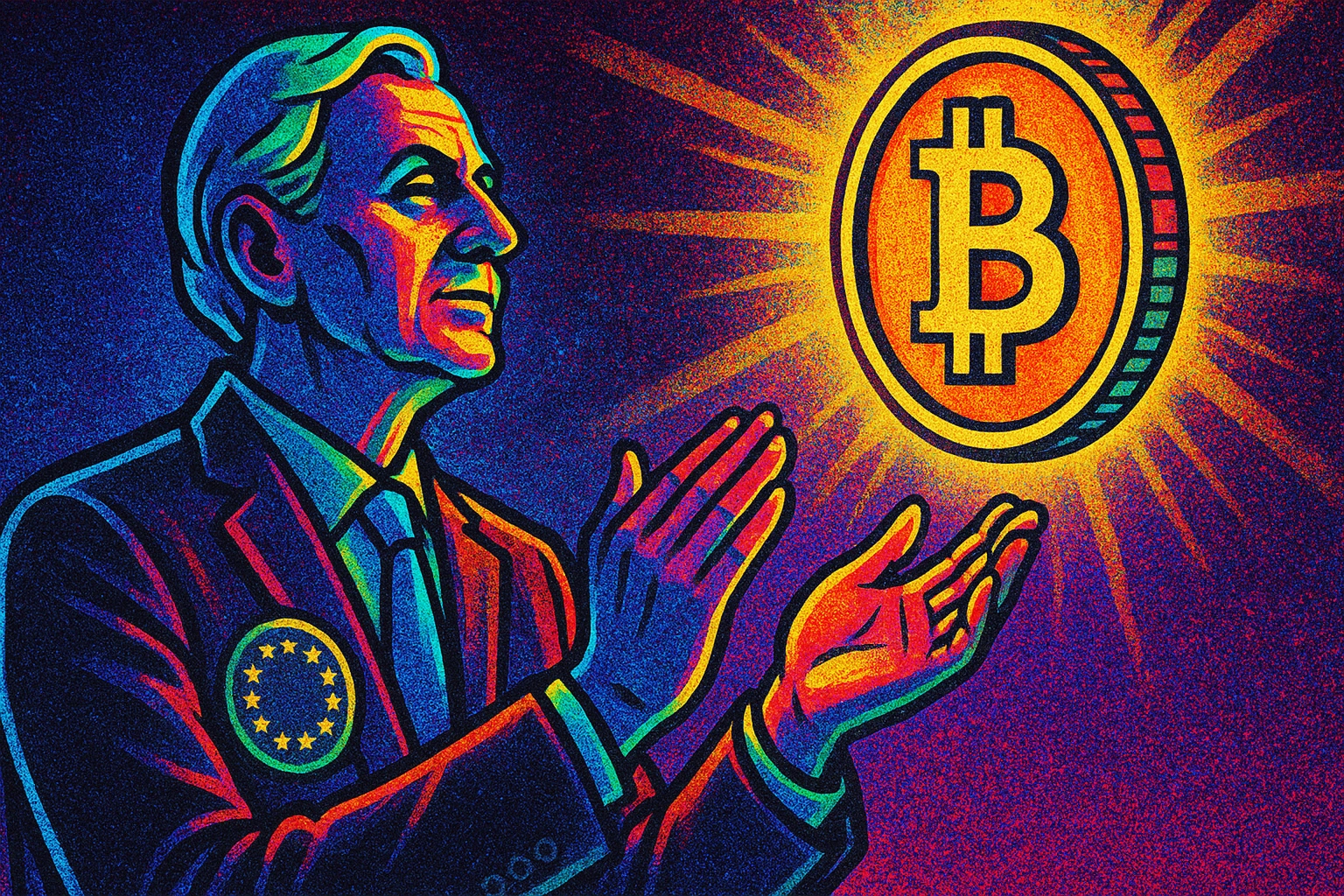
ECB Warns Stablecoins Pose Monetary Policy Risk
ECB Raises Alarm Over Stablecoin Impact on European Monetary Policy
The European Central Bank is increasingly viewing stablecoins as a potential source of macroeconomic disruption rather than merely a regulatory challenge. Dutch central bank governor Olaf Sleijpen has issued a stark warning about the growing influence of dollar-pegged stablecoins on Europe's financial system.
Stablecoins Could Trigger Financial Instability
In a recent interview, Sleijpen highlighted that dollar-backed stablecoins are rapidly approaching systemic relevance in Europe. The concern centers on what happens when these digital assets face instability. If stablecoins become unstable, their underlying assets may need to be liquidated quickly, potentially creating cascading effects across financial markets.
The Dutch central bank governor emphasized that such scenarios could impact financial stability, the broader economy, and even inflation rates across the eurozone. The rapid sale of reserve assets during a stablecoin crisis could amplify market stress and create widespread economic consequences.
ECB May Need to Rethink Monetary Policy
Sleijpen suggested that sufficiently strong shocks from the stablecoin sector could force the ECB to reconsider its monetary policy approach. However, he noted uncertainty about whether such circumstances would require interest rate increases or decreases, reflecting the complex and unprecedented nature of this potential challenge.
Explosive Growth in Stablecoin Market Raises Concerns
The stablecoin sector has experienced remarkable expansion this year, with market capitalization increasing nearly 50 percent. Current valuations place the overall stablecoin market at approximately 310 billion dollars.
Tether's USDT, the leading US dollar-pegged stablecoin, grew from 127 billion dollars in November 2024 to 183 billion dollars over the past year, representing a 44 percent increase. USDC, the second-largest stablecoin, nearly doubled from 37 billion dollars to 74 billion dollars during the same period.
Stablecoin Market Could Reach 2 Trillion Dollars by 2028
The US Department of the Treasury reported in April that evolving market dynamics could accelerate stablecoin growth significantly. Treasury projections suggest the stablecoin market could reach 2 trillion dollars by 2028.
Sleijpen warned that as dollar-pegged stablecoins continue expanding, the sector could reach a scale where fluctuations directly affect Europe's economic outlook. This growth trajectory has intensified concerns among European financial authorities about maintaining monetary sovereignty.
European Officials Express Growing Unease Over Dollar Stablecoins
ECB Executive Board member Piero Cipollone wrote in April about concerns surrounding dollar-backed stablecoin growth. He argued that launching a central bank digital currency could help preserve monetary sovereignty in the eurozone and limit the potential for foreign currency stablecoins to become common payment methods in Europe.
Italy's Minister of Economy and Finance, Giancarlo Giorgetti, expressed similar concerns, stating that stablecoins pose a more significant threat to European financial stability than trade tariffs.
Risk of Financial Contagion from Stablecoin Crisis
Sleijpen's comments underscore a pressing concern that stablecoin issuers could become channels for financial instability. If large issuers need to offload reserves at scale during a crisis, the resulting contagion could extend into liquidity conditions, asset prices, and inflation across the European economy.
Nobel Prize-winning economist Jean Tirole warned in September that governments could face multibillion-dollar bailout pressures if major stablecoins were to collapse. This adds another dimension to the systemic risk that European authorities are trying to address.
Balancing Innovation with Financial Stability
The stablecoin debate highlights the tension between embracing financial innovation and maintaining economic stability. European regulators are grappling with how to manage the rapid growth of these digital assets while protecting the eurozone from potential shocks.
As stablecoins become more deeply integrated into global financial systems, their potential to affect traditional monetary policy tools and economic stability continues to grow. The ECB and national central banks across Europe are now considering how to prepare for scenarios where stablecoin instability could require unprecedented policy responses.
The coming years will test whether regulatory frameworks can keep pace with the explosive growth of stablecoins while preventing them from becoming sources of systemic risk to the European economy.
For more Crypto, Web3, Blockchain & AI news visit : www.metamoonmedia.com