
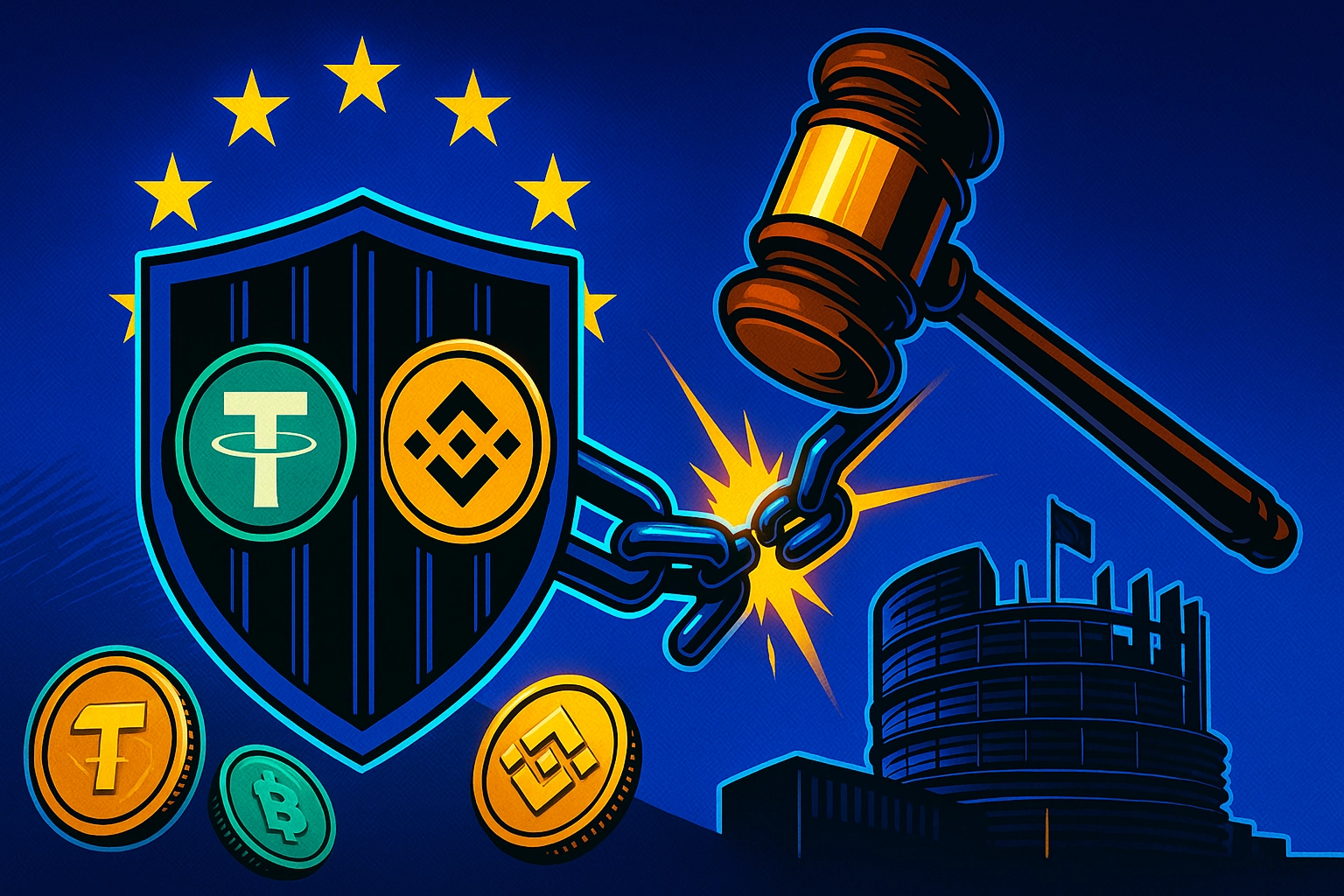
EU Approves 53 Crypto Firms Under MiCA; Tether, Binance Out
EU Authorizes 53 Crypto Firms Under MiCA Regulation as Major Players Face Delays
MiCA Licensing Milestone Reached After Six-Month Implementation
The European Union has officially authorized 53 cryptocurrency firms to operate across the European Economic Area under the Markets in Crypto-Assets regulation. This milestone comes six months after the phased rollout of MiCA began, marking a significant step in European crypto regulation.
Among the approved firms, 39 received licenses as crypto-asset service providers while 14 were authorized as stablecoin issuers. These licenses enable companies to provide services across 30 EEA countries without requiring separate approvals in each jurisdiction.
Leading Countries Drive MiCA Adoption
Stablecoin Issuers See Strong Growth
France, Germany, and the Netherlands have emerged as frontrunners in stablecoin issuance, collectively accounting for 9 of the 14 authorized issuers. Twenty fiat-backed stablecoins, primarily euro and dollar-denominated, now comply with MiCA regulations across seven European Union countries.
Germany and Netherlands Lead Service Provider Authorization
For crypto-asset service providers, Germany and the Netherlands dominate the regulatory landscape. Together, these two countries account for 23 of the 39 authorized providers, demonstrating their commitment to comprehensive crypto regulation.
Major Crypto Firms Secure MiCA Licenses
Several prominent cryptocurrency exchanges have successfully obtained MiCA authorization. Coinbase, Bitstamp, Kraken, and OKX represent the crypto-native firms that secured licenses under the new regulatory framework.
Traditional finance players have also embraced MiCA compliance. Robinhood, Trade Republic, and BBVA have joined the list of authorized firms, highlighting the growing convergence between traditional finance and digital assets.
Notable Absences Raise Regulatory Questions
Tether Faces Compliance Challenges
Despite being the issuer of the world's largest stablecoin USDT, Tether remains absent from the list of 14 authorized stablecoin issuers. The company's exclusion stems from ongoing transparency concerns and audit controversies.
Recent criticism from Consumers Research highlighted Tether's failure to provide independent audits of its reserves. The company has promised full audits since 2017 but continues to rely on attestations rather than comprehensive audits.
Tether CEO Paolo Ardoino acknowledged the challenges in securing top-tier audit partners, citing regulatory uncertainties and industry reputation concerns among major accounting firms.
Binance Struggles with European Regulatory Hurdles
Binance's absence from the approved list reflects the exchange's ongoing regulatory challenges across Europe. The platform has faced mounting scrutiny in Spain and other EU countries, leading to withdrawn license applications and ceased operations in several jurisdictions.
Throughout 2023 and early 2024, Binance withdrew from Germany, the Netherlands, and Cyprus amid regulatory pressure. The exchange has also restructured European operations, disabling copy trading and limiting unregulated stablecoins to address MiCA compliance concerns.
French authorities have launched investigations into Binance over alleged money laundering violations, further complicating the exchange's regional standing.
MiCA's Strict Compliance Requirements
The regulation demands strong governance frameworks and transparency measures from crypto firms. These requirements may contribute to delays for some major players seeking authorization.
Companies must demonstrate robust risk management, customer protection measures, and operational resilience to qualify for MiCA licenses. The regulation also mandates clear segregation of customer assets and regular reporting to supervisory authorities.
Future Outlook for European Crypto Regulation
The next regulatory checkpoint is scheduled for September 2025, when authorities will provide a nine-month status update on MiCA implementation. This assessment will offer insights into the regulation's effectiveness and potential areas for improvement.
The current approval rate suggests that MiCA is successfully establishing a comprehensive regulatory framework for crypto assets in Europe. However, the absence of major players like Tether and Binance indicates that full industry compliance may require additional time and regulatory clarity.
Impact on European Crypto Market
MiCA's implementation represents a significant milestone for European crypto regulation. The authorization of 53 firms demonstrates the EU's commitment to creating a regulated crypto environment while maintaining innovation opportunities.
The regulation's passport system allows authorized firms to operate across 30 countries with a single license, potentially reducing compliance costs and expanding market access. This approach positions Europe as a leader in comprehensive crypto regulation.
As more firms seek MiCA authorization, the European crypto market is likely to see increased institutional participation and consumer confidence. The regulation's emphasis on transparency and consumer protection may attract traditional financial institutions to enter the crypto space.
The ongoing implementation of MiCA will continue to shape the European crypto landscape, with additional firms expected to seek authorization in the coming months.