
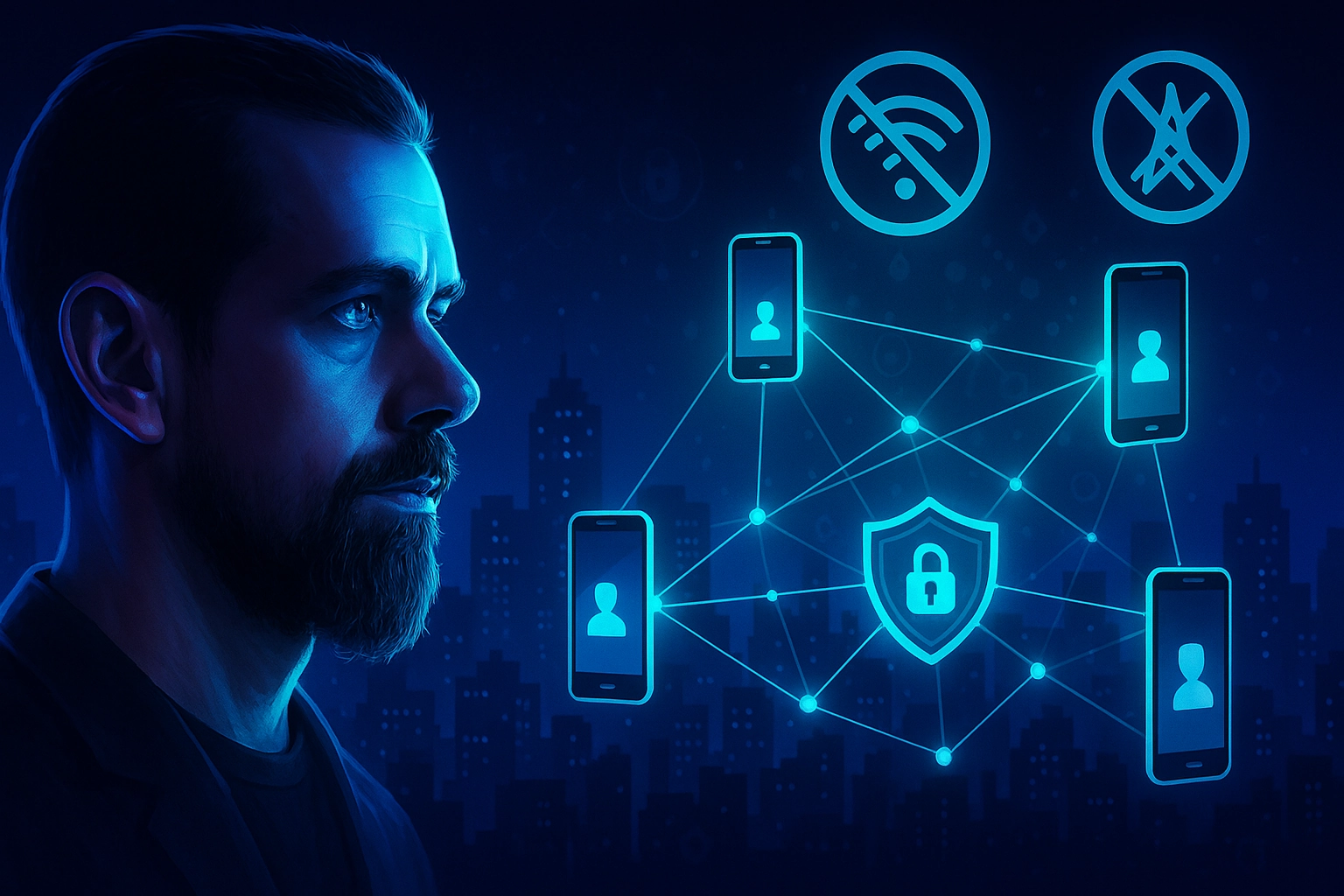
Jack Dorsey's Bitchat: Offline Messaging App Explained
Jack Dorsey's Bitchat: Revolutionary Offline Messaging App That Works Without Internet
What is Jack Dorsey's Bitchat App?
Jack Dorsey, the founder of Twitter and CEO of Block, has launched Bitchat, a groundbreaking messaging application that operates entirely without an internet connection. This revolutionary app represents a significant shift toward decentralized, censorship-resistant communication technology.
Originally starting as a weekend project for Dorsey, Bitchat has quickly evolved into a compelling proof-of-concept that challenges traditional messaging paradigms. The app was released in beta on July 7, 2025, and reached its 10,000 TestFlight capacity within hours, demonstrating immediate market demand for offline communication solutions.
Bitchat isn't merely a technical experiment but a glimpse into the future of communication where messaging remains possible even when traditional infrastructure fails or faces censorship. In an increasingly monitored digital landscape, this censorship-resistant tool addresses growing privacy concerns among users worldwide.
How Does Bitchat's Offline Messaging Technology Work?
Decentralized Peer-to-Peer Architecture
Bitchat operates on a sophisticated decentralized peer-to-peer messaging system powered by Bluetooth Low Energy (BLE) mesh networks. Unlike traditional messaging apps such as WhatsApp that rely on centralized servers, Bitchat eliminates the need for:
Internet connectivity
Cell towers
WiFi networks
Phone numbers
Centralized infrastructure
Bluetooth Mesh Network Communication
The app creates a decentralized mesh network where each device functions as both a messaging client and relay server. Messages hop between devices within a 30-meter Bluetooth range, creating a store-and-forward system that extends communication beyond direct device proximity.
When you send a message through Bitchat, it travels directly between nearby devices running the app, with each device relaying the message until it reaches the intended recipient. This creates a high-tech relay system that bypasses traditional communication infrastructure.
Core Technical Components of Bitchat
Advanced Encryption and Security Features
Bitchat incorporates several sophisticated technical components that enable secure peer-to-peer communication:
End-to-End Encryption: The app uses X25519 key exchange and AES-256-GCM encryption protocols, ensuring that only the sender and recipient can read messages despite data passing through multiple relay devices.
No Persistent Identifiers: Random peer IDs are generated for each session to protect user privacy. Users receive temporary device IDs each time they open the app, with no requirement for phone numbers or email addresses.
Message Hopping Technology: Data packets can jump up to seven times through networked devices, with each device adding routing information to build efficient communication paths.
Emergency Wipe Feature: The privacy-first design includes a triple-tap function that instantly clears all local data for enhanced security.
How to Access and Use Bitchat
Current Availability and Installation
Bitchat is currently available as a beta version for iOS devices through Apple's TestFlight platform, though it has reached maximum capacity. The community has created an unofficial Android version available on GitHub, requiring users to sideload the APK file.
Getting Started with Bitchat
Using Bitchat is remarkably simple compared to traditional messaging apps:
No account creation or personal information required
Automatic assignment of customizable nicknames like "anon1234"
IRC-style command interface for familiar chat room users
Automatic peer discovery on the Bluetooth mesh network
Instant messaging capability without cell coverage or internet
Key Use Cases for Bitchat Technology
Emergency and Disaster Communication
Bitchat proves invaluable during natural disasters when cell towers fail or become overwhelmed. The Hurricane Katrina disaster of 2005 highlighted the need for alternative communication methods during infrastructure failures. Bluetooth mesh networks enable community coordination and emergency services communication when traditional networks collapse.
Large Event Communication
During festivals, protests, or other large gatherings, cellular networks often become overloaded or unavailable in areas with poor coverage. Bitchat's mesh networking extends communication range across entire event spaces, allowing attendees to form topic-based channels and receive critical announcements without internet dependency.
Censorship-Resistant Communication
In regions with internet censorship or intermittent connectivity, Bitchat enables continued information sharing through Bluetooth networks. Users can maintain communication even with brief internet access windows, synchronizing messages when connectivity becomes available.
Community Bridge Networks
Geographically separated communities, such as rural villages, can communicate without centralized infrastructure. This enables coordination, resource sharing, and collective decision-making across areas unreachable by traditional internet services.
The Future of Decentralized Messaging Networks
Growing Market Demand
The global messaging security market is projected to grow from $8.56 billion in 2024 to $20.41 billion by 2029, indicating increasing demand for privacy-first communication solutions. This growth reflects user concerns about regulatory oversight and cyber threats.
Technology Industry Integration
Major technology companies are already investing in mesh networking solutions:
Google's Nest devices incorporate mesh networking capabilities
Starlink utilizes satellite constellations for space-based mesh networks
Similar apps like Bridgefy experienced 4,000% usage spikes during events like the Hong Kong protests
Regulatory and Law Enforcement Challenges
Bitchat's decentralized nature and complete encryption present challenges for regulators and law enforcement agencies. Without central authority or backdoors, tracking criminal behavior becomes significantly more difficult, similar to issues faced with other privacy-focused messaging platforms.
Impact on Digital Communication and Privacy
Data Ownership and Surveillance Concerns
As users become increasingly aware of data ownership and surveillance issues, decentralized messaging addresses growing demands for digital autonomy. Bitchat's architecture eliminates single points of failure or control, making the system harder to shut down or censor.
Shifting Trust Paradigms
The development of mesh networking technology may fundamentally change how people perceive trust, privacy, and control in digital interactions. By removing dependence on centralized authorities, users gain greater control over their communication infrastructure.
Conclusion: The Future of Internet-Free Communication
Jack Dorsey's Bitchat represents a significant advancement in decentralized communication technology, offering a viable alternative to traditional messaging infrastructure. As mesh networking technology matures, we may witness a fundamental shift not only in how messages travel but also in user expectations regarding privacy, autonomy, and digital rights.
The rapid adoption and immediate interest in Bitchat demonstrate strong market demand for censorship-resistant, offline communication tools. This technology could prove essential for emergency situations, privacy-conscious users, and communities in regions with unreliable internet infrastructure.
As decentralized messaging networks continue evolving, they promise to reshape the digital communication landscape, offering users unprecedented control over their data and communication channels while reducing dependence on traditional telecommunication infrastructure.
For more Crypto, Web3, Blockchain & AI news visit : www.metamoonmedia.com