
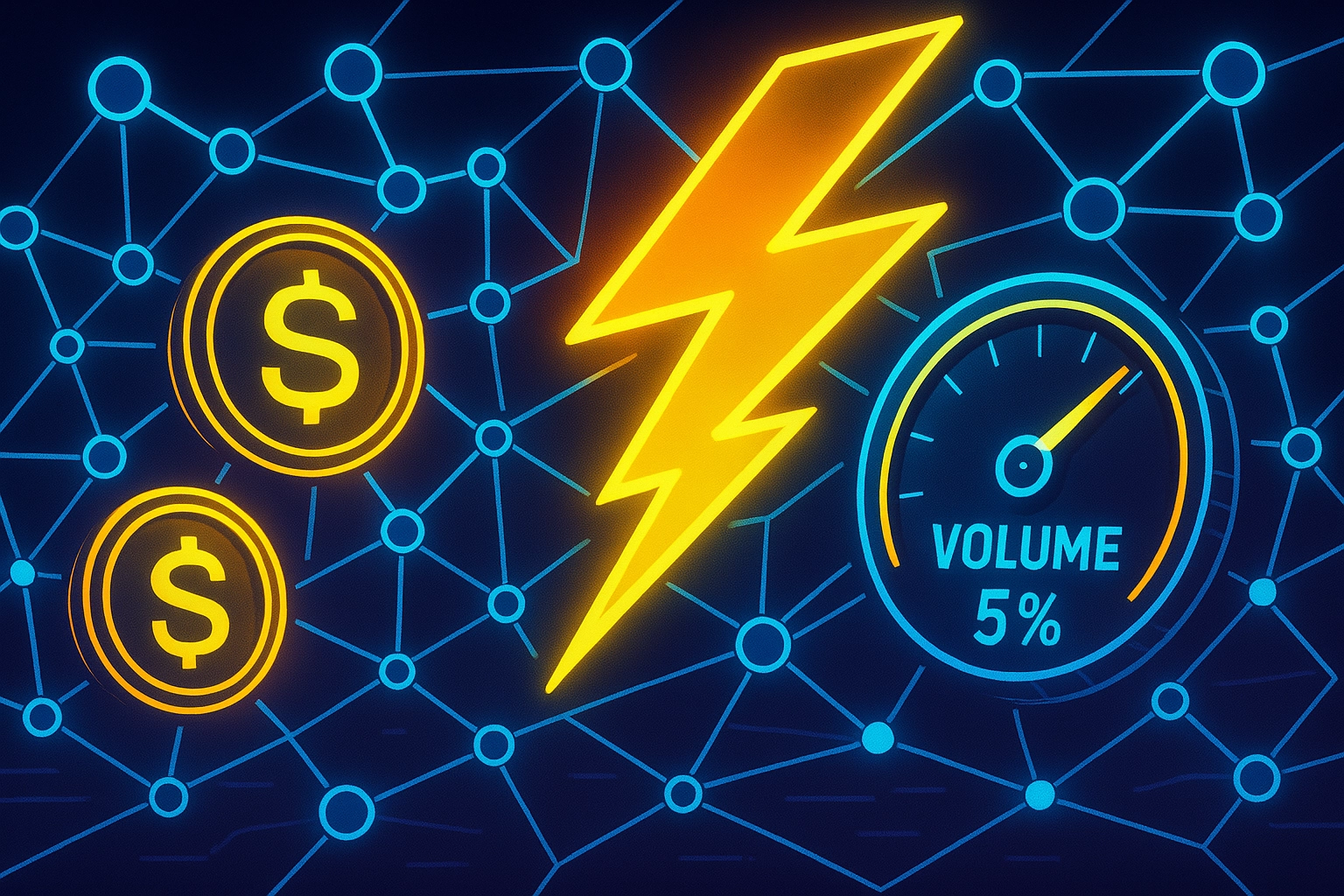
Lightning Network Could Capture 5% Stablecoin Volume 2028
Lightning Network Positioned to Capture 5% of Global Stablecoin Volume by 2028
Bitcoin's Lightning Network is preparing for massive growth in stablecoin adoption, with industry experts predicting the layer-2 scaling solution could handle 5% of global stablecoin volume within the next four years.
Voltage CEO Predicts Significant Stablecoin Market Share
Graham Krizek, founder and CEO of Lightning Network payments provider Voltage, projects that the scaling network will capture at minimum 5% of worldwide stablecoin volumes by 2028. This prediction comes as retail and institutional adoption of the Lightning Network continues to accelerate.
Current daily stablecoin volume reaches approximately $180 billion according to market data. If Krizek's projections prove accurate, the Lightning Network could facilitate up to $9 billion in daily stablecoin transactions using today's figures. This volume is expected to grow substantially as stablecoin regulations like the GENIUS Act are implemented across the United States and globally.
Stablecoins Drive Lightning Network Adoption
Krizek emphasizes that stablecoins will serve as a catalyst for Lightning Network growth, positioning the platform as the premier scalability solution for stablecoin transactions. He anticipates that stablecoin volumes on the Lightning Network could reach billions of dollars in the coming years.
While current stablecoin activity on the Lightning Network remains minimal, this landscape is rapidly changing. Major stablecoin issuers including Tether and Circle have yet to fully integrate with the network, keeping current volume percentages near zero. However, Krizek expects significant growth in the second half of this year as these major players enter the ecosystem.
Major Stablecoin Issuers Begin Lightning Integration
The world's largest stablecoin issuer, Tether, announced in January its plans to bring USDT to Bitcoin with native Lightning Network support. This integration represents a crucial milestone for Lightning Network stablecoin adoption.
Lightning Labs further advanced stablecoin functionality by releasing Taproot Assets version 0.6 in June, designed to transform the network into a decentralized foreign exchange layer for Bitcoin-based stablecoins.
Tether CEO Paolo Ardoino has expressed strong support for Lightning Network stablecoin transactions, citing concerns about blockchain scalability limitations. The peer-to-peer nature of Lightning makes it ideal for large-scale stablecoin operations, with Ardoino describing USDT on Lightning as the perfect solution for high-volume transactions.
Lightning Network Adoption Drivers
According to Krizek, Lightning Network adoption is primarily driven by retail users and developers who are pioneering innovative use cases. Developers continue building edge case applications, while retail users actively test and explore Lightning Network integration across various platforms.
Retail demand is pushing businesses to implement Lightning Network support, leading to increased adoption among cryptocurrency exchanges. Institutional interest is also growing as traditional financial institutions recognize Lightning's potential for risk management, improved working capital access, and reduced counterparty and chargeback risks.
Exchange Integration and Business Adoption
Cryptocurrency exchanges have rapidly embraced Lightning Network integration for cost savings and faster transaction processing. Cash App already processes 25% of its Bitcoin payments through the Lightning Network, demonstrating the platform's practical benefits for major financial service providers.
Krizek predicts that any business utilizing Bitcoin will eventually implement Lightning Network integrations, with instant settlement becoming the standard expectation for payment options.
Current Lightning Network Statistics
The Lightning Network currently operates with 14,000 nodes, 44,800 channels, and a total capacity of 3,820 BTC, valued at approximately $448 million at current Bitcoin prices. Despite network capacity declining 23% since the beginning of the year, this trend reflects improved capital efficiency and network optimization.
The reduction in total channels alongside larger individual channels indicates a more mature and efficient network structure. Access to the Lightning Network has expanded significantly, with over 700 million users having access through exchanges, wallets, neo-banks, and payment platforms - double the number from the previous year.
Infrastructure Development and Future Outlook
Voltage positions itself as a crucial infrastructure provider, helping wallet developers integrate stablecoin functionality on the Lightning Network. This infrastructure development is essential for supporting the projected growth in stablecoin adoption.
As regulatory frameworks like the GENIUS Act take shape and major stablecoin issuers complete their Lightning Network integrations, the platform appears well-positioned to capture a significant portion of the global stablecoin market. The combination of retail demand, institutional interest, and ongoing technical improvements suggests that Krizek's 5% market share prediction may be conservative.
The Lightning Network's evolution from a Bitcoin scaling solution to a comprehensive stablecoin infrastructure platform represents a significant shift in the cryptocurrency ecosystem, potentially reshaping how digital assets are transferred and traded globally.
For more Crypto, Web3, Blockchain & AI news visit : www.metamoonmedia.com