
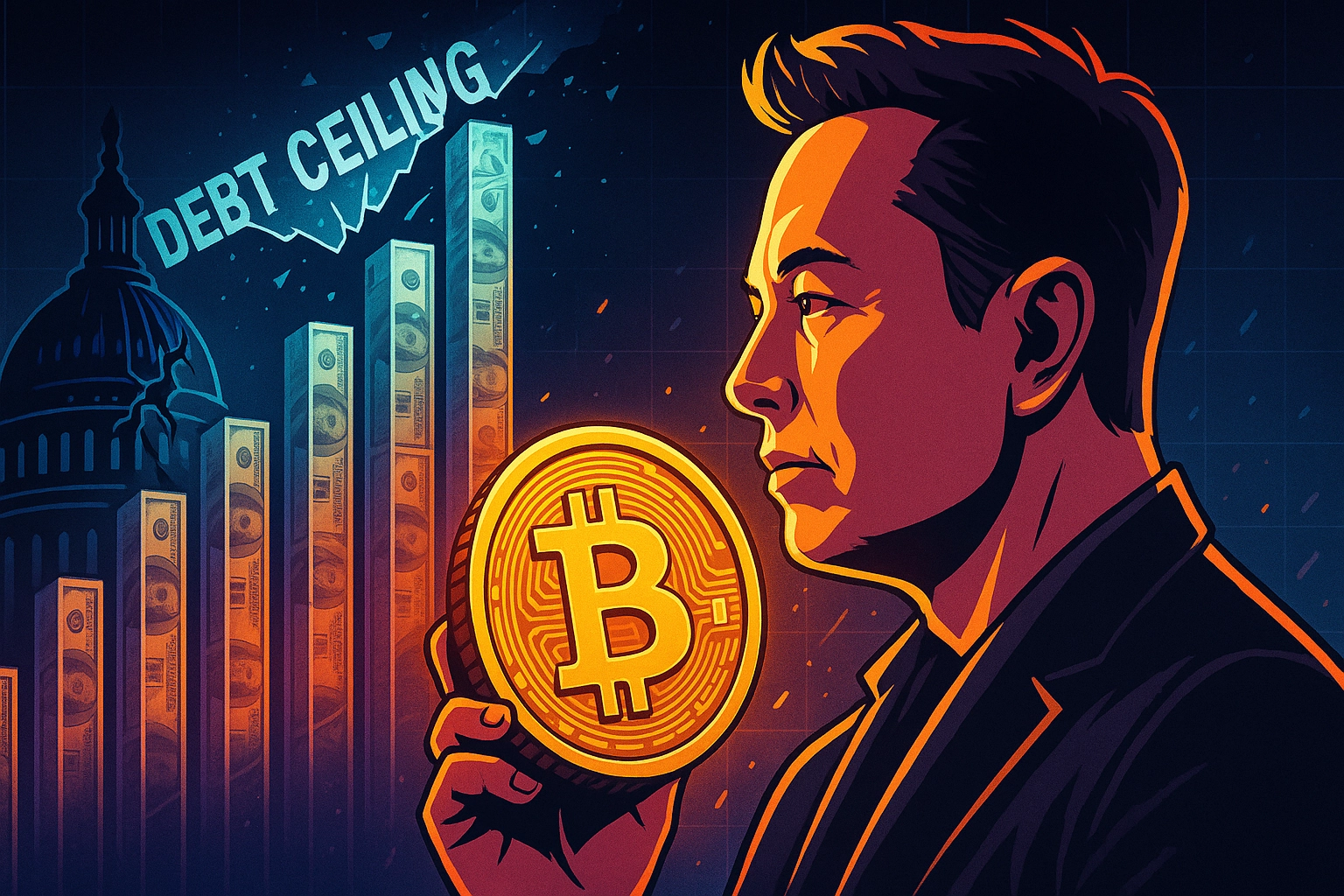
Musk Criticizes US Debt: Bitcoin as Solution to Crisis
Elon Musk Criticizes US Debt Crisis: Bitcoin Emerges as Potential Solution
Musk's Opposition to Trump's Spending Bill
Elon Musk has publicly criticized the Trump administration's approach to national debt management, specifically targeting the recently signed One Big Beautiful Bill Act. The Tesla founder argues this legislation will significantly worsen America's already concerning fiscal deficit.
As the former head of the Department of Government Efficiency (DOGE), Musk has been vocal about government overspending through his social media platforms. His criticism centers on the bill's potential to increase the debt ceiling by five trillion dollars.
The ongoing disagreement between Musk and Trump over fiscal policy has led to Musk forming his own political organization: the America Party. This new political entity aims to address what Musk perceives as systemic issues with wasteful government spending.
The Growing US Debt Crisis
The United States faces an escalating fiscal challenge that threatens long-term economic stability. Rather than implementing measures to control the growing deficit, lawmakers continue raising the debt ceiling, creating what Musk describes as a ticking debt bomb.
Danny Nelson, research analyst at Bitwise, explains the severity of the situation: "Debt is climbing fast, interest payments are now the government's largest single line item, and there's no credible plan to rein it in. As interest payments continue to snowball, the notion that something's got to give is gaining traction."
Current projections suggest continued growth in the deficit could trigger surging inflation and further devaluation of the US dollar. Despite available solutions, political resistance remains strong against implementing necessary fiscal reforms.
Political Obstacles to Debt Solutions
Traditional approaches to addressing rising national debt face significant political challenges. Both spending cuts and tax increases remain highly unpopular among voters, making implementation difficult for elected officials.
Patrick Heusser, Head of Lending and TradFi at Sentora, outlines the harsh realities: "History shows there are only a few brutal ways out of a debt spiral, and war tops the list. Short of that, Washington could slash spending on infrastructure, Social Security, and defense, or impose steep tax hikes. Both fixes are political poison in a democracy where voters recoil at benefit cuts and higher taxes."
Instead of confronting these difficult choices, lawmakers have consistently chosen to defer the problem to future generations. This approach has created a cycle of increasing debt without meaningful solutions.
Bitcoin as Alternative Debt Management Strategy
With traditional fiscal policies proving inadequate, Bitcoin has emerged as a potential component in addressing America's debt crisis. The cryptocurrency's reputation as digital gold and its long-term appreciation history make it an attractive consideration for debt management strategies.
Heusser explains the logic behind Bitcoin adoption: "Since the end of the gold standard, central banks have routinely added gold to their reserves as insurance against sharp fiat-currency depreciation. Extending that playbook to Bitcoin is a logical next step, and early movers would lock in the most protection."
Several innovative approaches have been proposed for incorporating Bitcoin into national debt strategy. These include Bitcoin-enhanced treasury bonds designed to lower interest rates and direct integration of the digital asset into national reserves.
Evaluating Bitcoin's Risks and Benefits
While Bitcoin presents an intriguing alternative to traditional debt management, experts emphasize the importance of careful analysis before implementation. The cryptocurrency's volatility remains a significant concern for large-scale government adoption.
Nelson warns about potential risks: "Bitcoin's volatility makes it an imperfect device for addressing a nation's debt. Any investment large enough to make a real difference comes with sizable risks. What if the price moves against the country in the short term? Such a situation could easily spook buyers of that country's debt, prompting them to demand higher interest payments."
However, Bitcoin's historical performance and decreasing volatility over time make it increasingly attractive to institutional investors. As the cryptocurrency matures, its stability continues to improve, potentially making it more suitable for government use.
Global Implications of US Bitcoin Adoption
The United States' position as the world's largest economy means any significant policy changes would have global ramifications. Should America decide to incorporate Bitcoin into its debt management strategy, other nations would likely follow suit.
Nelson believes this could create a tipping point: "If one major country does take a serious swing at Bitcoin as a solution to global debt concerns, and we believe that is a possibility, that could be the tipping point. More investors are turning to Bitcoin as a potential hedge and solution to runaway fiat currencies."
The interconnected nature of global financial markets means both positive and negative outcomes from such a strategy would affect economies worldwide. This reality adds pressure to ensure thorough analysis before implementation.
Future Outlook for Bitcoin and Debt Management
The debate over America's fiscal future has evolved from simply acknowledging the problem to actively seeking viable solutions. Bitcoin consistently appears in these discussions as a potential component of comprehensive debt management strategies.
As traditional methods prove insufficient for addressing the mounting crisis, policymakers and financial experts continue exploring alternative approaches. The cryptocurrency's unique properties as a decentralized, deflationary asset make it an increasingly relevant consideration in fiscal policy discussions.
The path forward requires careful evaluation of both risks and benefits. While Bitcoin offers promising potential as a hedge against inflation and sovereign debt issues, its implementation must be strategic and well-planned to maximize benefits while minimizing risks.
Conclusion
Elon Musk's criticism of current US debt management policies highlights a growing concern among financial experts and investors. As traditional fiscal approaches face political obstacles, Bitcoin emerges as a potentially viable alternative worth serious consideration.
The cryptocurrency's evolution from speculative asset to potential sovereign reserve tool reflects broader changes in how institutions view digital assets. While challenges remain, Bitcoin's unique properties make it an increasingly relevant component in discussions about America's fiscal future.
The decisions made regarding debt management will set important precedents for global financial policy. As the debate continues, Bitcoin's role in addressing sovereign debt issues will likely become an increasingly important consideration for policymakers worldwide.