
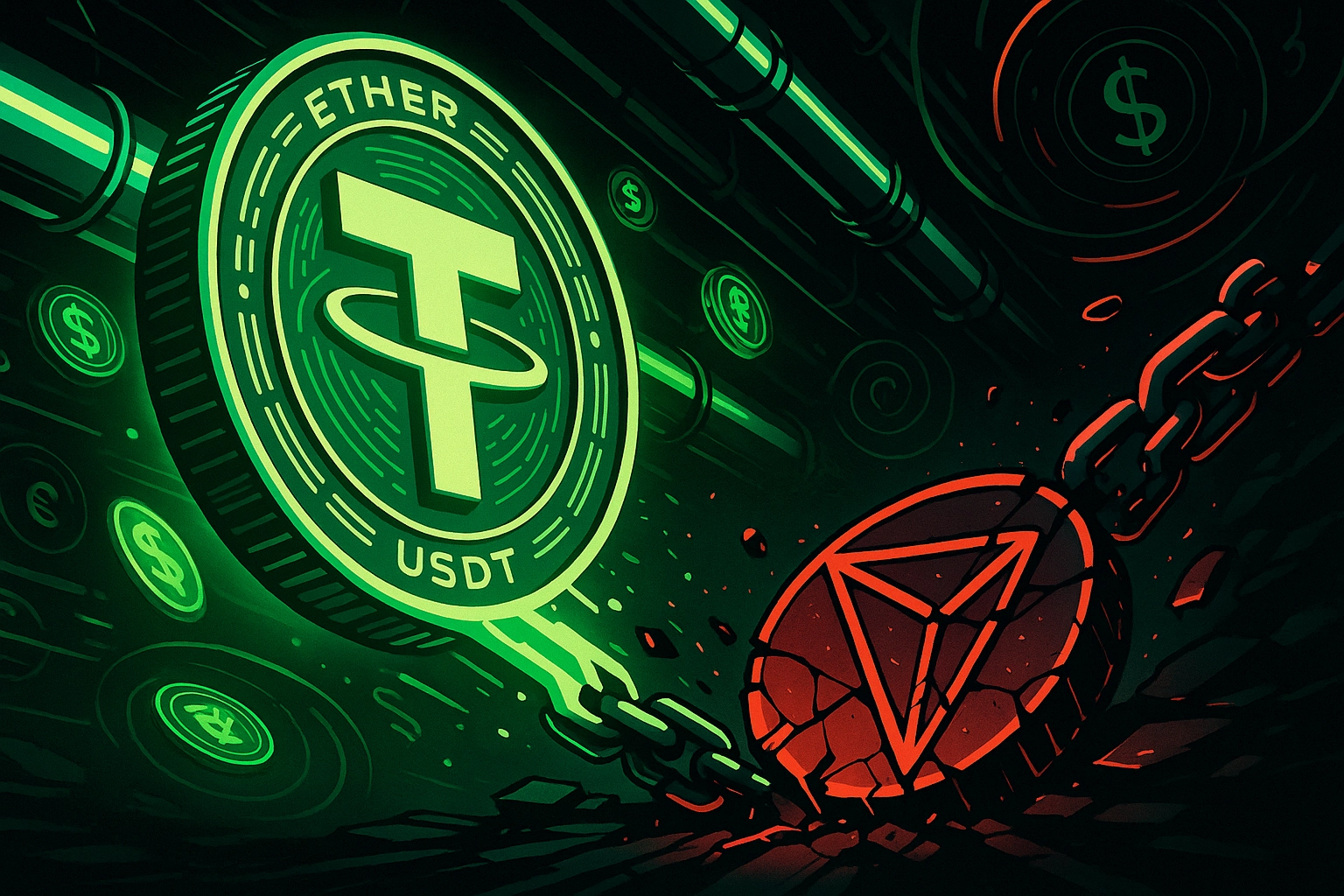
Plasma Blockchain Threatens Tron's USDT Market Dominance
Plasma Blockchain Poses Major Threat to Tron's USDT Market Leadership
Zero-Fee USDT Transfers Challenge Tron's Revenue Model
Bitfinex is preparing to launch Plasma, a revolutionary blockchain that promises zero-fee transfers for Tether's USDT stablecoin. This development represents a significant challenge to Tron, the blockchain currently hosting the majority of USDT in circulation.
According to crypto bank Sygnum's analysis, Tron's revenue dominance stems almost entirely from its substantial share of USDT transfers. The launch of Plasma could directly threaten this position, potentially reshaping the stablecoin transfer landscape.
Plasma's Strategic Market Entry
Strong Financial Backing and Market Position
Plasma has already demonstrated substantial market confidence by raising $373 million through the sale of its native XPL token. The blockchain is set to launch with an impressive $1 billion worth of deposits, indicating strong institutional and investor support.
This launch comes as stablecoin issuers increasingly seek to capitalize on both stablecoin usage and issuance opportunities. Tether recently reported a massive $4.9 billion profit in the second quarter, primarily generated from US treasuries backing the $164 billion worth of USDT in circulation.
Capturing Value from Stablecoin Transfers
While Tether profits from backing assets, blockchains like Tron benefit when USDT holders use the stablecoin for transfers or decentralized finance activities. Plasma is strategically positioned to capture this specific aspect of the stablecoin business model.
Circle, Tether's main competitor, has similarly announced its own in-house payments network for USDC, demonstrating a broader industry trend toward capturing more value from stablecoin usage.
Tron's Current Market Dominance at Risk
Massive USDT Holdings and Transfer Volume
Tron currently hosts $81 billion worth of USDT and processes approximately 60% of all stablecoin transfers globally. This dominance has been built on early market penetration in emerging markets and strategic integrations with major exchanges like Binance.
The blockchain's popularity extends beyond institutional users to individuals in developing countries who use stablecoins as alternatives to unstable local currencies for everyday payments. As one industry expert noted, "The popularity of Tron is 100% mixed up with the popularity of Tether."
Rising Fee Concerns Create Market Opportunity
Tron users have become increasingly sensitive to rising network fees, which have more than doubled to over $7 for USDT transfers in recent months. This fee inflation has created a significant market gap that competitors like Plasma can exploit.
Different Blockchains Face Varying Impact Levels
Tron's Revenue Vulnerability
Analysis suggests that if Ethereum loses 30% of its USDT usage to Plasma, the blockchain could face daily revenue losses of $230,000 to $370,000 in fees. However, Tron faces potentially higher stakes, standing to lose between $1.6 million and $2.1 million daily in missed TRX token burning.
Ethereum's Institutional Advantage
Despite hosting $67 billion worth of USDT, Ethereum may be more resilient to Plasma's challenge. Ethereum's user base consists primarily of professional money managers, institutional investors, and high-net-worth individuals who are less sensitive to high fees.
These users value Ethereum's proven track record of uptime and security. Building comparable trust and credibility will require significant time for new entrants like Plasma.
Market Dynamics and Future Outlook
Liquidity Concerns Beyond Revenue Loss
Industry analysts suggest that the primary concern may not be lost revenue but rather reduced liquidity thickness. As stablecoin volume spreads across multiple blockchains, individual networks may experience decreased liquidity depth.
Plasma's Replication Strategy
Plasma appears to be following a similar market penetration strategy to Tron's original approach. With Bitfinex's backing, Plasma has the potential to scale USDT liquidity effectively, much like Binance's support helped establish Tron's market position.
Long-Term Implications for Stablecoin Markets
Institutional vs Retail User Preferences
The competition between Plasma and established blockchains highlights the different needs of various user segments. While retail users in emerging markets prioritize low fees, institutional users focus on security, reliability, and established track records.
Network Effects and Trust Building
Despite Plasma's technological advantages and zero-fee proposition, establishing market trust takes time. Ethereum's institutional edge stems from years of proven performance, while Tron's dominance comes from early market penetration and exchange integrations.
Conclusion
Plasma's entry into the stablecoin transfer market represents a significant shift in blockchain economics. While Tron faces the most immediate threat due to its heavy reliance on USDT transfer fees, the broader implications extend across the entire stablecoin ecosystem.
The success of Plasma will likely depend on its ability to build trust, establish liquidity, and maintain its zero-fee promise while scaling operations. For existing blockchains, this development signals the need for continued innovation and user experience improvements to maintain competitive positions in the evolving stablecoin landscape.
For more Crypto, Web3, Blockchain & AI news visit : www.metamoonmedia.com