
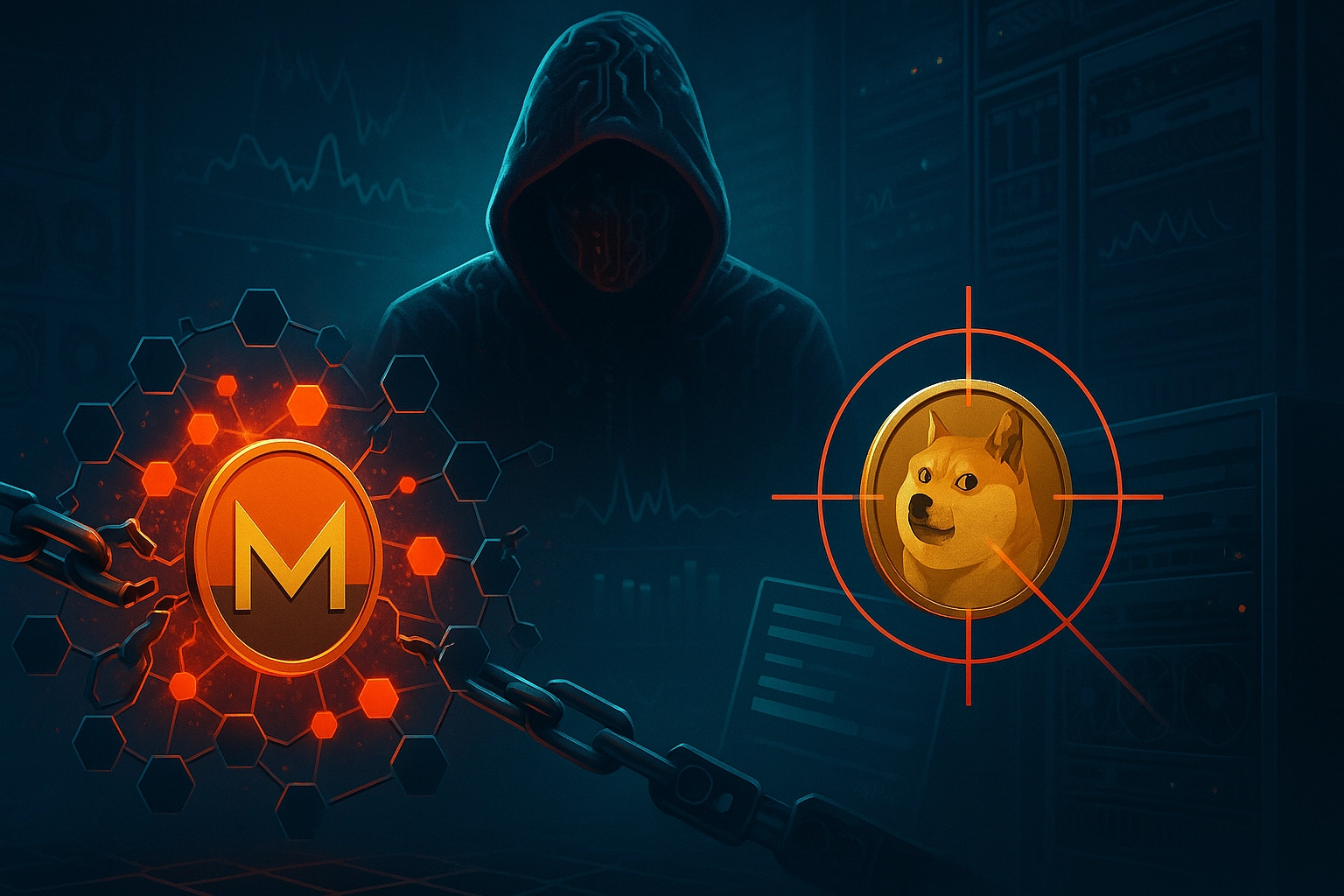
Qubic Targets Dogecoin After Successful 51% Monero Attack
Qubic Community Votes to Target Dogecoin After Monero 51% Attack Success
The Qubic community has officially chosen Dogecoin as their next target following a successful 51% attack on the Monero network earlier this week. The AI-focused blockchain project gained majority control of Monero's computing power and now sets its sights on another major cryptocurrency.
Community Vote Selects DOGE as Next Target
Sergey Ivancheglo, founder of the Qubic network, presented several options to the community for their next 51% attack target. The choices included Dogecoin, Kaspa, and Zcash - all ASIC-enabled, proof-of-work blockchains.
Dogecoin emerged as the clear winner with over 300 votes, surpassing all other networks combined. The meme-inspired cryptocurrency, boasting a market capitalization exceeding 35 billion dollars, now faces potential network disruption from Qubic's mining operations.
Understanding the 51% Attack Strategy
A 51% attack occurs when a single entity or group controls more than half of a blockchain network's mining power. This majority control allows attackers to manipulate transactions, double-spend coins, or prevent new transactions from confirming.
Qubic's approach demonstrates how AI-focused networks can leverage their computational resources to dominate traditional proof-of-work cryptocurrencies. This strategy raises significant concerns about network security across the cryptocurrency ecosystem.
Monero Attack Details and Timeline
The Qubic team successfully gained majority control over Monero's network after a month-long battle for hashrate dominance. Their mining pool achieved approximately 2.32 gigahashes per second, effectively controlling the privacy-focused blockchain.
During the takeover, Qubic miners successfully reorganized six blocks on the Monero network. Despite this control, the team claimed that Monero's core functionality, including privacy features, speed, and usability, remained uncompromised.
Market Response and Exchange Actions
Cryptocurrency exchange Kraken responded swiftly to the Monero attack by temporarily suspending XMR deposits. The exchange cited "potential risk to network integrity" as their primary concern following the 51% takeover.
While deposits were paused, Kraken maintained XMR withdrawals and trading services for existing customers. The exchange indicated that deposit services would resume once they determine the network is safe for normal operations.
Implications for Proof-of-Work Networks
The successful Monero attack signals troubling implications for other proof-of-work cryptocurrencies. Traditional mining-based blockchains may face increased vulnerability as AI-focused networks develop superior computational capabilities.
This development highlights the evolving landscape of blockchain security and the potential for newer networks to challenge established cryptocurrencies through brute computational force.
Technical Capabilities and Network Security
Qubic's demonstration of hashrate dominance showcases the growing power of AI-optimized mining operations. The network's ability to accumulate sufficient computing power to control major cryptocurrencies represents a significant shift in blockchain dynamics.
The targeted approach suggests a coordinated effort to demonstrate the vulnerability of traditional proof-of-work consensus mechanisms. This strategy could influence how future blockchain projects approach network security and consensus design.
Future Targets and Community Engagement
With Dogecoin selected as the next target, the cryptocurrency community watches closely for Qubic's next moves. The democratic voting process within the Qubic community adds an element of unpredictability to their targeting strategy.
The selection of high-profile cryptocurrencies like Monero and Dogecoin suggests a deliberate attempt to maximize attention and demonstrate the effectiveness of their approach across different network types and market capitalizations.
Conclusion
Qubic's successful 51% attack on Monero and subsequent targeting of Dogecoin represents a new chapter in blockchain security challenges. The AI-focused network's ability to mobilize sufficient computational resources threatens the security assumptions underlying traditional proof-of-work cryptocurrencies.
As the cryptocurrency ecosystem evolves, networks must adapt their security models to address emerging threats from sophisticated mining operations and AI-enhanced computational capabilities.
For more Crypto, Web3, Blockchain & AI news visit : www.metamoonmedia.com