
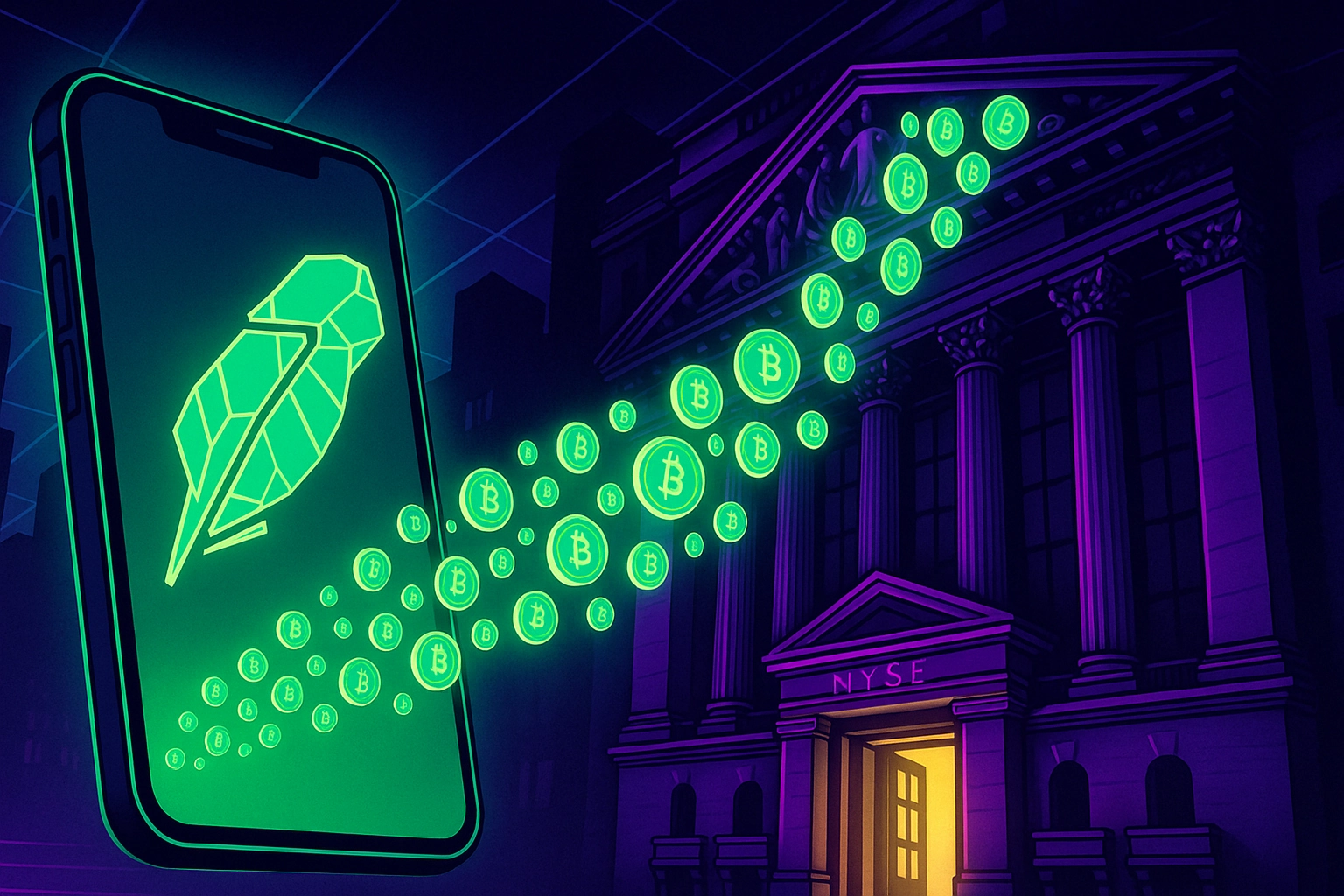
Robinhood Tokenization Threatens NYSE Trading Revenue
Robinhood's Tokenization Strategy Threatens Traditional Exchange Revenues
Galaxy Digital Analysis Reveals Trading Volume Shift Risk
Robinhood's ambitious plan to tokenize stocks on its new Ethereum-compatible blockchain could fundamentally disrupt traditional stock exchanges like the New York Stock Exchange (NYSE). According to a comprehensive analysis by Galaxy Digital, this move threatens to shift significant trading volume away from established exchanges, potentially undermining their core revenue streams from trading fees and market data.
Robinhood Chain: The Foundation of Stock Tokenization
At the recent EthCC conference, Robinhood CEO Vlad Tenev unveiled detailed plans for "Robinhood Chain," an innovative Ethereum-compatible layer-2 solution built on Arbitrum Orbit. This blockchain infrastructure will enable users to trade tokenized derivatives of stocks directly onchain, effectively moving asset trading beyond traditional exchange operating hours.
The platform's architecture centers around a sophisticated token engine that operates on the Robinhood Chain. This system provides users with tokenized derivatives of their assets, allowing them to maintain self-custody of these tokens or interact seamlessly with decentralized applications.
Revolutionary Trading Model with 24/7 Accessibility
Robinhood's tokenization approach involves creating token "wrappers" that are directly linked to real stocks custodied by a US broker-dealer. This innovative structure enables the platform to offer users near-instant settlement capabilities and 24/5 trading initially, with ambitious plans to expand to full 24/7 trading accessibility.
The initiative strategically leverages Robinhood's recent acquisition of cryptocurrency exchange Bitstamp, providing the necessary infrastructure and regulatory framework to support this groundbreaking trading model.
Direct Challenge to Traditional Exchange Dominance
Galaxy Digital's Friday report highlights how Robinhood's tokenization initiative removes assets from traditional market channels and brings them onchain. This transformation directly challenges the concentrated liquidity and activity that historically give major traditional finance exchanges like the NYSE their competitive advantage.
The platform's architecture mirrors successful rollup models like Coinbase's Base, granting Robinhood complete control over its sequencer and the ability to capture all transaction fees. Galaxy estimates that Base generates over $150,000 in daily sequencer fees for Coinbase, demonstrating the significant revenue potential of this model.
Comprehensive Revenue Capture Strategy
By operating the sequencer for Robinhood Chain while simultaneously controlling tokenized assets, Robinhood aims to monetize every layer of the trading stack. This strategy encompasses everything from offchain trading to onchain utility, creating multiple revenue streams that traditional exchanges cannot easily replicate.
Enhanced Utility Beyond Traditional Trading
The appeal of tokenized assets extends far beyond simple 24/7 trading capabilities. The programmability inherent in blockchain technology could enable innovative use cases such as using tokenized stocks as collateral in decentralized finance (DeFi) protocols or automating dividend distributions. These features represent functionality that traditional equities simply cannot match.
As Galaxy Digital noted in their analysis, if incumbent exchanges cannot match the utility offered by tokenized assets, they risk becoming merely "custodians of a less functional version of the same assets." This scenario would likely push more traders toward blockchain-based platforms, accelerating the shift away from traditional trading venues.
Potential Volatility Risks for Retail Investors
Despite the numerous advantages, the 24-hour trading model introduces certain volatility risks, particularly for retail investors. Market participants may wake up to discover sharp price movements that occurred outside regular trading hours, potentially leading to unexpected losses or missed opportunities.
This constant market activity could create additional stress for individual investors who are not equipped to monitor markets around the clock or implement sophisticated risk management strategies.
Regulatory Uncertainty and Industry Pushback
Regulatory uncertainty remains a significant challenge for Robinhood's tokenization initiative. While the company's tokens are currently only available to European Union users, the US Securities and Exchange Commission (SEC) has not yet provided public commentary on this innovative trading model.
The Securities Industry and Financial Markets Association (SIFMA) has already taken a stance against tokenized equity trading, urging the SEC to reject trading of tokenized equities outside the established Regulation NMS framework. This regulatory pushback could potentially limit the expansion of tokenized trading in the United States.
Market Implications and Future Outlook
The success of Robinhood's tokenization strategy could signal a broader transformation in how financial markets operate. Traditional exchanges may need to adapt quickly to maintain their relevance in an increasingly digital trading landscape.
If blockchain-based trading platforms can successfully offer enhanced utility, lower costs, and greater accessibility, they may capture significant market share from established exchanges. This shift could fundamentally alter the competitive landscape of financial markets and force traditional institutions to innovate or risk obsolescence.
The tokenization of traditional assets represents a convergence of traditional finance and decentralized finance, potentially creating new opportunities for innovation while challenging existing market structures. As this technology continues to develop, market participants will need to carefully balance the benefits of enhanced functionality against the risks of regulatory uncertainty and increased volatility.