
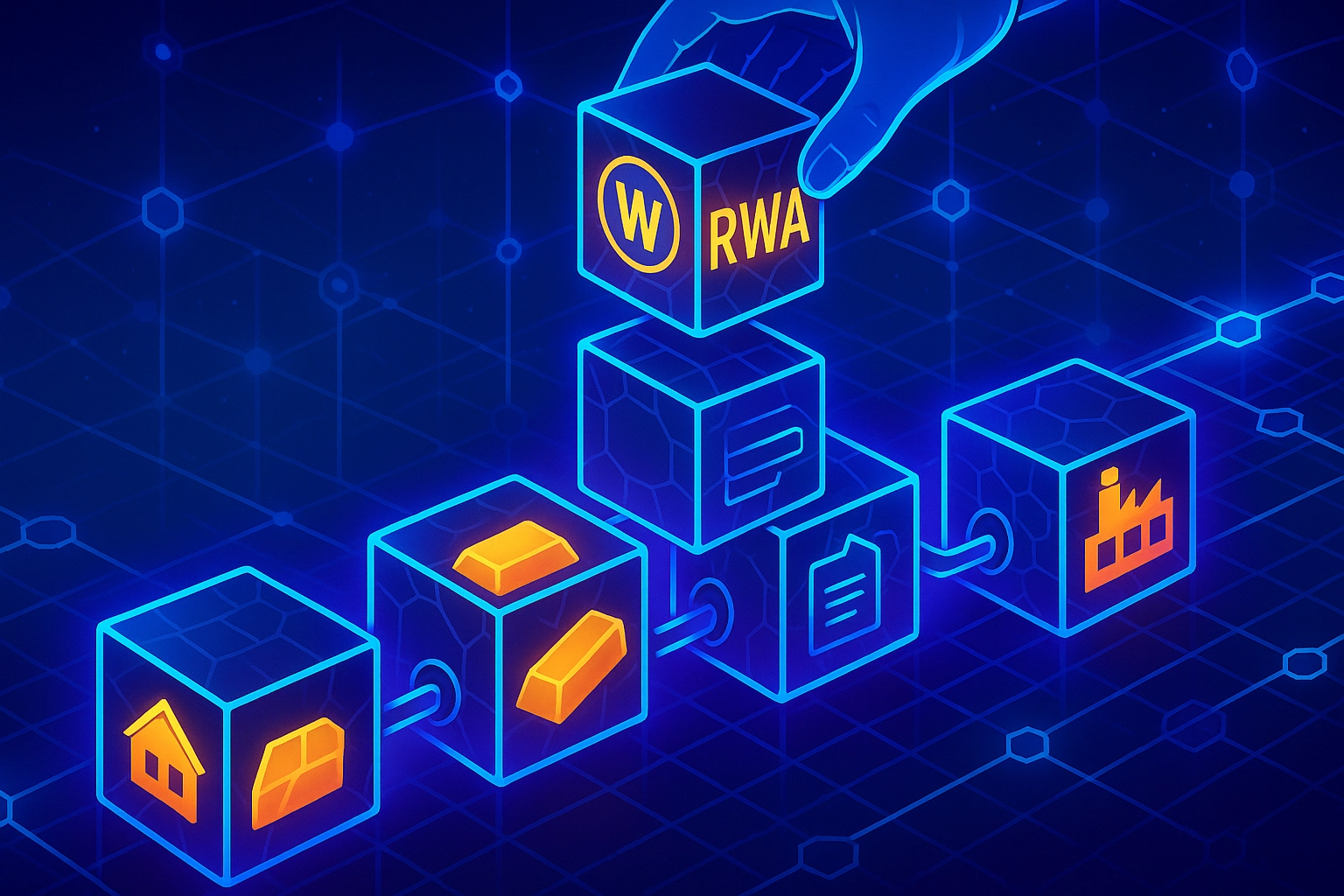
RWAs Need Building Blocks, Not Digital Replicas to Thrive
Real-World Assets Need Infrastructure Building Blocks for DeFi Success
Real-world assets onchain have moved beyond mere concepts to demonstrate tangible market traction. Stablecoins exemplify this evolution, generating dominant onchain volume with annual transfers exceeding Visa and Mastercard by 7.7% in recent years. Tokenized US Treasuries are attracting institutional investors seeking yield opportunities.
However, stablecoins represent more than successful tokenization. They have evolved into essential financial infrastructure, functioning as programmable money that enables other applications to build upon their foundation.
This platform-oriented approach distinguishes successful projects from struggling RWA initiatives. Most tokenized assets are designed as digital replicas when they should be architected as fundamental building blocks for broader financial systems.
Tokenization Alone Does Not Drive Adoption
The ability to tokenize any asset does not guarantee utility or market acceptance. Current RWA dashboards show growing total value locked, increased issuers, and heightened attention. However, most value remains concentrated in limited wallets with minimal integration into decentralized finance ecosystems.
This represents parked capital rather than active liquidity. Early RWA models focused on asset wrapping for custody or settlement purposes, neglecting usability within DeFi constraints. Legal classification further compounds these limitations, restricting asset movement and functionality.
Stablecoins succeeded by solving infrastructure challenges beyond representation. They enable instant settlement, eliminate pre-funding requirements for cross-border flows, and integrate seamlessly into automated systems. Most RWAs remain digital certificates rather than functional components of broader financial infrastructure.
Recent developments show promise as newer designs prioritize compliance awareness and DeFi compatibility. Adoption will accelerate when tokenized assets are built for integration rather than mere existence.
Compliance Creates the Primary Bottleneck
Legal restrictions represent the most significant constraint for RWA growth. When tokenized T-bills are classified as securities offchain, they maintain security status onchain, limiting protocol interactions and user access.
Current workarounds involve creating gated DeFi systems with KYC'd wallets, allowlists, and permissioned access. These approaches undermine composability and fragment liquidity, eliminating the core advantages that make DeFi powerful.
Token wrappers may improve accessibility but cannot resolve underlying regulatory status. Legal structuring must precede technological solutions.
The Senate's passage of the GENIUS Act represents significant progress, establishing federal frameworks for stablecoins backed 1:1 by Treasuries. This development signals that compliant, auditable digital assets are transitioning from experimental to institutional finance core.
This regulatory evolution will enable RWAs to progress from static representations to usable, scalable financial instruments.
Liquidity Lags Behind Market Narrative
RWAs promise enhanced liquidity through 24/7 access, faster settlement, and real-time transparency. However, most tokenized assets currently trade like private placements with thin volume, wide spreads, and limited secondary market activity.
Liquidity remains constrained because regulated assets cannot move freely across DeFi protocols. Without interoperability, markets remain siloed and inefficient.
Stablecoins demonstrate that liquidity emerges from composability. When currencies like the euro and Singapore dollar exist as programmable tokens, treasury operations transform from multi-step processes to instant cross-border transactions. Most tokenized assets miss these opportunities because they are designed as endpoints rather than interoperable components.
The solution requires infrastructure designed for both sides of the bridge with built-in compliance and transparency meeting institutional expectations.
Institutional Systems Require Meaningful Upgrades
From institutional perspectives, existing systems may be clunky but remain compliant and functional. Without significant improvements in efficiency, cost, or compliance, blockchain migration presents a challenging value proposition.
This changes when RWA infrastructure is purpose-built for institutional workflows with structurally integrated compliance rather than bolt-on solutions. When connections to liquidity, institutional-grade custody, and reporting are seamless rather than stitched together, onchain migration becomes worthwhile.
DeFi Needs Functionally Usable Assets
RWAs were intended to bridge DeFi and traditional finance but many remain stuck between these worlds. As institutions approach onchain integration, DeFi protocols face challenges adapting infrastructure to support assets with real-world constraints.
DeFi's most utilized assets remain native: stablecoins, Ether, and liquid staking tokens. Tokenized RWAs remain largely siloed, unable to participate in lending markets, collateral pools, or yield strategies.
Legal restrictions around asset classification and user access prevent many protocols from supporting them without significant modifications.
New primitives are emerging to make RWAs composable within controlled environments, bridging compliance and usability without compromise. This evolution is critical for making RWAs functionally relevant inside DeFi rather than adjacent to it.
Every Institution Needs a Tokenization Strategy
The first wave of institutions is selecting tokenization strategies. Success depends on platform thinking: building infrastructure that others can build upon rather than simply wrapping assets in digital form.
Just as companies needed mobile strategies in 2010 and cloud strategies in 2015, institutions now require plans for tokenized assets. Organizations recognizing this shift early will architect systems to participate in and potentially control the emerging tokenized economy.
Those who delay will be constrained to building on external platforms with limited control, reduced flexibility, and diminished upside potential.
Conclusion
Real-world asset tokenization success requires infrastructure-first thinking rather than simple digitization. As regulatory frameworks evolve and institutional adoption accelerates, projects that prioritize building blocks over digital replicas will drive the next wave of DeFi innovation and mainstream adoption.