
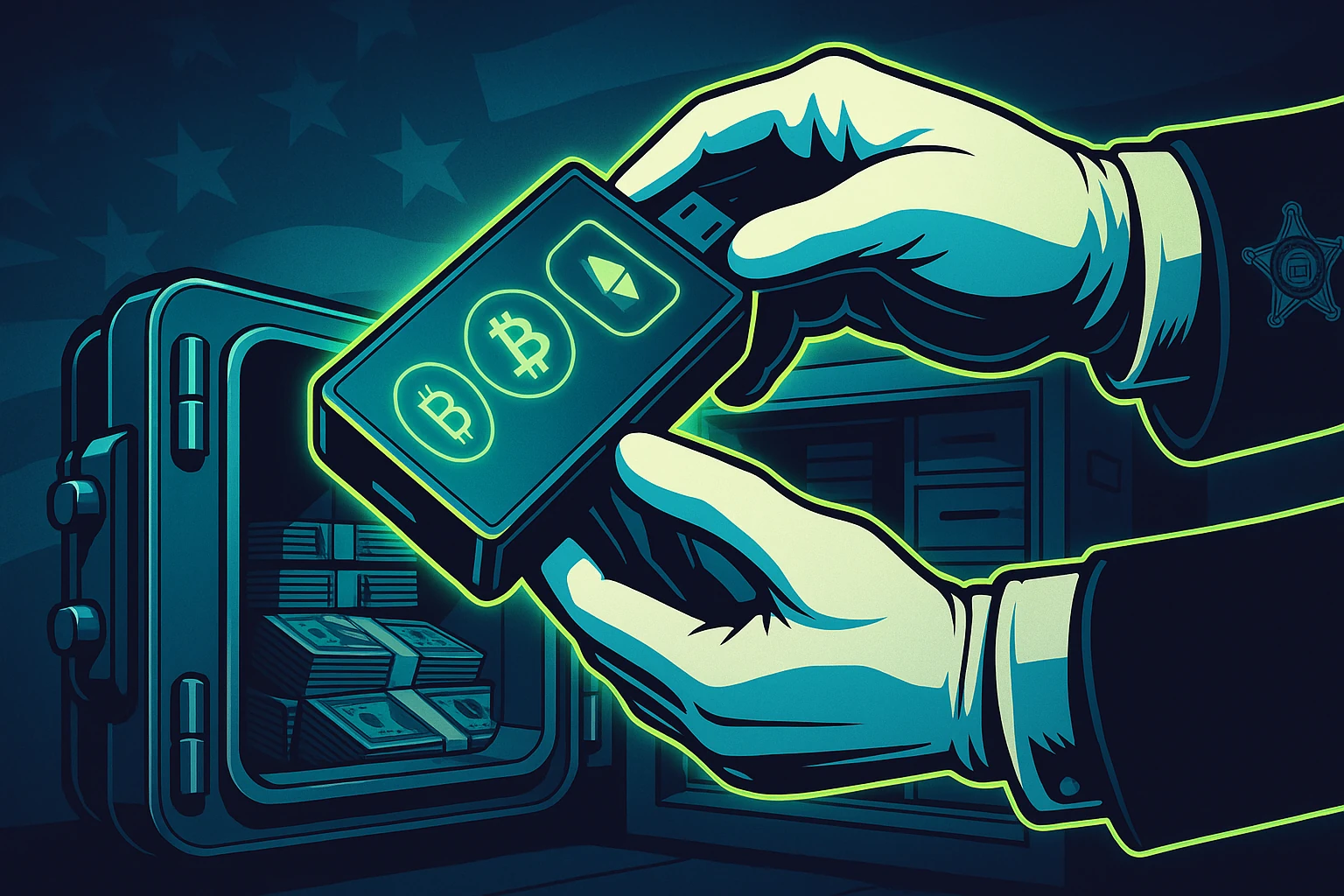
Secret Service Seizes $400M Crypto Cold Wallet Cache
Secret Service Builds $400 Million Crypto Cold Wallet Through Decade-Long Investigation
US Agency Amasses One of World's Largest Cryptocurrency Holdings
The United States Secret Service has quietly accumulated nearly $400 million in digital assets over the past decade, creating one of the world's largest cryptocurrency cold wallets. This substantial crypto trove results from extensive investigations into various scams and fraudulent schemes targeting unsuspecting victims.
Global Investigative Operations Center Leads Blockchain Analysis
The agency's Global Investigative Operations Center (GIOC) has become a powerhouse in cryptocurrency crime fighting. Using open-source tools, blockchain analysis, and patient investigation techniques, the team has successfully tracked funds across complex digital trails. Jamie Lam, an investigative analyst with the US Secret Service, recently shared insights about their methods with law enforcement officials in Bermuda.
Romance Scams Drive Major Cryptocurrency Seizures
Much of the seized cryptocurrency stems from romance-investment scams that have become increasingly sophisticated. Scammers create fake profiles using attractive photos and lure victims into seemingly legitimate crypto investment platforms. These fraudulent schemes typically allow victims to see initial profits before the platforms disappear with their deposits.
The typical modus operandi involves scammers sending photos of attractive individuals to build trust. However, these photos are often stolen, with the actual perpetrators being completely different from their online personas. Many of these operations trace back to organized crime networks operating from various international locations.
Advanced Tracking Methods Expose Crypto Criminals
Secret Service analysts employ multiple techniques to unmask cryptocurrency fraudsters. Their toolkit includes domain record analysis, blockchain transaction tracking, and exploiting VPN failures. In several cases, cryptocurrency payments led investigators to additional wallets, creating a chain of evidence that ultimately exposed entire criminal networks.
One notable investigation involved tracking a brief VPN failure that exposed an IP address, helping agents piece together the complete digital trail of a major scam operation. These technical slip-ups often provide the breakthrough evidence needed to identify and locate cybercriminals.
International Training Program Expands Global Reach
Kali Smith directs the Secret Service's cryptocurrency strategy and leads a team that has trained officials in over 60 countries. This international training program focuses on unmasking online financial crimes and has proven highly effective in jurisdictions with weak oversight.
The agency particularly targets areas with programs selling residency to foreign nationals, as these locations often become havens for cryptocurrency crime. Training sessions have revealed numerous previously unknown criminal operations, with local officials often surprised by the extent of crypto crime in their jurisdictions.
Romance Scams and Extortion Cases Reveal Criminal Networks
The Secret Service's investigations have uncovered various types of cryptocurrency crimes, from romance-investment schemes to sextortion cases. One significant investigation involved an Idaho teenager who sent a compromising photo to an online stranger, leading to extortion demands of $300 paid twice before police involvement.
Analysts traced these payments through another coerced teenager acting as a money mule, eventually connecting to an account with nearly $4.1 million in transactions linked to a Nigerian passport. British police successfully arrested the suspected extortionist upon arrival in Guildford, England, where he remains in custody awaiting extradition.
Cryptocurrency Fraud Dominates Internet Crime Statistics
Crypto-related scams have become the leading cause of internet crime losses in the United States. Americans reported $9.3 billion stolen through cryptocurrency fraud in 2024, representing more than half of the $16.6 billion in total internet crime losses for that year, according to FBI data.
The first half of 2025 has already seen more than $2.47 billion in losses due to hacks, scams, and exploits, representing a nearly 3% increase compared to the $2.4 billion stolen in 2024. These statistics highlight the growing sophistication and scale of cryptocurrency-related criminal activities.
Industry Cooperation Enables Major Recovery Operations
Successful cryptocurrency recovery often depends on cooperation from major industry players. Companies like Coinbase and Tether have acknowledged assisting in high-profile cases by analyzing transactions and freezing suspicious wallets. This collaboration between law enforcement and cryptocurrency companies has proven essential for tracking and recovering stolen funds.
One of the largest single recoveries involved $225 million in USDT linked to romance scams, demonstrating the potential for successful asset recovery when proper investigative techniques are combined with industry cooperation.
Future Implications for Cryptocurrency Crime Fighting
The Secret Service's success in building a $400 million crypto cold wallet demonstrates the evolving capabilities of law enforcement in the digital asset space. As cryptocurrency adoption continues to grow, the agency's methods and international training programs will likely become increasingly important in combating cybercrime.
The combination of advanced blockchain analysis, international cooperation, and industry partnerships represents a comprehensive approach to cryptocurrency crime fighting. This model may serve as a template for other law enforcement agencies worldwide as they develop their own cryptocurrency investigation capabilities.
Conclusion
The Secret Service's accumulation of $400 million in cryptocurrency through seizures represents a significant milestone in law enforcement's battle against digital asset crime. Through sophisticated tracking methods, international cooperation, and industry partnerships, the agency has demonstrated that cryptocurrency's perceived anonymity can be overcome through persistent investigation and advanced analytical techniques.
As cryptocurrency scams continue to evolve and increase in sophistication, the Secret Service's approach provides a roadmap for effective law enforcement response. The agency's success in training international partners and building cooperative relationships with industry players suggests that coordinated efforts can significantly impact cryptocurrency crime on a global scale.