
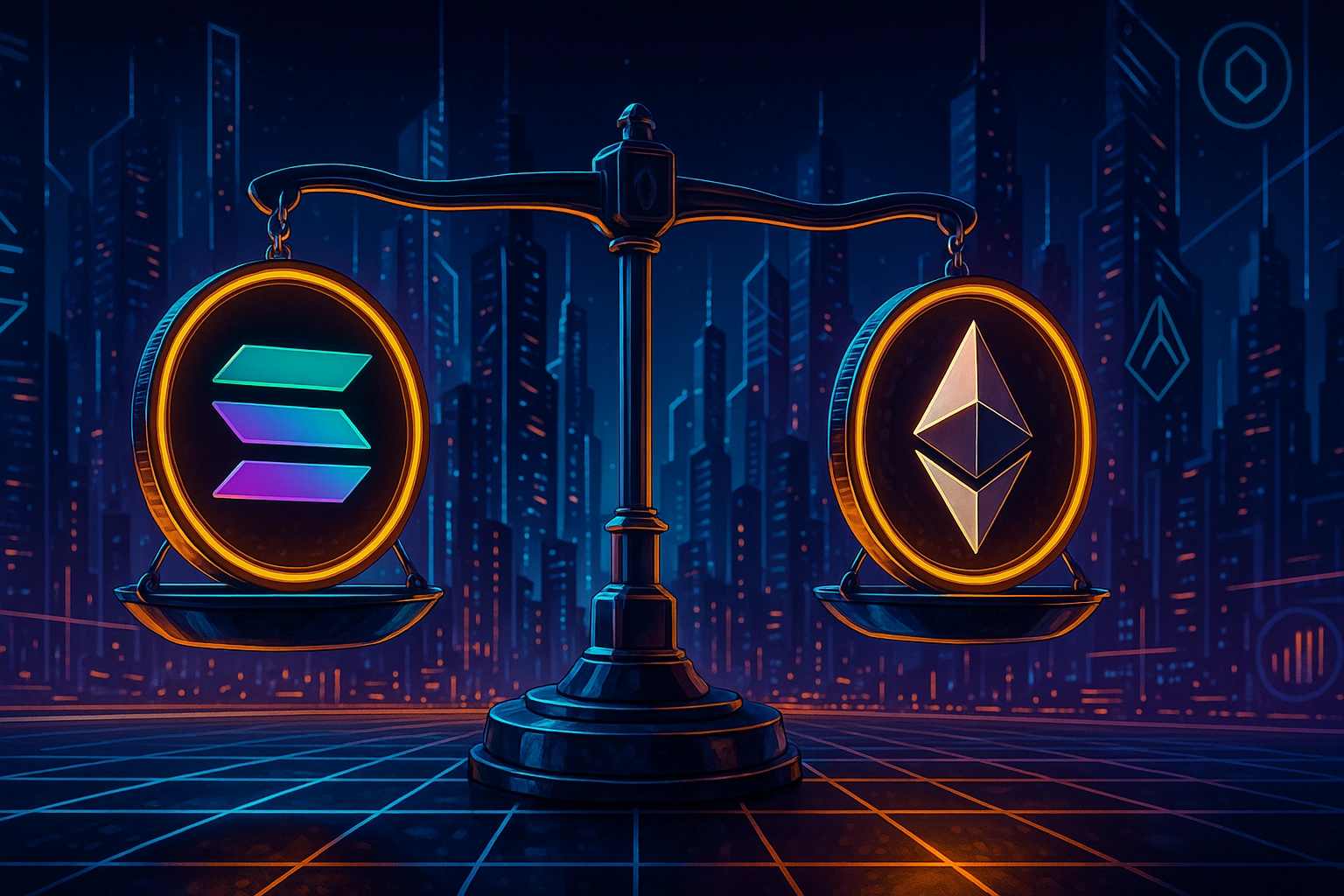
Solana vs Ethereum RWA Tokenization Battle 2025 Winner
Solana vs Ethereum: The Ultimate RWA Tokenization Showdown in 2025
Market Overview and Growth Statistics
The Real-World Asset tokenization market has exploded to over $24 billion across multiple blockchains by mid-2025. This represents a massive shift as physical assets including real estate, bonds, and art are being converted into blockchain-based digital instruments.
Solana has emerged as a formidable challenger in this space, with its RWA sector experiencing remarkable 218% growth in 2025, reaching a market value of $550 million. This growth rate significantly outpaced Ethereum's 81% increase during the same period.
Meanwhile, Ethereum continues to dominate the RWA landscape, controlling 83.69% of the $7.5 billion market share. The competition between these two blockchain giants is intensifying as institutions and retail investors increasingly adopt tokenized assets.
Solana's Rapid Rise in RWA Markets
Technical Advantages Driving Adoption
Solana's technical superiority is becoming increasingly apparent in the RWA space. The blockchain can process over 65,000 transactions per second, dramatically outperforming Ethereum's 15-45 TPS capacity. This speed advantage is crucial for applications requiring high liquidity and low latency, such as fractional real estate ownership.
Recent innovations including Firedancer and ZK Compression have further enhanced Solana's performance capabilities. These technological improvements have attracted major RWA projects seeking efficient and cost-effective blockchain solutions.
Institutional Partnerships and Market Growth
Solana has secured significant institutional backing through partnerships with industry leaders including BlackRock, Anchorage Digital, and R3 Corda. These collaborations have established Solana's credibility in the financial services sector while providing essential guidance on regulatory compliance, asset custody, and cross-chain operability.
The number of RWA holders on Solana has grown by over 1,280% this year, reaching 63,000 wallets. Major projects like Ondo Finance and ONe have chosen Solana for tokenizing U.S. treasuries, corporate debt, and real estate, citing low fees and fast confirmation times as key factors.
Current Market Position
Despite impressive growth, Solana currently holds only 3.9% of the RWA market share. However, this represents more than a doubling of its position in the last six months. At this growth trajectory, analysts predict Solana could surpass ZKSync Era's 17.2% market share within 18-24 months.
Ethereum's Dominant Position and Challenges
Market Leadership and Infrastructure
Ethereum maintains its commanding position with 83.69% of the RWA market, benefiting from first-mover advantage, extensive developer resources, and established DeFi protocols. The platform's mature ecosystem has attracted major tokenization projects including Securitize and Tokenized, which have successfully brought private equity, real estate, and bond markets on-chain.
The Ethereum network generated $15.9 million in RWA-related revenue over the last 30 days, compared to Solana's $3.9 million, highlighting the significant liquidity gap between the platforms.
Technical Limitations and Solutions
Ethereum faces persistent challenges with high gas fees often exceeding $100 per transaction and slower confirmation times. These issues create friction for users and limit the platform's appeal for frequent trading activities.
Layer 2 solutions like ZKSync Era, which captures 17.2% of the RWA market, help mitigate some scalability issues. However, these solutions add operational complexity while still relying on Ethereum's base layer for security.
The upcoming Cancun-Deneb upgrade promises to reduce gas fees by 50-70%, potentially addressing one of Ethereum's primary competitive disadvantages.
Key Growth Areas for Blockchain RWA Adoption
Regulatory Compliance and Clarity
Both platforms face ongoing regulatory scrutiny from the SEC and other authorities. Solana has gained some clarity through partnerships with compliant custodians like Anchorage Digital, but broader regulatory frameworks remain in development.
Ethereum's longer operational history has provided more regulatory familiarity, giving it an advantage in institutional adoption for traditional financial products.
Liquidity and Market Depth
Liquidity remains a critical factor for RWA success. Ethereum's established DeFi ecosystem provides deeper liquidity pools and more trading opportunities for tokenized assets. Solana needs to attract more capital to narrow this gap and compete effectively.
Interoperability and Cross-Chain Solutions
Cross-chain asset flow capabilities are essential for broader institutional adoption. While Solana is developing improved interoperability tools, the seamless movement of assets across different blockchains remains a work in progress for the entire industry.
Investment Opportunities and Portfolio Allocation
Ethereum-Based Opportunities
Ethereum remains the safer investment choice for risk-averse investors, with established firms like Securitize well-positioned to benefit from regulatory clarity and mature DeFi infrastructure. The platform's stability and market dominance make it attractive for institutional investors seeking proven tokenization solutions.
Solana-Based Innovation
Solana-based projects like Ondo Finance and ONe are pioneering innovative RWA products, particularly in tokenized U.S. treasuries and real estate. These projects offer potentially higher yields and faster settlement times compared to traditional fixed-income products.
Balanced Investment Strategy
Financial experts suggest a diversified approach with 60% allocation to Ethereum-based infrastructure and 40% to high-growth Solana platforms. This strategy balances stability with growth potential while capturing opportunities across both ecosystems.
Future Outlook and Market Predictions
Solana's Growth Trajectory
Solana's entry into RWA markets represents more than simple growth - it's a paradigm shift in blockchain utility. The platform is establishing itself as a legitimate player in tokenized finance, offering fast, scalable solutions with increasing institutional trust.
If current trends continue, Solana could capture a significantly larger portion of the RWA market, potentially challenging Ethereum's dominance within the next two years.
Ethereum's Response and Adaptation
Ethereum's vast ecosystem, entrenched market position, and planned scalability upgrades mean it won't easily relinquish its leadership. The platform's upcoming improvements could address current limitations while maintaining its first-mover advantages.
Market Impact and Industry Evolution
The battle between Solana and Ethereum in RWA tokenization could reshape how assets are owned, traded, and valued. This competition is driving innovation across both platforms, ultimately benefiting the entire tokenization industry.
Conclusion
The RWA tokenization battle between Solana and Ethereum represents a defining moment for blockchain technology adoption in traditional finance. While Ethereum maintains its dominant position through established infrastructure and regulatory familiarity, Solana's rapid growth, technical advantages, and institutional partnerships position it as a serious challenger.
Success in this space will depend on each platform's ability to address key challenges including regulatory compliance, liquidity provision, and interoperability solutions. As the market continues expanding toward projected multi-trillion dollar valuations, both platforms have significant opportunities to capture value and drive the future of asset tokenization.
Investors and institutions should monitor developments closely, as the winner of this RWA tokenization battle could determine the next phase of blockchain adoption in traditional financial markets.
Frequently Asked Questions
What is Real-World Asset tokenization?
Real-World Asset tokenization converts physical assets like real estate, bonds, and commodities into digital tokens on blockchain networks, enabling fractional ownership and improved liquidity.
Why is Solana gaining traction in RWA markets?
Solana offers superior transaction speeds up to 65,000 TPS and lower costs compared to competitors, making it attractive for institutions and RWA platforms requiring high-frequency transactions.
Does Ethereum still lead the RWA market in 2025?
Yes, Ethereum maintains over 83% market share in RWA tokenization, supported by mature DeFi infrastructure, established regulatory relationships, and extensive developer resources.
Can Solana overtake Ethereum in RWA tokenization?
While challenging, Solana's rapid 218% growth rate and strong institutional partnerships provide a realistic path to increased market share, particularly if liquidity and interoperability improve.
What's the optimal investment strategy between these platforms?
A diversified approach allocating 60% to Ethereum's stable infrastructure and 40% to Solana's high-growth projects balances risk management with upside potential in the expanding RWA market.
For more Crypto, Web3, Blockchain & AI news visit : www.metamoonmedia.com