
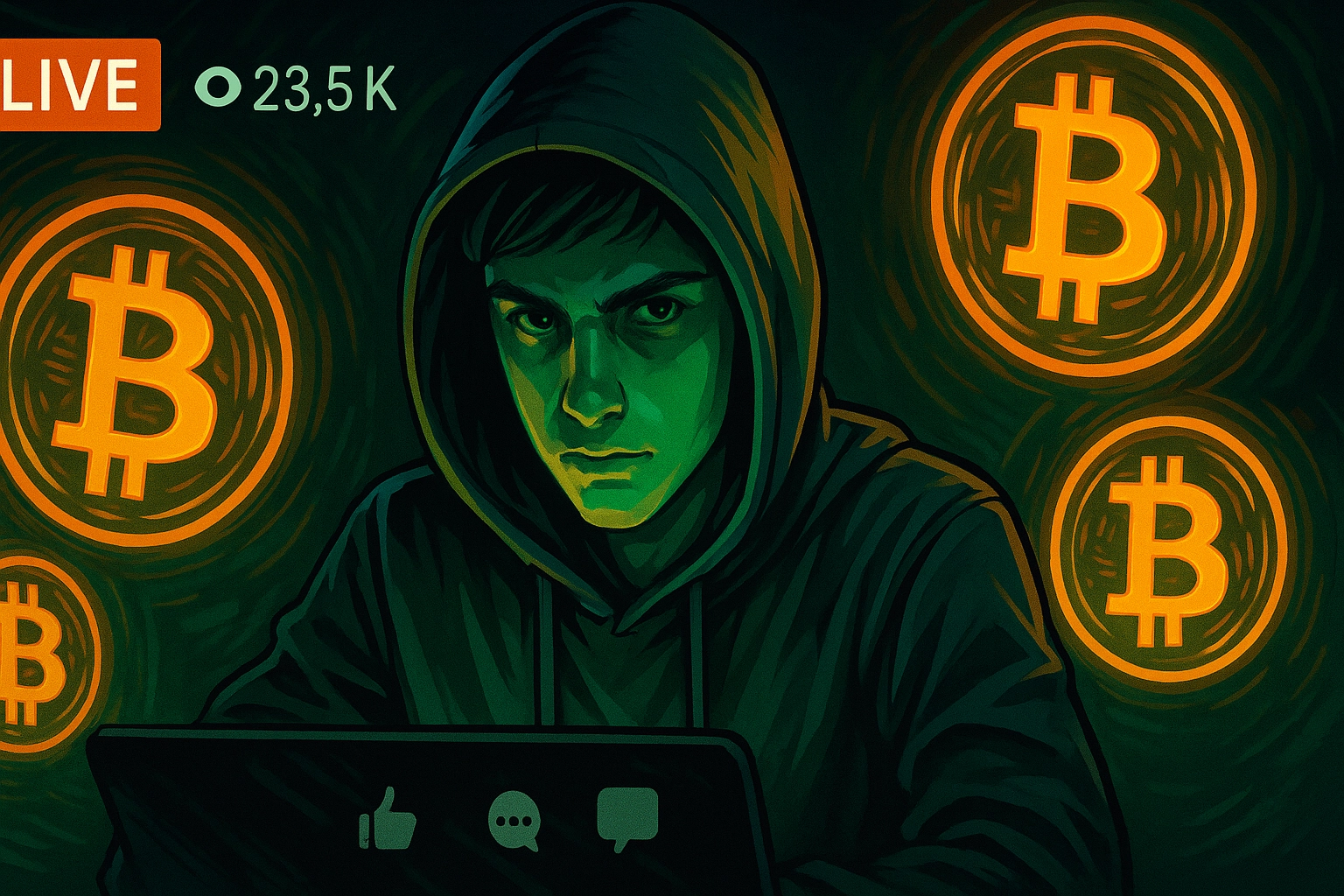
Teen Hackers Steal $243M Bitcoin Through Social Engineering
Teen Hackers Steal $243 Million Bitcoin Through Social Engineering Attack
The $243 Million Bitcoin Heist That Shocked the Crypto World
In August 2024, three young hackers executed one of the largest cryptocurrency thefts in history, stealing 4,100 Bitcoin worth $243 million from a single victim. The perpetrators, 19-year-old Veer Chetal, Malone Lam, and Jeandiel Serrano, used sophisticated social engineering tactics to access and drain the victim's cryptocurrency wallet overnight.
This case demonstrates how young, tech-savvy individuals can orchestrate massive financial crimes using relatively simple psychological manipulation techniques combined with technical knowledge.
How the Social Engineering Attack Unfolded
Initial Contact and Trust Building
The hackers began their operation by contacting the victim through a spoofed phone number, pretending to be Google support representatives. This initial contact was designed to compromise the victim's personal accounts and establish credibility for future interactions.
Following the fake Google support call, the scammers contacted the victim again, this time impersonating Gemini exchange customer service. They claimed the victim's account had been compromised and needed immediate security measures.
The Technical Manipulation
The social engineering attack involved multiple coordinated steps:
Account Access: Chetal gained unauthorized access to the victim's Gmail and iCloud accounts while the victim was distracted by the fake support calls.
Information Gathering: Lam systematically searched through the victim's emails and digital folders to collect personal information that would make their impersonation more convincing.
Direct Manipulation: Serrano, posing as the Gemini customer service representative, convinced the victim to reset their two-factor authentication settings.
Screen Sharing Exploit: The victim was persuaded to use AnyDesk software to share their screen, inadvertently exposing their Bitcoin private keys to the hackers.
By the early hours of August 19, 2024, the trio had successfully accessed and completely drained the victim's cryptocurrency wallet.
The Lavish Spending Spree That Led to Their Downfall
Malone Lam's Extravagant Lifestyle
After the successful heist, Malone Lam immediately began spending the stolen funds on luxury items. Court documents reveal he purchased 10 expensive cars and spent over $500,000 on nightlife activities in Los Angeles and Miami. His flashy lifestyle and social media presence would later become key evidence in the investigation.
Veer Chetal's Luxury Purchases
Chetal, nicknamed "Wiz," also engaged in extensive luxury spending. He accumulated over $36 million worth of Ethereum and purchased 30 luxury watches, along with expensive cars, jewelry, and designer clothing. The rapid conversion of stolen Bitcoin into luxury goods created a clear money trail for investigators.
How ZachXBT Exposed the Bitcoin Thieves
The Livestream That Revealed Everything
Cryptocurrency investigator ZachXBT played a crucial role in identifying and tracking the perpetrators. The hackers made a critical error by recording their live reaction as they received the stolen 4,064 Bitcoin. During this livestream, Chetal accidentally revealed his real name, providing investigators with their first concrete lead.
Blockchain Investigation Techniques
ZachXBT used advanced blockchain analysis tools to track the movement of the stolen cryptocurrency:
Transaction Tracing: The investigator followed the Bitcoin as it was split among the three conspirators and then transferred to over 15 different cryptocurrency exchanges.
Cross-Currency Tracking: The team tracked the funds as they were converted multiple times between Bitcoin, Litecoin, Ethereum, and Monero in an attempt to obscure the money trail.
Digital Forensics: Social media posts, Discord messages, and Telegram communications were analyzed to establish connections between the suspects and the stolen funds.
Identity Mistakes That Exposed the Criminals
Each member of the group made crucial errors that led to their identification:
Veer Chetal: Accidentally revealed his name during the livestream and was repeatedly called "Veer" by accomplices in recorded conversations.
Malone Lam: Multiple people referred to him by his real name in video clips, and he openly displayed stolen funds on Discord. His girlfriend's Instagram posts revealing their locations also aided in his capture.
Jeandiel Serrano: Used identical profile pictures across multiple platforms, making it easy to connect him to $18 million in stolen cryptocurrency.
The Arrest and Legal Consequences
Initial Arrests and Charges
All three suspects were arrested following ZachXBT's investigation. Lam and Serrano's indictment was unsealed on September 19, 2024, revealing the full scope of their criminal activities. The Department of Justice documentation showed the sophisticated nature of their social engineering operation.
Chetal's Cooperation Agreement
Veer Chetal initially agreed to cooperate with federal authorities and testify against his co-conspirators. He pleaded guilty to his role in the $243 million theft and agreed to forfeit his luxury purchases, including the 30 watches and $36 million in Ethereum.
The plea agreement initially recommended a prison sentence of 19 to 24 years. However, after a pre-trial hearing, Chetal was released on bond on October 21, 2024, pending his cooperation with the ongoing investigation.
The Second Cryptocurrency Scam While on Bail
Another Social Engineering Attack
In a shocking turn of events, while out on bail and supposedly cooperating with authorities, Chetal orchestrated another cryptocurrency theft. This time, he targeted a New Jersey resident using similar social engineering tactics.
The victim was contacted by individuals claiming to represent both Gemini exchange and Google support services. Through psychological manipulation, they convinced her to reveal her cryptocurrency wallet seed phrase, which provided complete access to her digital assets.
The $2 Million Theft and Gambling Loss
Approximately $2 million in cryptocurrency was stolen from the New Jersey victim's wallet. Blockchain investigators tracked the stolen funds and discovered that $200,000 had been transferred to a newly created online gambling platform account.
The gambling platform appeared to lack proper Know Your Customer protocols, making it an attractive destination for laundering stolen cryptocurrency. However, this choice would ultimately lead to Chetal's downfall.
Technical Evidence Links Chetal to Second Crime
Investigators were able to connect Chetal to the second theft through several pieces of technical evidence:
IP Address Exposure: During one of six gambling sessions, a VPN failure exposed Chetal's real IP address, which was traced directly to his New Jersey residence.
Gambling Behavior: Court documents reveal that Chetal gambled and lost the entire $200,000 in a single bet just nine minutes after receiving the stolen funds.
Legal Admission: Chetal's attorney acknowledged in court filings that his client understood the funds were likely tied to illegal activity but accepted them anyway.
The Judge's Decision on Bail Revocation
Court Findings on Chetal's Actions
US District Judge Colleen Kollar-Kotelly rejected Chetal's request for re-release on bond, citing his continued criminal activity while supposedly cooperating with authorities. In her decision, she highlighted the brazen nature of his actions.
The judge noted that Chetal had committed the second theft with nothing more than "a simple text message," demonstrating both the ease of cryptocurrency crime and his continued willingness to engage in illegal activities.
The Consequences of Digital Crime Addiction
The judge's comments revealed the concerning pattern of Chetal's behavior. The fact that he considered $200,000 so trivial that he could gamble it away in minutes highlighted the distorted relationship with money that often develops among cryptocurrency criminals.
Family Impact and Real-World Violence
Kidnapping Attempt on Chetal's Parents
One week after the initial $243 million Bitcoin theft, Chetal's parents became victims of a violent crime connected to their son's activities. Six masked individuals attempted to kidnap them, likely seeking access to the stolen cryptocurrency or ransom money.
Local police officers arrived in time to arrest the six perpetrators, preventing what could have been a tragic escalation of the digital crime into physical violence. This incident demonstrates how cryptocurrency crimes can have serious real-world consequences for entire families.
The Ripple Effects of Digital Crime
The attempted kidnapping illustrates how large-scale cryptocurrency thefts can attract additional criminal activity. When significant amounts of digital assets are involved, criminals may resort to physical intimidation or violence to access or control those funds.
Social Engineering in Cryptocurrency Crime
Common Tactics Used by Crypto Scammers
The Chetal case demonstrates several social engineering techniques commonly used in cryptocurrency crimes:
Authority Impersonation: Pretending to be representatives from trusted companies like Google or major cryptocurrency exchanges.
Urgency Creation: Claiming that immediate action is needed to protect accounts or prevent losses.
Technical Intimidation: Using complex technical language to confuse victims and make fraudulent requests seem legitimate.
Trust Building: Establishing credibility through multiple contacts and seeming knowledge of the victim's accounts.
How Victims Can Protect Themselves
Cryptocurrency users can protect themselves from social engineering attacks by following several key practices:
Verification Protocols: Always verify the identity of anyone claiming to represent a company by calling official support numbers directly.
Two-Factor Authentication: Maintain strong 2FA settings and never disable them based on phone requests.
Screen Sharing Caution: Never share screens or provide remote access to computers when dealing with unsolicited support calls.
Private Key Security: Never share seed phrases, private keys, or other sensitive information with anyone claiming to provide technical support.
The Role of Parental Oversight in Digital Crime Prevention
Understanding Teen Vulnerability to Crypto Crime
The Chetal case highlights how technically skilled teenagers can quickly become involved in high-stakes financial crimes. Parents and guardians need to understand the risks associated with cryptocurrency access and online financial activities.
Young people may be particularly susceptible to the allure of quick profits from cryptocurrency crimes, especially when they see the potential for massive financial gains with relatively low apparent risk of detection.
Strategies for Parental Protection
Digital Monitoring: Parents should maintain awareness of their children's online activities, particularly involving cryptocurrency platforms and financial applications.
Education Programs: Families should engage in open discussions about legal and ethical ways to participate in digital finance.
Boundary Setting: Clear rules should be established regarding access to financial platforms and cryptocurrency trading.
Professional Guidance: Families may benefit from consultation with financial advisors who understand cryptocurrency risks and legal compliance.
Law Enforcement Response to Cryptocurrency Crime
Advanced Investigation Techniques
The successful identification and prosecution of Chetal and his co-conspirators demonstrates the sophistication of modern cryptocurrency crime investigation:
Blockchain Analysis: Investigators use specialized tools to track cryptocurrency movements across multiple platforms and currencies.
Digital Forensics: Social media monitoring, communication analysis, and digital behavior tracking help establish criminal connections.
International Cooperation: Cryptocurrency crimes often involve multiple jurisdictions, requiring coordinated law enforcement responses.
Technical Expertise: Investigators must understand both traditional financial crimes and cutting-edge digital currency technologies.
Challenges in Crypto Crime Prosecution
Despite successful cases like the Chetal investigation, cryptocurrency crime prosecution faces ongoing challenges:
Technical Complexity: Judges and juries may struggle to understand the technical aspects of cryptocurrency crimes.
Jurisdictional Issues: Digital currencies operate across international boundaries, complicating legal proceedings.
Evidence Preservation: Digital evidence requires specialized handling and preservation techniques.
Rapid Technology Changes: Criminal techniques evolve quickly, requiring constant adaptation of investigation methods.
The Future of Cryptocurrency Security
Industry Response to Social Engineering Attacks
The cryptocurrency industry continues to develop new security measures in response to cases like the Chetal heist:
Enhanced Verification: Exchanges are implementing more robust customer verification procedures.
Security Education: Platforms are investing in user education about social engineering tactics.
Technical Improvements: New authentication methods and security protocols are being developed to prevent unauthorized access.
Regulatory Compliance: Increased government oversight is driving improved security standards across the industry.
Long-term Implications for Digital Finance
The Chetal case serves as a watershed moment for cryptocurrency security awareness. It demonstrates both the vulnerability of individual users and the sophisticated methods available to law enforcement for tracking and prosecuting digital crimes.
As cryptocurrency adoption continues to grow, the lessons learned from this case will likely influence security protocols, regulatory frameworks, and user education programs for years to come.
The case also highlights the need for continued vigilance from users, parents, and law enforcement agencies as digital financial crimes become increasingly sophisticated and potentially devastating in their impact.
For more Crypto, Web3, Blockchain & AI news visit : www.metamoonmedia.com