
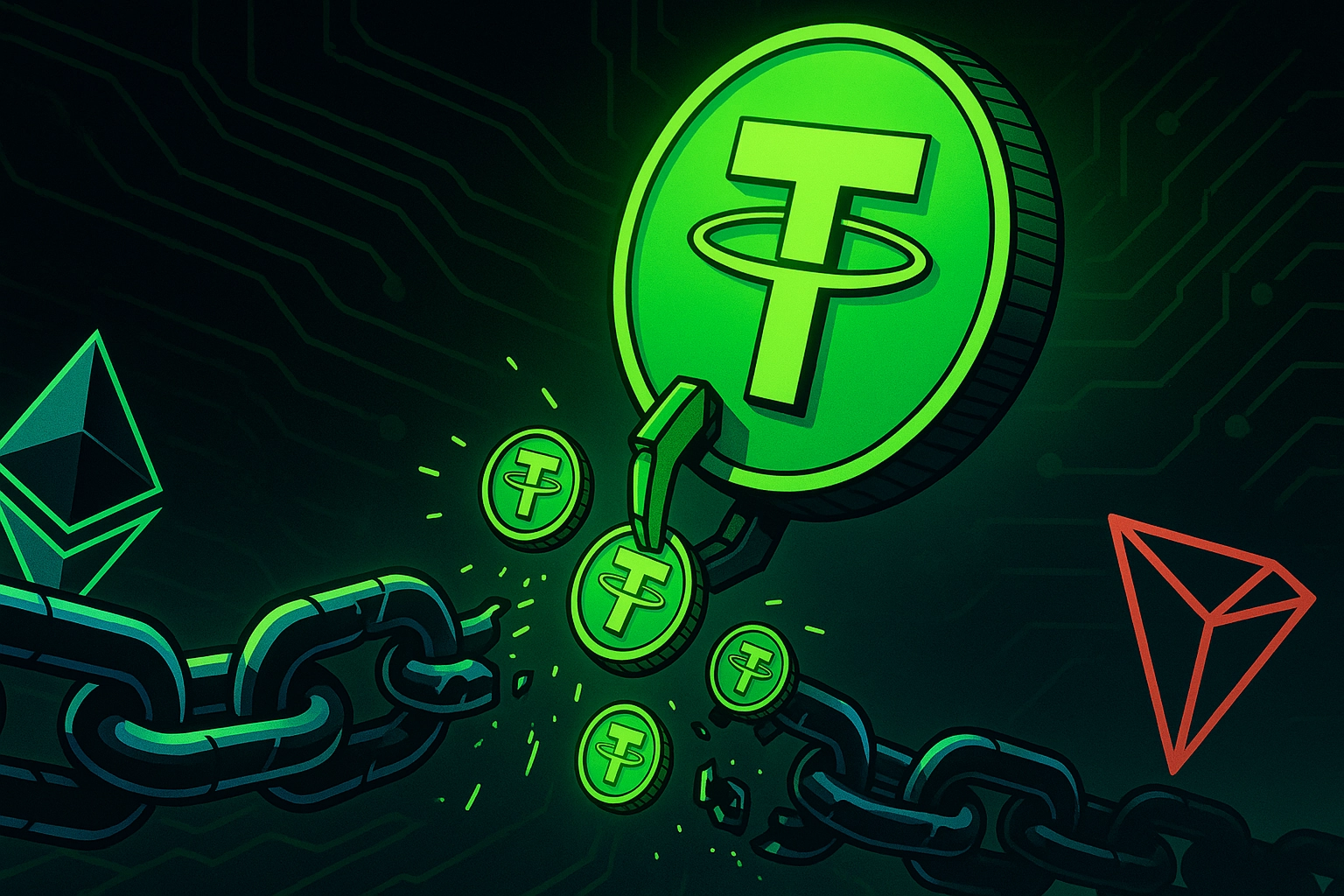
Tether Drops USDT Support on 5 Legacy Blockchains 2025
Tether Discontinues USDT Support on Five Legacy Blockchains in 2025
Tether, the world's largest stablecoin issuer, has announced it will discontinue USDT support on five legacy blockchains as part of a strategic infrastructure review. The decision affects Omni Layer, Bitcoin Cash SLP, Kusama, EOS, and Algorand networks, with support ending on September 1, 2025.
Which Blockchains Are Affected by Tether's Decision
The stablecoin giant will cease operations on the following networks:
Omni Layer - The original Bitcoin-based protocol where USDT was first launched Bitcoin Cash SLP - Simple Ledger Protocol on Bitcoin Cash network Kusama - Polkadot's canary network for experimental features EOS - Delegated proof-of-stake blockchain platform Algorand - Pure proof-of-stake blockchain protocol
Timeline and Migration Process
Tether has provided users with ample time to migrate their holdings. The company began halting minting on some of these networks in 2023 and 2024, with EOS and Algorand minting stopped in June 2024. All redemptions and remaining token freezing will be completed by September 1, 2025.
Users holding USDT on these networks should redeem their holdings immediately or request issuance on supported blockchains. Those who are not direct Tether customers can migrate through available service providers.
Reasons Behind the Strategic Shift
According to Paolo Ardoino, CEO of Tether, the decision stems from comprehensive blockchain usage data analysis and community feedback. The volume of USDT circulating on these legacy chains has declined significantly over the past two years.
The move allows Tether to focus resources on platforms offering greater scalability, developer activity, and community engagement. This strategic pivot aligns with the company's goal to drive the next wave of stablecoin adoption.
Impact on USDT Market Capitalization
With a market capitalization of $139.4 billion, USDT remains the largest stablecoin in circulation. The discontinuation of support on these five networks represents a minimal impact on overall market share, as the affected blockchains hold relatively small amounts of circulating USDT.
The decision reflects the dominance of Ethereum and Tron networks, which host the majority of USDT transactions and holdings globally.
Tether's Future Blockchain Strategy
Tether is redirecting its focus toward expanding support for Layer 2 networks and emerging blockchains that offer improved interoperability and speed. The company specifically mentioned the Lightning Network as part of its strategic expansion plans.
This infrastructure optimization positions Tether to better serve its global user base while supporting platforms with robust developer ecosystems and active communities.
What This Means for the Stablecoin Market
The phased withdrawal from legacy blockchains demonstrates Tether's commitment to maintaining liquidity and operational efficiency. Previous similar decisions by the company have occurred without major market disruptions, indicating the minimal impact on overall stablecoin stability.
This strategic consolidation allows Tether to allocate resources more effectively toward high-utility platforms that align with current market demands and technological advancement.
Key Takeaways for USDT Holders
Users must act before September 1, 2025 to avoid losing access to their USDT holdings on affected networks. The transition period provides sufficient time for orderly migration to supported blockchains.
Tether continues to explore collaborations with innovative blockchain ecosystems to broaden USDT accessibility and utility, particularly focusing on scalable Layer 2 networks and DeFi-native chains where user activity remains strong.