
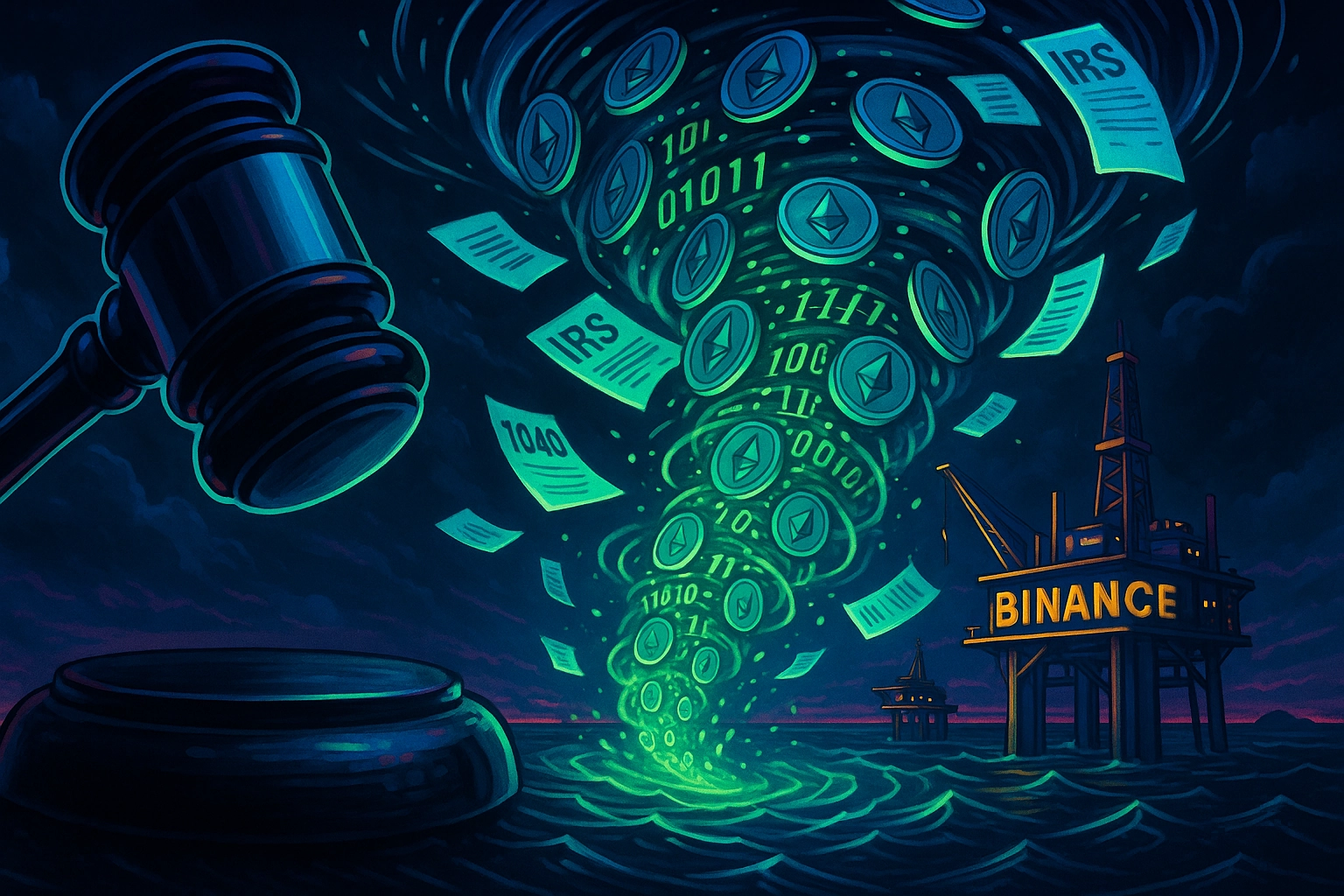
Tornado Cash Trial: Roman Storm Linked to Binance Funds
Roman Storm Tornado Cash Trial: New Evidence Links Founder to Binance and Offshore Dealings
IRS Agent Reveals Financial Trail Evidence
Federal prosecutors have presented compelling evidence in the Tornado Cash trial, suggesting founder Roman Storm orchestrated significant financial movements through Binance and coordinated with co-founders for offshore investments. The testimony from IRS-CI Special Agent Stephan George has shed new light on the prosecution's case against the cryptocurrency mixer's creator.
Storm Allegedly Moved Over $533,000 Through Binance
Agent George testified that he successfully traced over $533,000 in USDT from a Binance account allegedly under Roman Storm's control. The financial movements occurred on August 9, 2022, with funds being distributed across three separate wallet addresses. This evidence forms a crucial part of the prosecution's argument regarding Storm's active involvement in managing Tornado Cash funds.
Chat Logs Reveal Multi-Million Dollar Transfers
Prosecutors presented internal communications between Tornado Cash's founding trio: Roman Storm, Roman Semenov, and Alexey Pertsev. These chat logs contain potentially damaging admissions, including Storm's statement about overloading 8 million dollars and sending 2.6 million to each co-founder.
The communications suggest Storm maintained significant control over financial operations, contradicting defense claims about his limited involvement in the platform's day-to-day operations.
Offshore Real Estate and Transaction Obscuring Plans
Perhaps most damaging to Storm's defense are messages indicating plans to establish offshore entities and purchase real estate. One communication shows Storm instructing a colleague to open various offshore accounts and acquire property, suggesting deliberate attempts to move assets beyond regulatory reach.
Additional messages from co-founder Semenov reference sending TORN tokens later to avoid detection, indicating awareness of potential legal scrutiny and efforts to obscure transaction patterns.
Tornado Cash User Interface Dominated Platform Usage
Expert testimony from Philip Werlau of AnChain.AI revealed that 96.2 percent of Tornado Cash users accessed the platform through its web interface rather than command line operations. This statistic supports the prosecution's argument that the platform was designed for mainstream accessibility rather than purely technical users.
Interestingly, Werlau noted that the Lazarus Group, a notorious North Korean hacking collective, only shifted to command line usage after US sanctions were imposed on Tornado Cash. This behavioral change suggests sophisticated users recognized the web interface's potential vulnerabilities.
Defense Challenges Technical Evidence
Storm's defense team has focused on challenging the technical aspects of the prosecution's case. They emphasize that Tornado Cash's smart contract pools became immutable in May 2020, meaning neither Storm nor any decentralized autonomous organization could modify their functionality afterward.
The defense also clarified that Tornado Cash's user interface did not directly handle transactions. Instead, all deposits and withdrawals required direct interaction with Ethereum smart contracts, potentially undermining claims about centralized control.
Trial Developments and Upcoming Proceedings
The prosecution is expected to conclude its case presentation tomorrow morning, marking a significant milestone in this closely watched cryptocurrency trial. A separate hearing regarding Chainalysis expert testimony remains pending, which could introduce additional technical evidence.
Storm's defense team is preparing to present their arguments, focusing heavily on the immutable nature of smart contracts and Storm's alleged lack of control after the platform's deployment. This technical defense strategy could prove crucial in determining the trial's outcome.
Implications for Cryptocurrency Regulation
The Tornado Cash trial represents a landmark case in cryptocurrency regulation and enforcement. The prosecution's evidence suggests government agencies have developed sophisticated capabilities for tracing digital asset movements, even through privacy-focused platforms.
The case's outcome could establish important precedents for how regulatory authorities pursue cases against decentralized finance platforms and their creators. Legal experts are closely monitoring the proceedings for their potential impact on the broader cryptocurrency ecosystem.
Key Evidence Summary
The prosecution has built its case around several key pieces of evidence: traced financial movements through major exchanges, internal communications revealing coordination between founders, and expert testimony about user behavior patterns. These elements combine to paint a picture of active management and potential regulatory evasion.
The defense counters with technical arguments about smart contract immutability and the decentralized nature of the platform's operation. The jury must ultimately weigh these competing narratives to determine Storm's culpability in the alleged criminal activities.
What This Means for Crypto Privacy Tools
The Tornado Cash trial extends beyond Roman Storm's individual case, potentially setting precedents for how privacy-focused cryptocurrency tools are regulated and prosecuted. The government's ability to trace transactions and obtain internal communications demonstrates the challenges facing privacy-oriented platforms in the current regulatory environment.
As the trial progresses toward its conclusion, the cryptocurrency community awaits a verdict that could significantly impact the development and operation of similar privacy-enhancing technologies in the digital asset space.
For more Crypto, Web3, Blockchain & AI news visit : www.metamoonmedia.com