
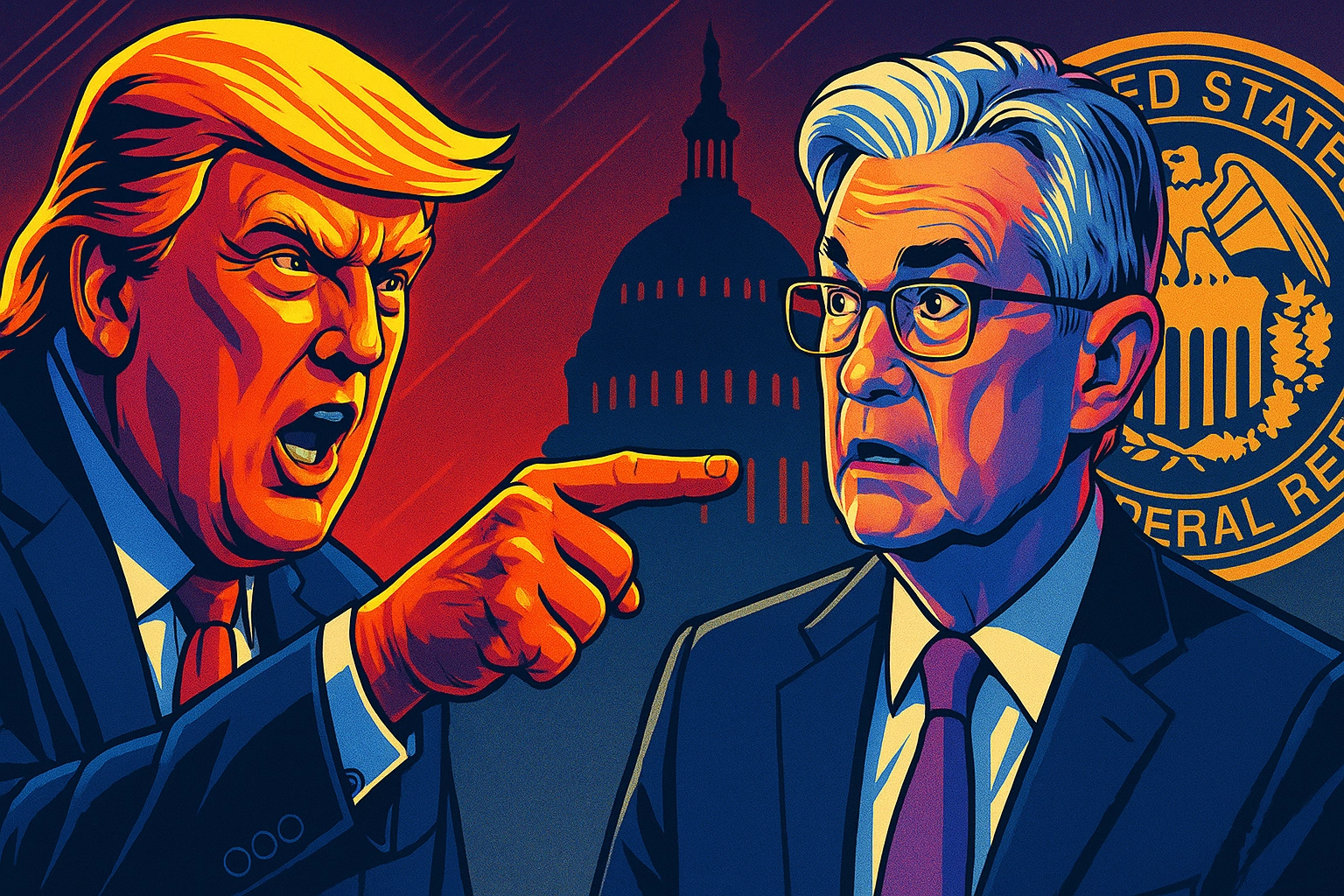
Trump Demands Jerome Powell Resign Amid Fed Investigation
Trump Demands Jerome Powell Resign Amid Fed Investigation
Trump Labels Fed Chair "Terrible" and Calls for Immediate Resignation
President Donald Trump has intensified his criticism of Federal Reserve Chair Jerome Powell, branding him as "terrible" and demanding his immediate resignation. The escalating conflict centers on Powell's reluctance to cut interest rates despite improving inflation metrics and mounting political pressure.
During a recent press conference, Trump reiterated his stance against Powell when questioned about the looming Congressional investigation into the Fed Chair. The President accused Powell of exhibiting bias in his handling of Federal Reserve policy, particularly regarding interest rate decisions.
Fed Chair's Rate Cut Stance Draws Presidential Ire
Trump's frustration stems from Powell's cautious approach to interest rate cuts. The President argues that Powell was more liberal with rate cuts during the Biden administration, cutting rates multiple times leading up to the 2024 Presidential election. However, Powell has maintained unchanged interest rates under the current administration, adopting what Trump views as an unnecessarily hard stance.
The Fed Chair has justified his position by citing concerns about Trump's tariffs potentially stoking inflation. This cautious approach has led Trump to characterize Powell as "too slow" for the job, with previous meetings between the two yielding no positive outcomes.
Congressional Investigation Looms Over Powell
Jerome Powell faces potential congressional investigation following his Senate testimony in July. The Fed Chair stands accused of providing misleading testimony to the Senate Banking Committee regarding a $2.5 billion renovation of the Federal Reserve headquarters.
FHFA Director Bill Pulte and Senator Cynthia Lummis have accused Powell of lying under oath, specifically denying the extravagant spending on the headquarters renovation. These accusations have intensified calls for formal investigation into Powell's conduct.
Market Impact and Rate Cut Speculation
Since the calls for Powell's investigation emerged, odds for a July Fed rate cut have increased by 23%. Several Federal Reserve governors have hinted at an incoming rate cut, though uncertainty remains about whether Powell will bow to mounting political pressure from Trump.
The ongoing tension between Trump and Powell has created significant market uncertainty, with investors closely monitoring developments ahead of July's FOMC meeting. The pressure for Fed rate cuts has reached unprecedented levels as markets await clarity on monetary policy direction.
Trump Considers Powell Replacement Options
Frustrated by Powell's stance, Trump has reportedly been weighing options for a potential replacement. The President's criticism has been consistent, with multiple public statements characterizing Powell as unfit for the position.
The conflict highlights the ongoing tension between political pressure and Federal Reserve independence, with Trump's demands for immediate resignation representing a significant escalation in the dispute.
Federal Reserve Policy Under Scrutiny
Powell's handling of Federal Reserve policy has become a focal point of political debate. The Fed Chair's refusal to cut interest rates despite improving inflation metrics has drawn criticism not only from Trump but also from various market participants expecting more accommodative monetary policy.
The situation underscores the complex relationship between political expectations and central bank independence, with Powell's decisions facing unprecedented scrutiny from both political and market forces.
Implications for Monetary Policy
The ongoing conflict between Trump and Powell raises questions about the future direction of U.S. monetary policy. With congressional investigation looming and presidential pressure mounting, the Federal Reserve's decision-making process faces significant external pressures.
Market participants continue to monitor developments closely, with particular attention to July's FOMC meeting and any potential changes in the Fed's rate cutting trajectory. The outcome of these tensions could have far-reaching implications for both monetary policy and market stability.