
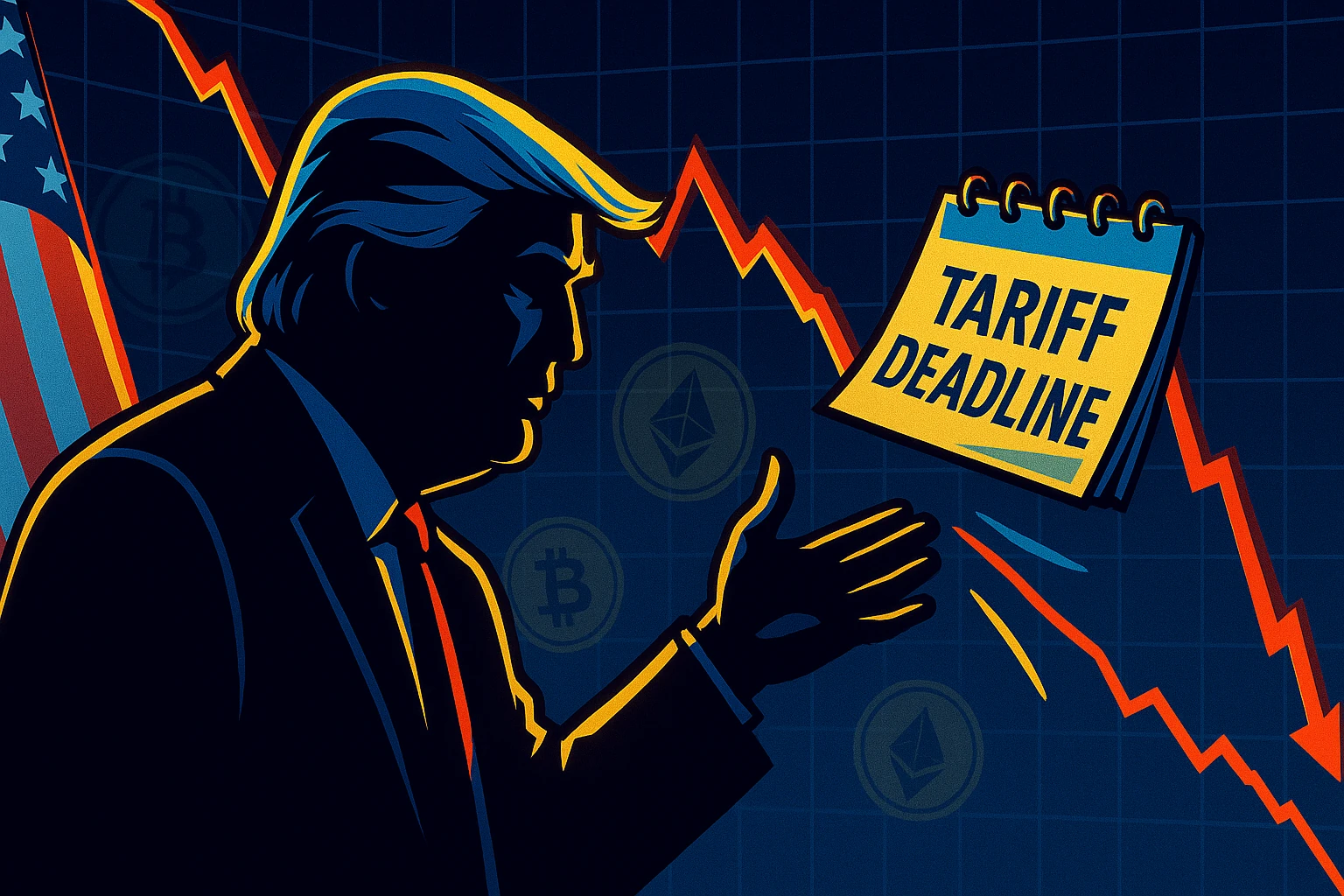
Trump Tariff Deadline Sparks Major Crypto Market Decline
Trump Tariff Deadline Sparks Major Crypto Market Decline
The cryptocurrency market is experiencing significant turbulence as President Donald Trump refuses to extend the July 9 tariff deadline. Major digital currencies including Bitcoin, Ethereum, and XRP have suffered notable losses amid growing trade tensions and market uncertainty.
Trump Maintains Firm Position on Tariff Negotiations
President Trump has made his position clear regarding the upcoming July 9 deadline for tariff negotiations. When questioned about potentially extending the negotiating period with trading partners, Trump responded decisively, stating he does not believe an extension will be necessary.
The Trump administration continues to use tariffs as leverage to secure more favorable trade agreements with various nations. This strategy has particularly impacted negotiations with Japan, where both countries have yet to reach a comprehensive trade deal.
The president's unwavering stance on tariffs has created ripple effects across global financial markets. As investors monitor the unfolding negotiations, many have grown increasingly concerned about potential economic consequences stemming from heightened trade tensions.
Cryptocurrency Markets Show Steep Declines
The crypto market has reacted strongly to the mounting uncertainty surrounding trade negotiations. Major cryptocurrencies have experienced substantial losses over recent trading sessions.
Bitcoin price dropped more than 1.5 percent, while Ethereum suffered approximately 4 percent in losses. XRP experienced an even steeper decline, falling 5.24 percent to trade at $2.17. Dogecoin also participated in the downward trend, declining 3.5 percent to approximately $0.75.
Cryptocurrency markets demonstrate particular sensitivity to macroeconomic factors, including trade agreements and geopolitical risks. Trump's firm rejection of deadline extensions has amplified investor uncertainty regarding broader economic implications.
Trade Agreement Challenges Mount
The Trump administration faces significant obstacles in finalizing trade agreements with key international partners. While the president has consistently threatened higher tariffs against nations failing to reach satisfactory agreements, the United States has secured relatively few comprehensive deals through ongoing negotiations.
Notable agreements have been reached with the United Kingdom and China, though these arrangements have not fully addressed the trade issues Trump has consistently highlighted throughout his tenure.
Treasury Secretary Scott Bessent has acknowledged that the administration appears unlikely to achieve its ambitious target of securing 90 trade deals within the initial 90-day timeframe. The absence of concrete agreements has generated concerns that negotiations may extend well beyond the July 9 deadline.
Some analysts suggest that trade discussions could potentially continue into early September without meaningful resolution. This protracted timeline has contributed to strained international trade relationships and ongoing market instability.
Market Outlook Remains Uncertain
The stalling of trade agreement progress has created a challenging environment for global markets. Cryptocurrency investors continue monitoring negotiation developments closely while navigating an atmosphere of persistent uncertainty.
With the possibility of higher tariffs looming on the horizon, the crypto market could experience additional volatility in the coming weeks. Most traders are adopting cautious approaches as the July 9 deadline approaches.
The continued uncertainty surrounding Trump's tariff policy has placed sustained pressure on cryptocurrency markets. Digital asset prices remain vulnerable to further turbulence as trade negotiations progress toward their critical deadline.
Impact on Major Cryptocurrencies
Bitcoin, as the leading cryptocurrency by market capitalization, has shown resilience despite recent losses. However, the 1.5 percent decline reflects broader market concerns about macroeconomic stability.
Ethereum's 4 percent drop demonstrates how alternative cryptocurrencies are not immune to trade-related market pressures. The decentralized finance ecosystem built on Ethereum may face additional challenges if trade tensions escalate further.
XRP's 5.24 percent decline to $2.17 represents one of the steepest losses among major cryptocurrencies. This significant drop highlights how regulatory and macroeconomic uncertainties continue affecting digital asset valuations.
Dogecoin's 3.5 percent decrease to around $0.75 shows that even meme-based cryptocurrencies are experiencing downward pressure amid the current market environment.
Conclusion
The cryptocurrency market's recent decline directly correlates with Trump's firm stance on the July 9 tariff deadline. As trade negotiations continue without clear resolution, digital asset investors face an increasingly challenging landscape.
The intersection of international trade policy and cryptocurrency markets demonstrates how traditional economic factors continue influencing digital asset valuations. Market participants must navigate this uncertainty while the Trump administration pursues its aggressive trade negotiation strategy.
With the deadline rapidly approaching and limited progress on comprehensive trade agreements, cryptocurrency markets may experience continued volatility. Investors should prepare for potential further declines as geopolitical tensions and trade uncertainties persist in the global economic landscape.