
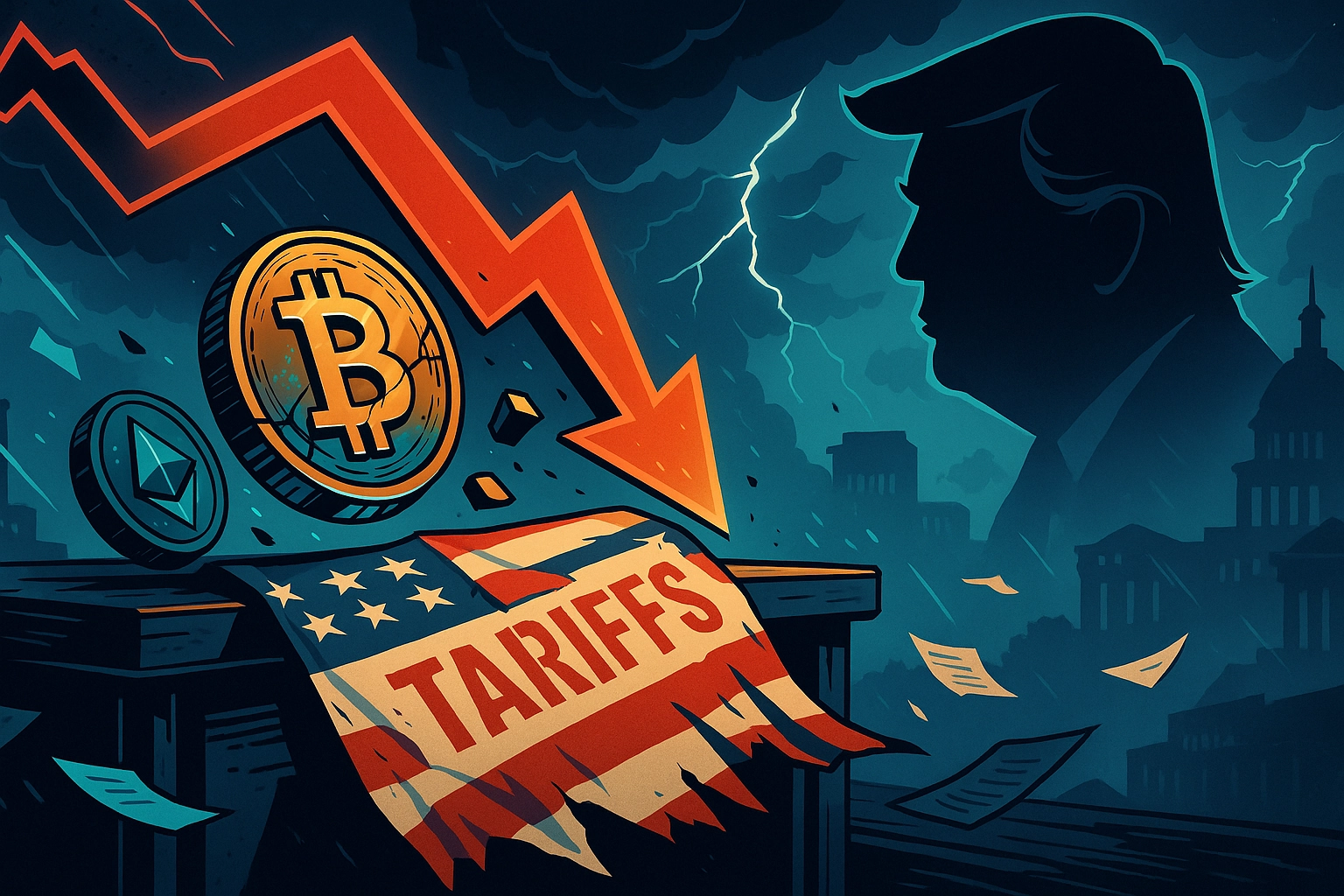
Trump Tariffs Trigger 4.5% Crypto Market Crash Today
Trump Tariffs Trigger 4.5% Crypto Market Crash Today
The cryptocurrency market experienced a sharp 4.5% decline in the past 24 hours following President Donald Trump's announcement of new tariffs targeting multiple countries. The market downturn has also impacted crypto stocks and Bitcoin mining companies, creating widespread losses across digital asset markets.
Trump Issues Tariff Letters to 14 Countries
On July 7, President Trump sent tariff letters to 14 countries, imposing rates ranging from 25% to 40%. South Korea and Japan were the first recipients, followed by 12 other nations including Tunisia, Kazakhstan, Serbia, Bosnia, Myanmar, Laos, Bangladesh, Malaysia, Cambodia, Thailand, Indonesia, and South Africa.
According to The Kobeissi Letter, US Treasury Secretary Bessent indicated that over 100 countries failed to respond to US tariffs with trade deals, and all these countries are expected to receive similar tariff letters.
In the letters, Trump expressed concern over trade deficits the United States maintains with these countries. He warned that any retaliatory actions would result in further tariff increases.
Economic Expert Criticism of Tariff Strategy
Economist Peter Schiff criticized Trump's tariff approach, arguing it reflects a fundamental misunderstanding of trade dynamics. Schiff noted that Japan's tariffs on US goods average less than 2%, while Korea's average less than 1%.
"Our trade deficits result from South Korea and Japan making more goods that Americans want to buy than the goods we make that they want to buy," Schiff explained. He predicted that Trump's 25% tariffs would have minimal effect on trade deficits with either nation.
Crypto Market Performance After Tariff Announcement
The tariff announcement proved detrimental to cryptocurrency markets. Total market capitalization fell 4.5% over the past day, with all top ten cryptocurrencies showing red performance.
Bitcoin dropped 1.56% below the $108,000 mark, trading at $107,688 at the time of writing. Ethereum plunged 1.89% to $2,535. Dogecoin experienced the largest loss at 4.78%.
Crypto Stocks and Mining Companies Suffer Losses
Crypto-related stocks also experienced significant declines. MicroStrategy Class A stock MSTR closed the market with a 2% dip, while Robinhood was down 1%. Bitcoin mining companies saw even larger declines in their stock values.
The broader impact extended beyond cryptocurrency markets, affecting traditional stock indices as well.
US Stock Market Reaction to Tariff News
The tariff letters negatively impacted the US stock market. The Dow Jones fell by 422.17 points, the S&P 500 declined by 49.37 points, and the NASDAQ dropped by 188.59 points.
Market analysts noted that the 10-year Treasury Note Yield returned to 4.40% following the tariff announcement, reaching levels just 20 basis points below the highs seen when Trump announced a 90-day tariff pause.
Historical Context of Tariff-Related Market Volatility
The current market decline mirrors past instances of tariff-related volatility. In April, US-China trade tensions drove Bitcoin below $80,000, causing massive liquidations across cryptocurrency markets.
With new tariffs scheduled to take effect on August 1, market participants are preparing for potential further declines in both cryptocurrency and traditional markets.
Federal Reserve Rate Cut Expectations Decline
The tariff announcements have impacted Federal Reserve rate cut expectations. The probability of a Fed rate cut in July has fallen to below 5%, while September rate cut odds have declined to 61.9% from 90% just two weeks ago.
This shift in monetary policy expectations adds another layer of uncertainty to financial markets, potentially contributing to continued bearish sentiment.
Market Outlook and Uncertainty Factors
Multiple factors are combining to create an environment of increased market uncertainty. Trump's new tariffs, negative market reactions, and shifting expectations around Fed rate cuts are all contributing to volatile trading conditions.
The cryptocurrency market's sensitivity to macroeconomic policy changes continues to demonstrate the interconnected nature of digital assets with traditional financial markets.
Key Takeaways for Investors
The current market environment highlights the importance of monitoring geopolitical developments and their potential impact on cryptocurrency prices. Tariff announcements and trade policy changes can create significant short-term volatility in digital asset markets.
Investors should remain cautious and consider the broader economic context when making investment decisions in the current uncertain market environment.