
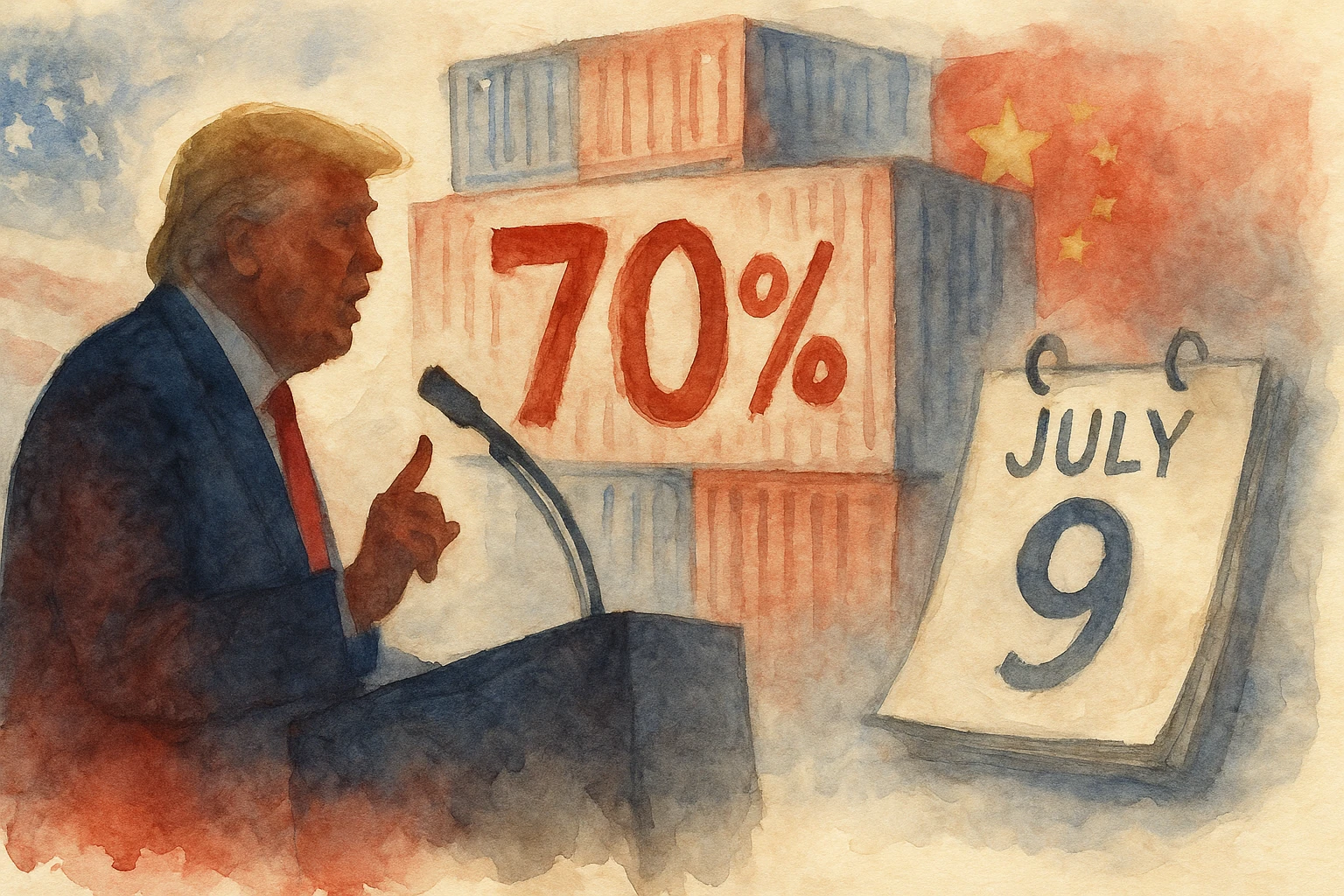
Trump Threatens 70% Tariffs with July 9 Trade Deadline
Trump Threatens 70% Tariffs with July 9 Trade Deadline
Trump Sets August 1 Tariff Implementation Date
President Donald Trump has announced plans to impose tariffs of up to 70% on imports from key trading partners, effective August 1, 2025. The aggressive tariff policy comes as the administration approaches its July 9 deadline for countries to finalize new trade agreements with the United States.
The Trump administration will begin sending notification letters to approximately twelve countries on Friday, detailing the specific tariff rates that will apply to their exports. These rates will vary significantly by country, ranging from 10% to 70% depending on existing trade relationships and negotiation outcomes.
Trade Negotiation Timeline and Deadlines
The current tariff threat follows a temporary 10% tariff implemented in April during an initial negotiation period. Trump's administration provided countries with a 90-day window to reach new agreements, which the president characterized as a "final opportunity" for improved trade terms.
"They'll start to pay on August 1," Trump stated. "The money will start coming into the United States on 1 August."
Despite ongoing negotiations with several countries, the White House maintains that the July 9 deadline remains firm, with no extensions being considered for trade discussions.
Global Market Impact and Economic Concerns
The announcement of substantial tariff increases has triggered volatility in international markets. Stock markets across Asia and Europe have experienced declines as investors assess the potential economic implications of the new trade policies.
Economists warn that the proposed tariffs could significantly impact global inflation rates, as businesses may transfer increased import costs to consumers. Industries including technology, manufacturing, and agriculture face particular vulnerability to these trade policy changes.
The tariff strategy represents the Trump administration's effort to leverage trade access to the US market in exchange for more favorable bilateral trade terms with partner countries.
Countries Facing Tariff Increases
Several major trading partners are currently engaged in urgent negotiations with the United States to avoid the highest tariff rates. Countries including Korea, Indonesia, Switzerland, and the European Union are actively working to finalize agreements before the July 9 deadline.
The European Union faces particular scrutiny, with Trump administration officials threatening 17% tariffs on specific EU agricultural products, including Belgian chocolate, Irish butter, and Italian olive oil. These targeted measures reflect the administration's focus on addressing perceived trade imbalances with European partners.
Japan also remains a significant focus of US trade policy, with Trump administration officials citing concerns about existing trade arrangements and their impact on American economic interests.
Economic Implications for US Consumers
While the tariff policy aims to strengthen America's trade position, economists caution that increased import costs could ultimately impact US consumers through higher prices on affected goods. The administration's approach reflects a willingness to accept short-term economic friction in pursuit of longer-term trade advantages.
The success of the tariff strategy will largely depend on whether targeted countries agree to revised trade terms before the August 1 implementation date. Countries that fail to reach agreements by the deadline will face the full impact of the proposed tariff increases.
Conclusion
Trump's tariff announcement represents a significant escalation in US trade policy, with potential implications for global economic relationships. The July 9 deadline creates immediate pressure for affected countries to finalize new trade agreements or face substantially higher costs for accessing the American market.
The outcome of these negotiations will likely influence international trade patterns and economic relationships for years to come, making the coming weeks critical for global trade policy development.