
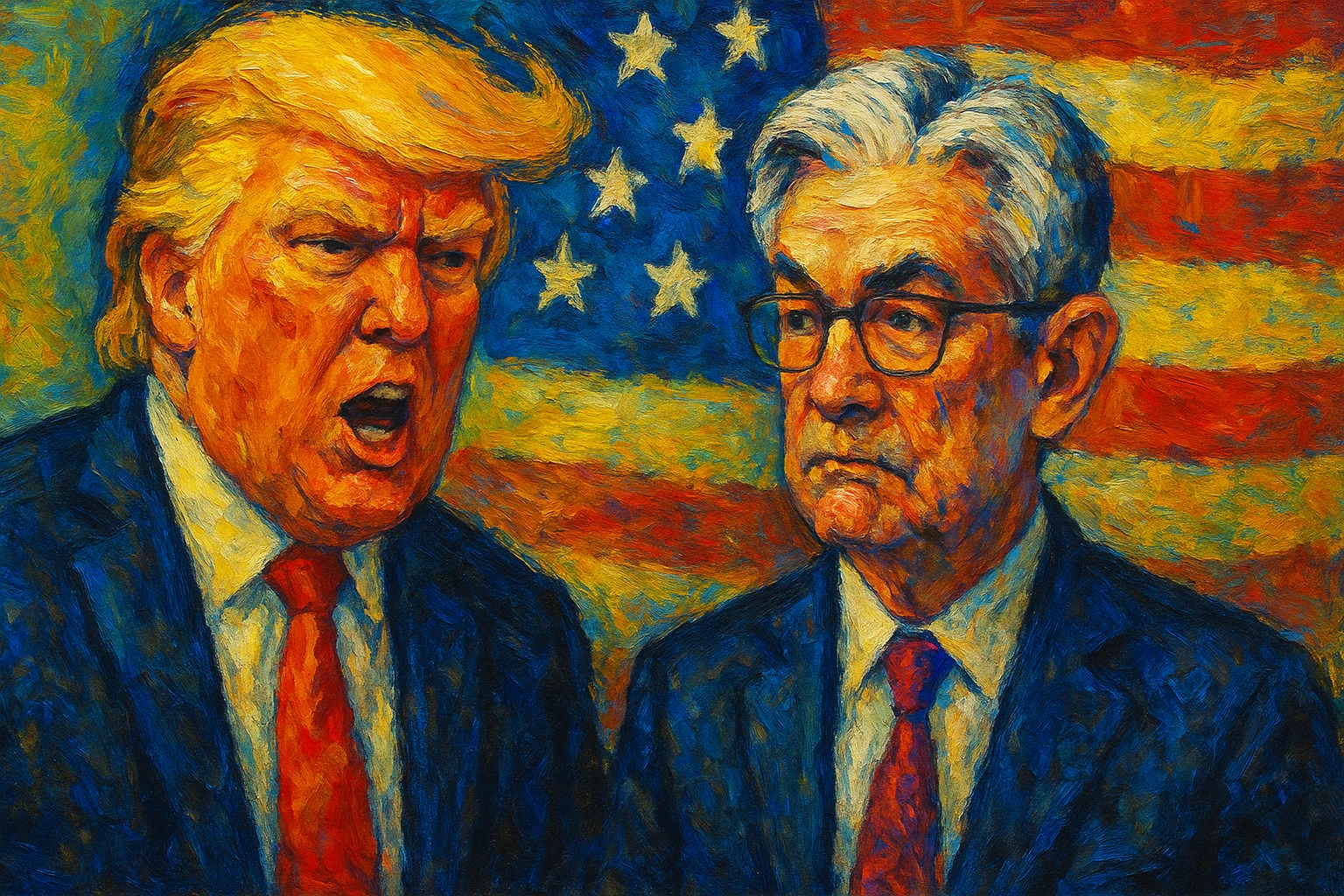
Trump Urges Fed Chair Powell to Resign Over Rate Policy
Trump Calls for Fed Chair Jerome Powell’s Resignation Over Interest Rates
Former U.S. President Donald Trump has intensified his criticism of Federal Reserve Chair Jerome Powell, publicly calling for Powell to resign. Trump’s comments highlight a growing rift over monetary policy as the former president mounts a fresh campaign to regain the White House.
Trump’s Criticism of Powell’s Policies
During recent interviews, Trump accused Powell of keeping interest rates at excessively high levels that he claims are harming the economy. The Federal Reserve has maintained benchmark rates in the range of 4.25% to 4.50%, the highest levels in decades, in an effort to control inflation. Trump contends these rates are choking economic growth, making borrowing more expensive for businesses and consumers, and threatening financial stability.
He called Powell “stupid” and insisted that he would “love” for the Fed Chair to step down immediately. Trump also argued that Powell’s leadership has been inconsistent and has contributed to market volatility.
Pledge to Appoint a Dovish Fed Chair
With Powell’s term running through May 2026, Trump is signaling plans to overhaul the Fed’s leadership if he returns to office. According to sources familiar with his thinking, he is already vetting candidates who would be committed to sharply reducing rates. Potential names being discussed include:
Scott Bessent, Treasury Secretary
Christopher Waller, current Fed Governor
Kevin Hassett, former White House economic adviser
Kevin Warsh, former Fed Governor
Trump is reportedly considering naming his preferred successor before the election to reassure investors and political allies that he would pursue a more aggressive easing strategy.
Economic and Political Implications
Economists warn that if the White House exerts pressure on the central bank to slash interest rates, it could undermine the Fed’s independence. Historically, presidents have avoided direct public attacks on Fed officials to protect the institution’s credibility and avoid spooking markets. Trump’s willingness to single out Powell by name and threaten early replacement marks a break from that tradition.
Despite Trump’s criticism, it is important to note that monetary policy decisions are not determined by the Fed Chair alone. The Federal Open Market Committee (FOMC), a panel of voting governors and regional bank presidents, must collectively approve rate changes. Even if Trump installed a new chair, winning consensus for deep cuts could prove challenging.
Market Reactions and Future Outlook
While some investors have speculated that lower rates could fuel market rallies, others fear the perception of political interference could weaken confidence in the U.S. dollar and Treasury markets. Some analysts have warned that rapid rate cuts at the wrong time could reignite inflation, creating long-term economic risks.
As the 2024 election cycle heats up, Trump’s pledge to reshape the Fed underscores how monetary policy has become a central political issue. His remarks also signal that if elected, he will prioritize cheap borrowing costs and growth over inflation concerns, a stance likely to attract both support and criticism from across the financial community.