
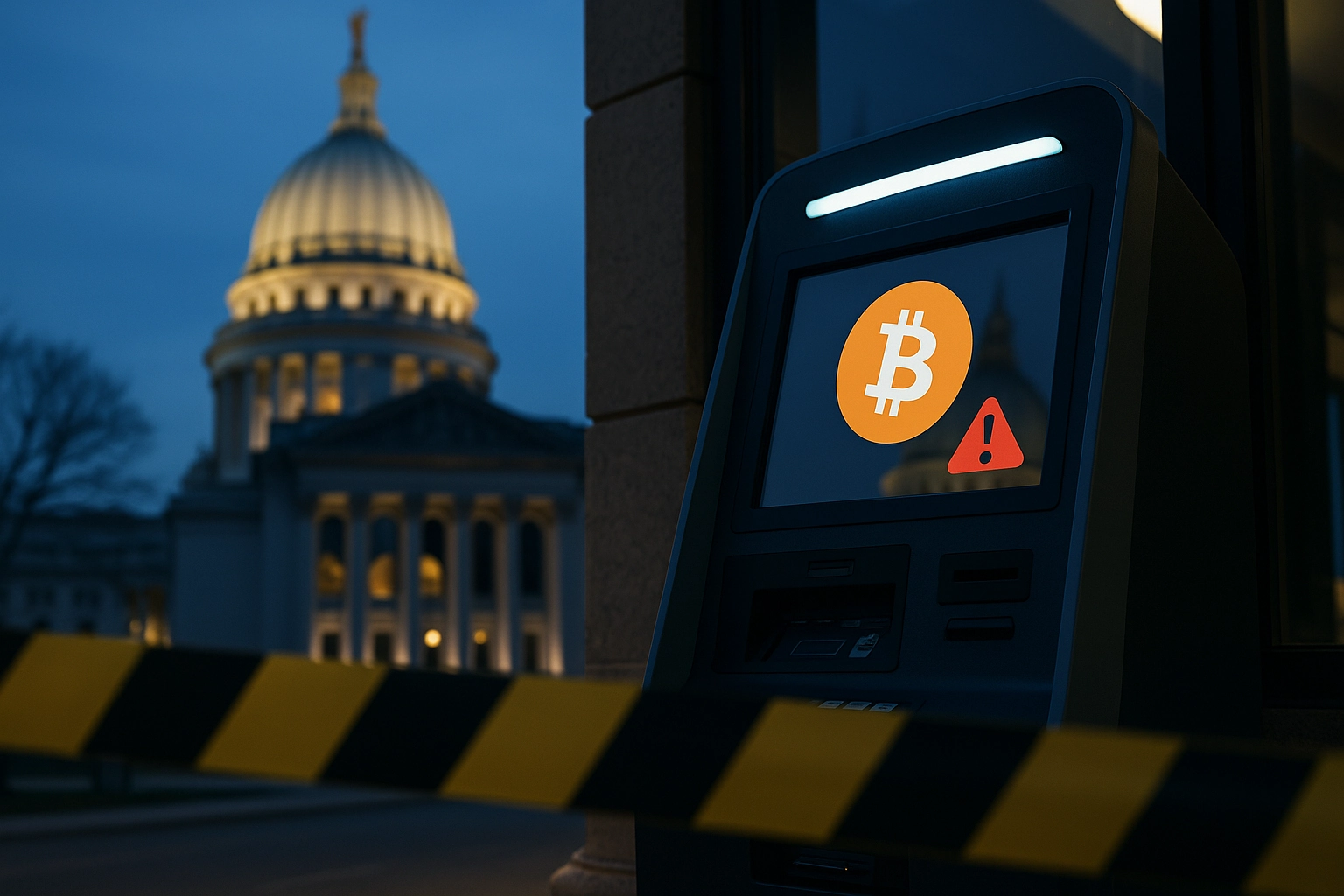
Wisconsin Senate Files Bill to Regulate Crypto ATMs
Wisconsin Senate Files Companion Bill to Combat Crypto ATM Scams
New Legislation Targets Growing Fraud Concerns
Wisconsin lawmakers have introduced comprehensive legislation aimed at regulating cryptocurrency ATMs and protecting consumers from fraud. Senator Kelda Roys, alongside six Democratic colleagues, filed Senate Bill 386 on Monday as companion legislation to Assembly Bill 384, which was introduced in the lower house on July 31.
The identical bills represent a strategic approach to expedite the legislative process, allowing both chambers to consider the measures simultaneously while increasing the likelihood of passage.
Key Requirements for Crypto ATM Operators
Licensing and Identity Verification
Under the proposed legislation, cryptocurrency ATM and kiosk operators must obtain money transmitting licenses to operate within Wisconsin. The bills establish strict identity verification protocols requiring operators to collect comprehensive user information including:
Full name and date of birth
Contact phone number
Physical address
Email address
Government-issued identification documents
Operators must photograph customers during each transaction and verify their identity for every cryptocurrency purchase or sale.
Transaction Limits and Fee Caps
The legislation implements consumer protection measures through transaction limitations and fee regulations. Daily transaction limits are capped at $1,000 per user to reduce potential fraud exposure.
Fee structures would be regulated under the new rules, with operators limited to charging either a flat $5 fee or 3% of the transaction value, whichever amount is higher. This represents a significant reduction from current industry practices where crypto ATMs typically charge substantially higher fees compared to online cryptocurrency exchanges.
Fraud Prevention Measures
Warning Requirements
The bills mandate prominent fraud warnings be displayed within customers' direct line of sight on the front of each machine. This visual warning system aims to alert users to potential scam risks before completing transactions.
Reimbursement Protections
Operators would bear financial responsibility for fraudulent transactions under the proposed legislation. If law enforcement agencies confirm a transaction was fraudulent within 30 days, operators must fully reimburse affected customers. This provision extends protection to victims of scammer-directed transactions.
Federal Agency Concerns Drive State Action
FinCEN Issues Industry Warning
The Wisconsin legislation follows federal action from the Treasury Department's Financial Crimes Enforcement Network. On August 4, FinCEN issued an advisory notice requesting financial institutions report suspicious cryptocurrency ATM transactions.
FinCEN Director Andrea Gacki emphasized criminal exploitation of innovative technologies, stating that bad actors have learned to abuse convertible virtual currency kiosks for illicit purposes.
The federal agency identified three primary criminal activities conducted through crypto ATMs: fraud schemes, cybercrime operations, and drug trafficking networks.
Vulnerable Population Targeting
Federal investigators have confirmed that elderly individuals face heightened vulnerability to cryptocurrency ATM scams. Criminals frequently impersonate bank employees, technical support representatives, and customer service agents to deceive older victims into making fraudulent transactions.
Global Regulatory Response
International Crackdowns
Wisconsin's legislative effort reflects broader international concerns about cryptocurrency ATM misuse. New Zealand implemented a complete nationwide ban on crypto ATMs in July, citing money laundering and criminal financing risks.
The United Kingdom has pursued aggressive enforcement actions, with regulators seizing seven cryptocurrency ATMs and arresting two individuals in southwest London on money laundering and illegal exchange operation charges.
Preemptive Local Measures
Even jurisdictions without existing crypto ATM installations are taking preventive action. Grosse Pointe Farms, Michigan, passed preemptive regulatory measures despite having no cryptocurrency ATMs currently operating within the town limits.
Industry Impact and Consumer Protection
Balancing Innovation and Safety
The Wisconsin legislation represents efforts to balance technological innovation with consumer protection. By implementing licensing requirements and transaction monitoring, lawmakers aim to preserve legitimate cryptocurrency access while reducing criminal exploitation.
The companion bill approach demonstrates bipartisan recognition of the need for comprehensive cryptocurrency ATM regulation as these machines become more prevalent across the state.
Implementation Timeline
Both bills await committee review and floor votes in their respective chambers. If passed, the legislation would establish Wisconsin among the first states to implement comprehensive cryptocurrency ATM regulatory frameworks, potentially serving as a model for other jurisdictions considering similar measures.
For more Crypto, Web3, Blockchain & AI news visit : www.metamoonmedia.com