
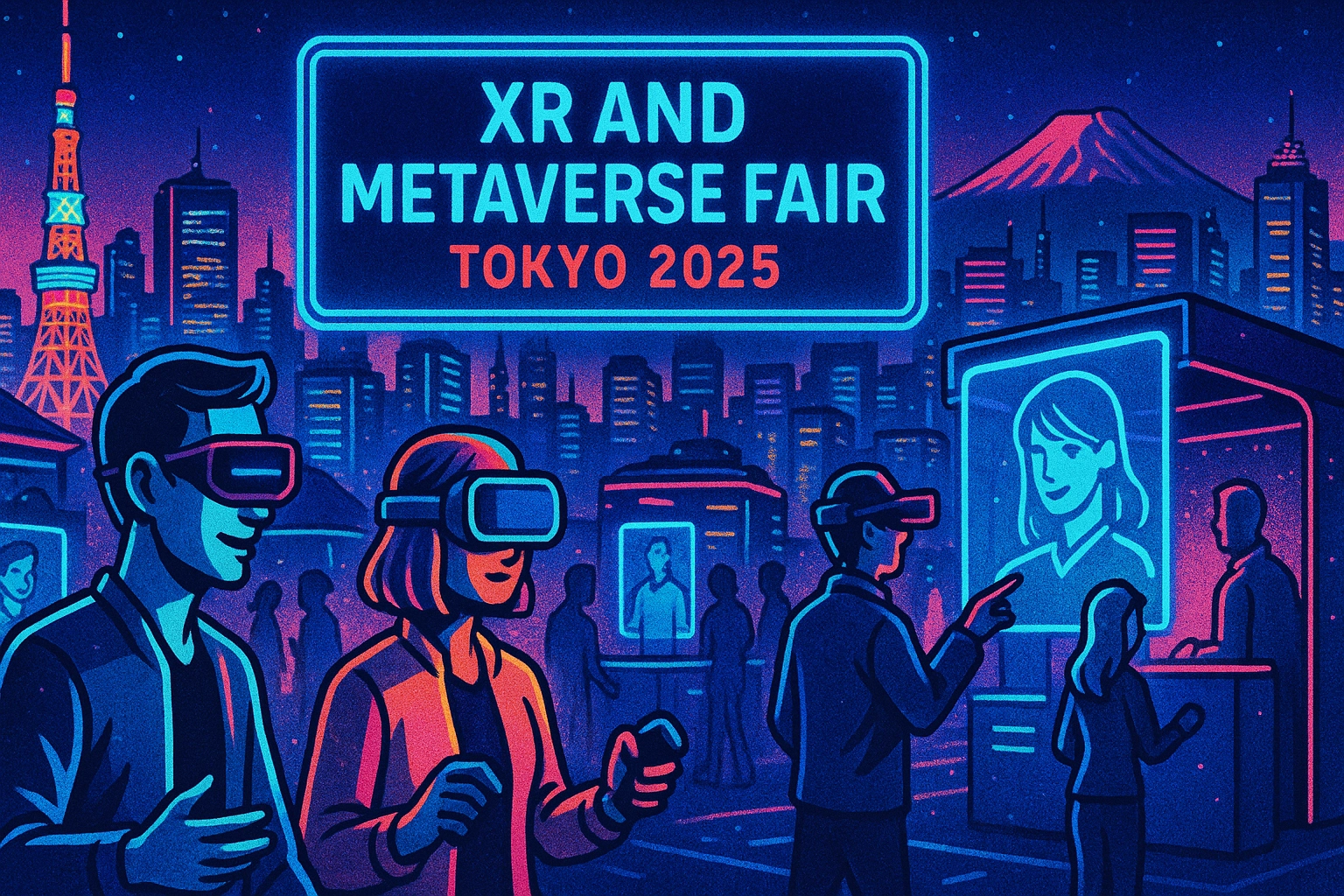
XR Metaverse Fair Tokyo 2025: Industry Trends & Analysis
XR Metaverse Fair Tokyo 2025: Comprehensive Industry Analysis and Technology Showcase
The XR and Metaverse Fair Tokyo 2025 took place at Tokyo Big Sight, representing one of Japan's largest exhibitions for AR, VR, and mixed reality technologies. This comprehensive analysis explores the key innovations, industry trends, and future outlook presented at this significant technology event.
Overview of XR Metaverse Fair Tokyo 2025
The XR and Metaverse Fair Tokyo serves as Japan's premier platform for companies to demonstrate cutting-edge developments in augmented reality, virtual reality, and mixed reality technologies. As part of the broader Lifestyle Week event series, the fair attracts major corporations, startups, and technology innovators from across Asia.
Since its inception in 2023, the event has featured presentations from industry giants including Universal Studios Japan, Sony, DMM, LINE, and Nissan. These companies have demonstrated practical applications of XR technology in entertainment, business efficiency, and audience engagement.
Major Technology Innovations at the Fair
Nikon's Revolutionary VR Sports Broadcasting
Nikon emerged as a standout exhibitor with groundbreaking developments in VR video production technology. The company showcased advanced recording equipment designed specifically for immersive sports broadcasting applications.
The most impressive demonstration featured Nikon's dual-lens VR technology creating comprehensive 3D maps of baseball stadiums. This innovation allows viewers to experience sports from previously impossible vantage points, including positions directly on the field of play.
Unlike traditional broadcasting methods that rely on limited camera angles, Nikon's system captures complete 3D imaging of sporting events using strategically placed camera arrays throughout stadiums. Viewers can select any location within the venue to watch the action unfold.
The demonstration included two distinct viewing experiences: watching batting action while standing directly beside the batter, and observing pitches from outfield positions. This technology represents a significant advancement over current mixed reality sports applications.
Techfirm's OneXR Training Solutions
Software solutions company Techfirm presented their proprietary OneXR system for remote headset management and group training applications. The platform demonstrated impressive capabilities through a firefighter simulation program, showcasing practical applications for professional training environments.
Xreal's Display Glass Technology
Xreal, representing Asia's growing influence in XR hardware development, exhibited their latest One Pro display glasses. The demonstration highlighted both gaming and professional applications, showing how users can interact with virtual objects while maintaining awareness of their physical environment.
The display glasses offer a field of view approaching 60 degrees, representing significant progress toward consumer-ready AR technology, though still facing limitations common to current display glass solutions.
Asian Innovation in XR Technology
The fair emphasized Asia's emerging leadership in XR technology development. Companies from Japan, Korea, and China presented diverse solutions ranging from advanced hardware to specialized software applications.
Japanese company Nexco demonstrated impressive AR integration for engineering visualization, while various Korean startups showcased mobile-based augmented reality applications. This geographic diversity highlighted the global nature of XR innovation.
Industry Challenges and Market Outlook
Despite technological advances, the event revealed significant challenges facing the XR industry. Many exhibitors appeared to lack clear vision for mass market adoption, with numerous companies still pursuing concepts that have failed to gain public acceptance.
Several exhibitors continued promoting metaverse-focused solutions despite limited consumer enthusiasm for virtual meeting spaces and digital workplace environments. This disconnect between industry offerings and consumer preferences represents a significant challenge for sector growth.
The Japanese VR market alone represents nearly 4 billion dollars in value with continued growth projections. However, the industry struggles to articulate compelling use cases that justify these optimistic forecasts.
Successful XR Applications in Japan
Universal Studios Japan continues implementing VR and XR technology to enhance theme park attractions, demonstrating successful commercial applications of immersive technology.
Cluster, a Japanese metaverse application, has achieved mainstream adoption through collaborations with major media companies and government organizations. The platform successfully bridges flat and VR applications, finding particular success in VTuber community interactions.
Gaming and Entertainment Applications
The VR Yokocho showcase at BitSummit highlighted successful gaming applications of XR technology. Japanese companies like MyDearest and CharacterBank attracted significant audience interest with both released titles and upcoming VR gaming experiences.
Expo 2025 features government-supported XR exhibits, including Capcom's Monster Hunter Bridge experience, demonstrating how established entertainment companies are pushing current technology boundaries.
Consumer Adoption Challenges
The industry faces significant hurdles in transitioning from business-to-business applications to consumer markets. High hardware costs, particularly for premium devices like Apple Vision Pro, limit mainstream adoption potential.
Apple's reported development of a more affordable Apple Vision Air device indicates industry recognition of price barriers preventing broader consumer acceptance.
Future Technology Trends
The most promising developments focus on practical applications that offer unique value propositions. Nikon's sports broadcasting technology and specialized training applications demonstrate clear advantages over traditional alternatives.
Display glass technology continues improving, with better field of view capabilities and more reliable object interaction systems. However, significant technical challenges remain before achieving true consumer-ready AR experiences.
Professional and Industrial Applications
XR technology shows strongest adoption in professional environments where training, visualization, and remote collaboration provide clear return on investment. Engineering, healthcare, and education sectors demonstrate most successful implementation of immersive technologies.
Japanese companies excel in developing specialized industrial applications, leveraging the country's manufacturing expertise and technological innovation capabilities.
Comparison with International Markets
While international companies like Meta and Apple dominate consumer VR markets, Asian manufacturers increasingly lead in display technology and specialized applications. Chinese companies particularly excel in affordable display glasses and mobile AR solutions.
Japanese companies focus on high-quality, specialized applications rather than competing directly in mass consumer markets, reflecting the country's traditional approach to technology development.
Event Impact and Industry Outlook
The XR and Metaverse Fair Tokyo 2025 highlighted both significant technological progress and persistent industry challenges. While hardware capabilities continue improving and specialized applications find success, the industry struggles with clear messaging for mainstream consumer adoption.
The most successful companies demonstrate practical solutions for specific use cases rather than pursuing broad metaverse concepts. This targeted approach appears more likely to drive sustainable industry growth.
The fair's integration with broader Lifestyle Week events suggests successful XR adoption may come through integration with established industries rather than standalone technology showcases.
Conclusion
XR and Metaverse Fair Tokyo 2025 showcased an industry in transition, featuring impressive technological innovations alongside persistent market challenges. Companies like Nikon and Xreal demonstrate the potential for practical XR applications, while the broader industry continues seeking sustainable paths to mainstream adoption.
The event highlighted Asia's growing influence in XR development, with Japanese companies particularly excelling in specialized applications and high-quality implementations. However, the industry must address consumer messaging and practical value propositions to realize projected growth potential.
Success appears most likely for companies focusing on specific use cases with clear advantages over traditional alternatives, rather than pursuing broad virtual world concepts that have yet to achieve mainstream acceptance.
For more Crypto, Web3, Blockchain & AI news visit : www.metamoonmedia.com